
A bizarre aviation incident in Hungary turned into a potential security emergency after an intoxicated 24-year-old allegedly stole a small aircraft and flew it into restricted airspace surrounding the country’s only nuclear power plant.
The man was reportedly flying a Cessna 172 when military radar detected the aircraft inside the protected airspace around the Paks Nuclear Power Plant in southern Hungary.
Authorities scrambled two Hungarian Gripen fighter jets to locate and monitor the aircraft as emergency crews were dispatched.
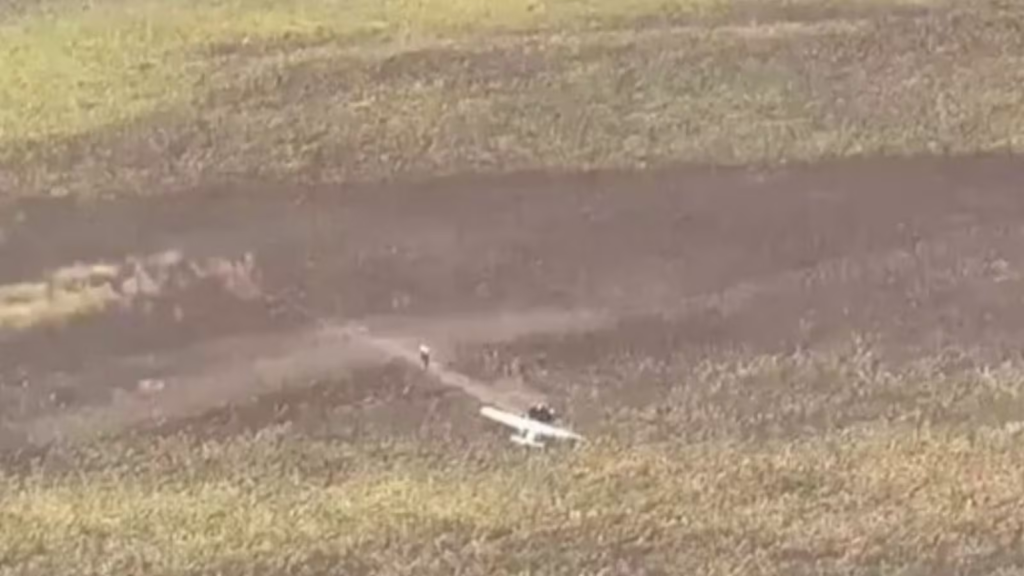
The incident ended when the Cessna made an emergency landing in a sunflower field several miles from the nuclear facility.
The pilot survived the crash landing without injuries but was later arrested after allegedly attempting to take a passing driver’s vehicle.
How the aircraft entered restricted airspace
The aircraft was reportedly taken without authorization from the vicinity of Kalocsa Airport in Hungary.
Investigators are now trying to establish how the man gained access to the Cessna 172 and why he decided to take off.
The aircraft subsequently entered a restricted zone surrounding the Paks nuclear facility.
Civilian aircraft are prohibited from entering the designated airspace around the plant at certain altitudes. Authorities maintain these restrictions to protect critical infrastructure from potential aviation-related threats.
The aircraft’s appearance on military radar therefore triggered an immediate response.
Hungary scrambled two fighter jets
Once the Cessna was detected, Hungary deployed two Gripen fighter aircraft.
The jets located the small plane and remained in the area while emergency responders moved toward the aircraft’s suspected location.
The situation could have become considerably more serious had the aircraft continued toward the nuclear facility.
Instead, the Cessna eventually made an emergency landing in a sunflower field roughly four miles from the nuclear plant.
The aircraft was badly damaged in the landing.
The pilot, however, escaped without physical injuries.
What happened after the crash?
The incident did not end with the emergency landing.
According to police, the man left the crash site on foot and was later spotted along a nearby road.
A passing motorist encountered him, after which authorities said the man attempted to take control of the driver’s vehicle.
Police intervened before he could successfully flee in the car.
He was taken into custody and questioned by investigators.
The sequence of events turned what had already been an unusual aviation incident into a broader police investigation.
Police say the pilot was intoxicated
Authorities said initial tests indicated that the 24-year-old was intoxicated.
Additional testing is being conducted to determine whether he had consumed other drugs or substances.
Investigators will likely examine his condition at the time of the flight, as well as whether intoxication played a role in his decision to take the aircraft, enter restricted airspace and subsequently attempt to take a vehicle.
The findings could determine the charges he faces.
Why the Paks nuclear plant matters
The Paks Nuclear Power Plant is Hungary’s only operating nuclear power station and is a critical part of the country’s electricity infrastructure.
Because nuclear facilities are considered sensitive targets, their surrounding airspace is subject to special restrictions.
Aircraft violating such restrictions can create an immediate security concern even when there is no evidence that the pilot intended to attack the facility.
In this case, the combination of an unauthorized aircraft, an intoxicated pilot and a flight into protected airspace was enough to prompt a military response.
Why were fighter jets sent after a small plane?
Scrambling fighter aircraft may appear disproportionate when the intruder is a small civilian plane.
But military authorities cannot immediately know the pilot’s intentions simply from the aircraft’s size.
A plane that enters restricted airspace near critical infrastructure could represent anything from a navigation error to an intentional security threat.
Military aircraft can rapidly identify the intruder, establish visual contact and assess whether it is responding to instructions.
The Gripens therefore served as an airborne security response while authorities dealt with the situation on the ground.
Investigators are now examining how the Cessna was stolen
One of the central questions is how the man managed to access the aircraft in the first place.
Authorities suspect that he took the Cessna from the area around Kalocsa Airport without permission.
Investigators will need to determine whether the aircraft was secured, whether the man had any aviation experience and how he managed to start and operate the plane.
They are also examining what motivated the flight.
At this stage, the available information does not establish that the incident was an attempted attack on the nuclear plant.
A dangerous chain of events
What began with the alleged theft of a light aircraft quickly escalated into a national-security concern.
The aircraft entered protected airspace around a nuclear facility, prompting Hungary to scramble military jets.
It then crash-landed in a field, with the pilot escaping unharmed.
Authorities say he subsequently attempted to take another person’s vehicle before police arrested him.
The investigation will now focus on the man’s state of intoxication, how he accessed the aircraft, why he flew toward restricted airspace and what happened in the moments leading up to the emergency landing.
For Hungarian authorities, the incident also raises questions about security around civilian aircraft and the protection of sensitive infrastructure.
For the pilot, what may have started as an unauthorised joyride has now become a serious criminal and aviation investigation.