
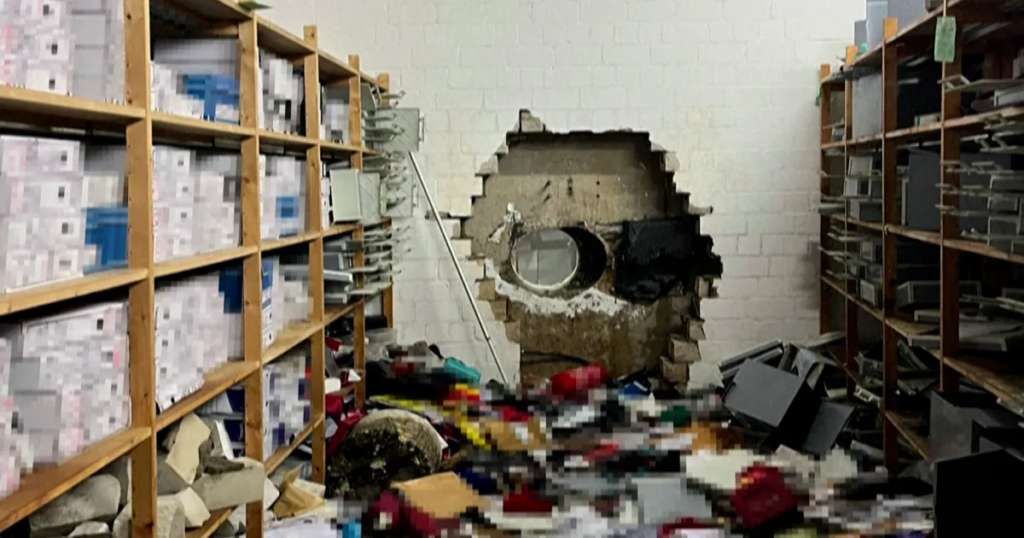
A meticulously planned bank heist in western Germany has left authorities scrambling and customers furious after thieves drilled into a vault and emptied thousands of safe deposit boxes, escaping with valuables estimated at €30 million ($35 million).
The burglary, which took place at a Sparkasse bank branch in Gelsenkirchen, is now being described by investigators as one of the largest retail bank thefts in recent German history. What makes it more striking is when it happened: during the Christmas shutdown, when much of the country, including banks, was effectively offline.
How Did the Thieves Pull Off the Heist?
According to police, the suspects executed the crime with precision and patience.
What investigators know so far
- The thieves drilled through a thick concrete wall to access the vault.
- Once inside, they forced open thousands of customer deposit boxes.
- Items stolen include cash, jewelry, and other valuables.
- The estimated haul: around €30 million ($35 million).
The break-in occurred at a Sparkasse branch in Gelsenkirchen, a city in Germany’s industrial Ruhr region.
Authorities believe the criminals took advantage of Germany’s Christmas shutdown, when banks close from the evening of December 24, and activity drops sharply.
Why the Crime Went Undetected for Days
The timing appears to have been key to the operation’s success.
In Germany, most businesses, especially banks, shut down over Christmas. With minimal foot traffic and staff absent, the suspects had a wide window to operate undetected.
The crime only came to light in the early hours of Monday, December 29, when a fire alarm was triggered inside the building. By the time police arrived, the vault had already been emptied.
Anger Erupts Outside the Bank
By Tuesday morning, frustration boiled over.
Dozens of customers gathered outside the locked bank branch, demanding answers. Many said they had received no official communication from the bank about what had happened or whether their valuables were recoverable.
“I couldn’t sleep last night. We’re getting no information,” one customer told German broadcaster Welt.
Another said the stolen items included cash and jewelry accumulated over decades, stored in what they believed was one of the safest places possible.
Chants of “Let us in!” echoed outside the branch as police cordoned off the area.
So far, Sparkasse has not released a public statement detailing the losses or explaining when customers will be allowed access to their deposit boxes.
What Do Police Know About the Suspects?
Investigators are piecing together the suspects’ movements from eyewitness accounts and surveillance footage.
Key details so far:
- Witnesses reported seeing several men carrying large bags through a nearby parking garage late Saturday night.
- A black Audi RS6 was spotted leaving the area early Monday morning.
- The vehicle’s license plate was traced to a car stolen in Hanover, over 200 kilometers away.
- The suspects reportedly wore masks.
Police are now reviewing CCTV footage from surrounding buildings and highways and have issued a public appeal for witnesses.
Why This Heist Is Raising Alarm Across Germany
This incident has sparked fresh concerns about the security of traditional bank vaults and safe deposit boxes.
While digital fraud dominates headlines, physical bank thefts of this scale are rare, and that’s precisely why this case stands out.
Experts point to three troubling factors:
- Inside knowledge: The precision suggests familiarity with the building’s layout.
- Timing: The criminals clearly understood holiday security gaps.
- Scale: Thousands of boxes breached in a single operation.
Security analysts say the case exposes vulnerabilities in older bank infrastructure, particularly during holiday closures.
What Happens to Customers Now?
The legal and financial fallout could be extensive.
In Germany, banks are not always liable for the contents of safe deposit boxes unless customers can prove negligence or had declared their valuables in advance.
That means:
- Customers may need to document what was stored, often difficult for items kept privately.
- Insurance claims could take months.
- Compensation may vary case by case.
Legal experts say lawsuits are likely if negligence is established.
A Growing Pattern of High-Value Thefts
This isn’t an isolated case. Across Europe, organized criminal groups have increasingly targeted:
- Jewelry stores
- Cash transport vehicles
- Bank vaults during holiday shutdowns
The Gelsenkirchen heist echoes similar crimes in Berlin, Antwerp, and Milan over the past decade, many involving insider intelligence or advanced drilling equipment.
Why This Story Matters Beyond Germany
The case highlights a broader issue: physical security hasn’t kept pace with modern criminal tactics.
While banks invest heavily in cybersecurity, physical vaults often rely on:
- Older infrastructure
- Limited overnight monitoring
- Manual inspection systems
As previously reported, organized crime groups are increasingly blending traditional theft methods with modern planning and surveillance techniques, making them harder to detect and stop.
What Happens Next?
Police say the investigation is ongoing, with forensic teams analyzing:
- Tool marks
- Entry points
- Surveillance footage
- Vehicle movement data
Authorities have urged anyone who saw suspicious activity in the area over Christmas weekend to come forward.
So far, no arrests have been made.
TL;DR
- Thieves drilled into a Sparkasse bank vault in Gelsenkirchen, Germany
- Thousands of deposit boxes were emptied
- Estimated loss: €30 million ($35 million)
- Crime occurred during the Christmas shutdown
- Suspects fled in a stolen Audi RS6
- Customers are furious; investigation ongoing