German investigators say they have finally identified the man they believe carried out one of the most notorious antisemitic attacks in postwar Munich.
More than 56 years after a fire at a Jewish community center and retirement home killed seven people, Munich prosecutors said on August 20, 2026, that the evidence points to a German far-right extremist who was 25 years old when the attack took place.
The suspect died in 2020, meaning prosecutors cannot bring criminal charges against him. Authorities have therefore closed the investigation.
The case had remained unresolved for decades, despite extensive investigations and hundreds of leads. A new witness came forward in 2025, prompting authorities to reopen the case and examine the possibility that the attack was carried out by a neo-Nazi lone actor.
What happened in Munich in 1970?
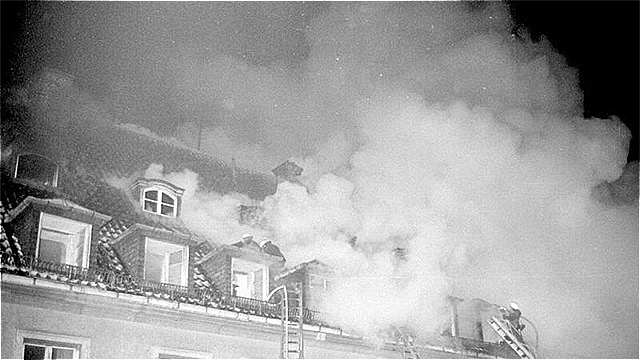
The attack took place on February 13, 1970, at the Jewish community center on Reichenbachstrasse in Munich.
The building also contained a retirement home for members of the Jewish community. At the time of the attack, dozens of people were inside the building.
According to investigators, the attacker used petrol to set fire to the wooden stairwell. The flames spread rapidly through the building, trapping residents and causing a devastating fire.
Seven people were killed.
All seven victims were Jewish and had survived the Holocaust. Their ages ranged from 59 to 71.
Another 15 people were injured, including four who suffered serious injuries.
The attack came only three days after an attempted aircraft hijacking at Munich Airport, adding to the atmosphere of fear surrounding the city at the time.
Who were the victims?
The seven victims were residents of the Jewish retirement home.
Among them were David Jakubowicz, Georg Eljakim Pfau, Leopold Arie Leib Gimpel, Siegfried Offenbacher, Meir Max Blum, Regina Rivka Becher and Rosa Drucker.
Two of the victims, Jakubowicz and Pfau, had survived Nazi concentration and extermination camps.
That detail makes the attack particularly chilling.
Only 25 years after the end of Nazi Germany, people who had survived the Holocaust were killed in an antisemitic attack in the same country where the Nazi regime had carried out the systematic persecution and murder of European Jews.
What did investigators believe happened?
Investigators believe the attacker entered the building and deliberately started the fire in the stairwell.
Historical investigations examined a number of possible motives and suspects.
Authorities considered several different possibilities over the decades, including far-right extremists, left-wing extremists and individuals connected to Palestinian or anti-Israel organizations. None of those investigations initially produced enough evidence to identify a perpetrator.
The case was eventually closed after investigators failed to establish who was responsible.
It was reopened years later as new information emerged, but again failed to produce a prosecutable suspect until the latest investigation.
Who is the newly identified suspect?
German authorities have identified the suspect only by the name Bernd V., in accordance with German privacy conventions.
He was 25 years old at the time of the attack and was known to have far-right and antisemitic views, according to reporting on the investigation.
Investigators now believe he acted alone.
Authorities said the evidence points clearly toward his involvement, although the suspect died in 2020.
Because he is dead, there will be no criminal trial and no judicial determination of guilt.
That distinction is important.
The conclusion represents the investigators’ assessment based on the evidence they uncovered, rather than a conviction by a court.
What new evidence reopened the case?
The investigation was reopened in April 2025 after a witness provided information that authorities considered credible.
According to prosecutors, the witness said the suspect had been in close contact with a relative of hers during the 1970s.
The relative apparently had knowledge relevant to the case but did not disclose it immediately.
After that relative died, the witness came forward with what she knew. Investigators then reassessed the old evidence and examined the suspect’s background and activities.
The new information gave investigators a fresh lead more than five decades after the attack.
That eventually led them toward the deceased far-right suspect.
What did the suspect allegedly say before the fire?
Investigators say witnesses heard the man make antisemitic comments shortly before the attack.
According to prosecutors, he was heard saying that “the Jews had everything” and that he wanted to “set them on fire.”
About 15 minutes later, the Jewish community building was engulfed in flames.
The statements are significant because they potentially establish a direct connection between the suspect’s known antisemitic views and the motive for the attack.
However, because the suspect cannot be questioned and there is no trial, investigators must rely on historical witness testimony and other evidence to reconstruct what happened.
Why did the investigation take so long?
The case was extraordinarily difficult to solve.
Investigators initially pursued multiple theories and examined a wide range of possible suspects and political groups.
A special police investigation looked at known arsonists, far-right extremists, left-wing militants and people associated with Palestinian political organizations.
Despite the scale of the investigation, no conclusive perpetrator was identified.
The case was reopened in 2013 but was ultimately closed again in 2017 after prosecutors failed to establish sufficient evidence.
That meant the attack remained officially unresolved for decades.
The new witness testimony in 2025 changed the picture.
Why was a neo-Nazi motive initially difficult to establish?
Germany in 1970 was only 25 years removed from the end of World War II.
The country was experiencing political violence from both the far left and far right, while international conflicts involving Israel and Palestinian militant groups were also influencing political activity.
That created several possible lines of investigation.
The Munich attack was initially examined in the context of multiple political and extremist milieus.
The absence of a group claiming responsibility made the case even more difficult.
According to the Munich historical record, no terrorist or political organization publicly claimed responsibility for the attack.
Investigators now believe the attack was instead carried out by an individual motivated by antisemitism.
Why is the case significant in German history?
The attack is considered one of the most serious antisemitic attacks in postwar Germany.
Its historical significance extends beyond the seven deaths.
The victims were Holocaust survivors who had lived through Nazi persecution only to be killed decades later in an antisemitic attack.
The incident also challenged the assumption that antisemitic violence had disappeared with the fall of Nazi Germany.
Modern Germany has spent decades confronting the legacy of the Holocaust and the persistence of antisemitism.
The Munich attack is part of that history.
Why can’t prosecutors charge the suspect now?
German criminal law does not allow authorities to prosecute a person who has died.
Investigators can establish what they believe happened and identify a deceased suspect, but there can be no trial, conviction or sentence.
That is why Munich prosecutors have closed the case despite saying that the evidence points clearly toward the suspect.
The investigation therefore ends with an official investigative conclusion rather than a court verdict.
This distinction should be maintained when reporting the case.
Does this mean the case is completely solved?
Investigators believe they have identified the perpetrator, but some questions may remain unanswered.
Authorities have said there are no indications that other people were involved and have described the suspect as a lone actor.
But because the suspect is dead, investigators cannot question him about his motive, preparation or possible contacts.
There is also no criminal trial through which competing interpretations of the evidence could be tested.
The case is therefore best described as an investigation that has identified a deceased suspect rather than a case resolved through a conviction.
What does the discovery mean for the victims’ families?
The identification cannot bring the victims back or result in a criminal punishment.
But it does answer a question that has remained unresolved for more than half a century: who investigators believe was responsible.
For families and the wider Jewish community in Munich, the conclusion also provides an official acknowledgment that the attack was rooted in antisemitism.
That historical recognition matters because unresolved extremist attacks can leave victims’ families without a definitive account of what happened.
Why does the case still matter today?
The investigation comes at a time when antisemitism remains a major concern in Germany and across Europe.
The Munich attack demonstrates that antisemitic violence was not confined to the Nazi era.
It also shows the importance of preserving historical evidence and revisiting unsolved cases when credible new information emerges.
Modern investigative techniques cannot always solve decades-old crimes, but new testimony can sometimes provide the missing connection.
In this case, a witness who came forward more than 50 years after the attack helped authorities revisit evidence surrounding a suspect who had died six years earlier.
The bigger picture
The 1970 Munich arson attack was one of the darkest episodes in Germany’s postwar Jewish history.
Seven Holocaust survivors died after an attacker deliberately set fire to their community building.
For decades, the identity of the perpetrator remained unknown.
Now, Munich prosecutors say the evidence points to a far-right extremist who was 25 at the time and died in 2020.
The investigation cannot produce a criminal conviction because the suspect is no longer alive.
But after 56 years, German authorities have reached a conclusion about who they believe carried out the attack.
The case is a reminder that historical crimes can remain unresolved long after the physical evidence has disappeared and witnesses have died.
It is also a reminder of the human cost of antisemitism — not only during the Holocaust, but in the decades that followed.