
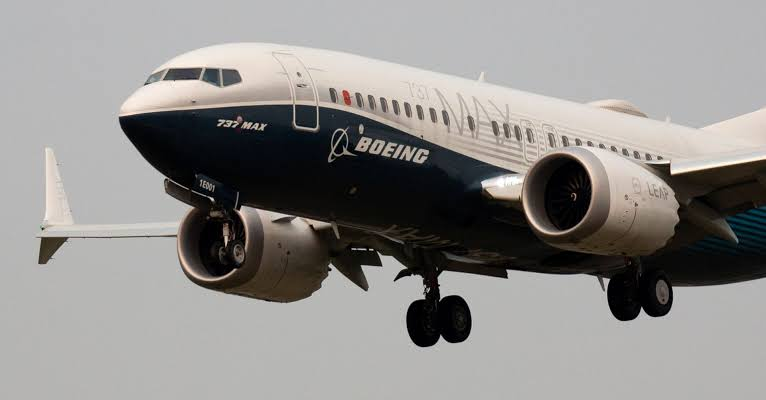
The Federal Aviation Administration (FAA) has proposed mandatory repairs for hundreds of Boeing 737 MAX aircraft after discovering that some passenger seats were installed incorrectly, a flaw the agency says could increase the risk of injuries during an emergency landing.
The proposed airworthiness directive, announced Monday, affects 453 U.S.-registered Boeing 737 MAX aircraft. While the FAA’s order applies directly to U.S. operators, international airlines that fly the aircraft often adopt FAA safety directives or comply with equivalent requirements issued by their own aviation regulators.
TL;DR
- The FAA has proposed mandatory repairs for 453 U.S.-registered Boeing 737 MAX aircraft.
- The issue involves passenger seats that were incorrectly installed in seat tracks.
- Improperly secured seats could increase the risk of passenger injuries during an emergency landing.
- Up to 69 passenger seat assemblies per aircraft may require inspection and repair.
- Boeing had not commented on the proposal at the time of reporting.
What Is the FAA’s New Boeing 737 MAX Safety Directive?
The FAA issued a proposed Airworthiness Directive (AD) after receiving reports that certain passenger seat assemblies on Boeing 737 MAX aircraft were not properly installed.
According to the agency, some seat assemblies were incorrectly attached to the aircraft’s seat tracks, potentially preventing them from performing as designed during high-impact events such as an emergency landing or severe deceleration.
The FAA said the repairs are necessary to ensure passenger seats remain securely fastened and continue to meet federal safety standards.
Why Are Incorrectly Installed Seats a Safety Concern?
Passenger seats are designed to withstand significant forces during emergencies, helping protect occupants from serious injuries.
If a seat is not correctly secured to its track:
- It may shift or detach during a hard landing.
- Occupants could face a higher risk of injury.
- Emergency evacuation could become more difficult if seats become displaced.
- The aircraft may no longer meet required crashworthiness standards.
While the FAA did not cite any injuries or accidents linked to the issue, it determined that corrective action is necessary to prevent potential safety risks.
How Many Aircraft Are Affected?
The proposed directive covers 453 Boeing 737 MAX aircraft registered in the United States.
According to the FAA:
- Each aircraft could have up to 69 track-mounted passenger seat assemblies requiring inspection or repair.
- Correcting each affected seat assembly is expected to take approximately one work-hour.
The agency has not yet provided an overall compliance deadline for airlines.
Will International Airlines Be Affected?
The FAA’s proposal applies specifically to U.S.-registered aircraft.
However, many aviation authorities around the world—including the European Union Aviation Safety Agency (EASA) and other national regulators—often review FAA directives and may issue similar requirements if they determine the same safety concern exists within their jurisdictions.
Airlines operating Boeing 737 MAX aircraft outside the United States could therefore face comparable inspections if their regulators adopt equivalent measures.
What Is an Airworthiness Directive?
An Airworthiness Directive (AD) is a legally enforceable safety order issued by the FAA to correct unsafe conditions found in aircraft, engines, propellers, or other aviation components.
Airworthiness directives may require:
- Aircraft inspections
- Repairs
- Component replacements
- Operational limitations
- Additional maintenance procedures
Once finalized, operators must comply with the directive within the specified timeframe to keep affected aircraft legally airworthy.
Has Boeing Responded?
At the time the FAA announced the proposed directive, Boeing had not publicly commented on the issue.
It also remains unclear:
- How the installation error occurred.
- Whether the issue originated during manufacturing, cabin installation, or maintenance.
- Whether airlines have already begun voluntary inspections.
Additional details may emerge during the FAA’s rulemaking process or through statements from Boeing and affected carriers.
Does This Mean the Boeing 737 MAX Is Unsafe to Fly?
The FAA has not grounded the Boeing 737 MAX or advised passengers to avoid flying on the aircraft.
Instead, the agency is addressing a specific maintenance and installation issue involving passenger seats.
Airworthiness directives are a routine part of aviation safety oversight and are intended to identify and correct potential problems before they contribute to accidents or injuries.
While the proposed repairs highlight the importance of proper aircraft maintenance, the FAA’s action reflects the aviation industry’s layered approach to identifying and mitigating safety risks.
What Happens Next?
Before the directive becomes final, the FAA typically allows a public comment period during which airlines, manufacturers, and other stakeholders can provide feedback.
If adopted, affected operators will be required to inspect and repair incorrectly installed passenger seat assemblies within the compliance period established by the FAA.
Airlines will also likely coordinate with Boeing to obtain any necessary technical guidance or replacement parts.
The Bigger Picture
The proposed directive underscores how even seemingly minor installation issues can carry significant safety implications in commercial aviation.
Passenger seats are certified to meet strict crashworthiness standards, and ensuring they are correctly secured is a critical part of protecting passengers during rare but high-impact events such as emergency landings.
Although the issue does not suggest an immediate operational crisis for the Boeing 737 MAX fleet, the FAA’s action demonstrates the aviation regulator’s emphasis on proactively addressing potential hazards before they lead to incidents.