
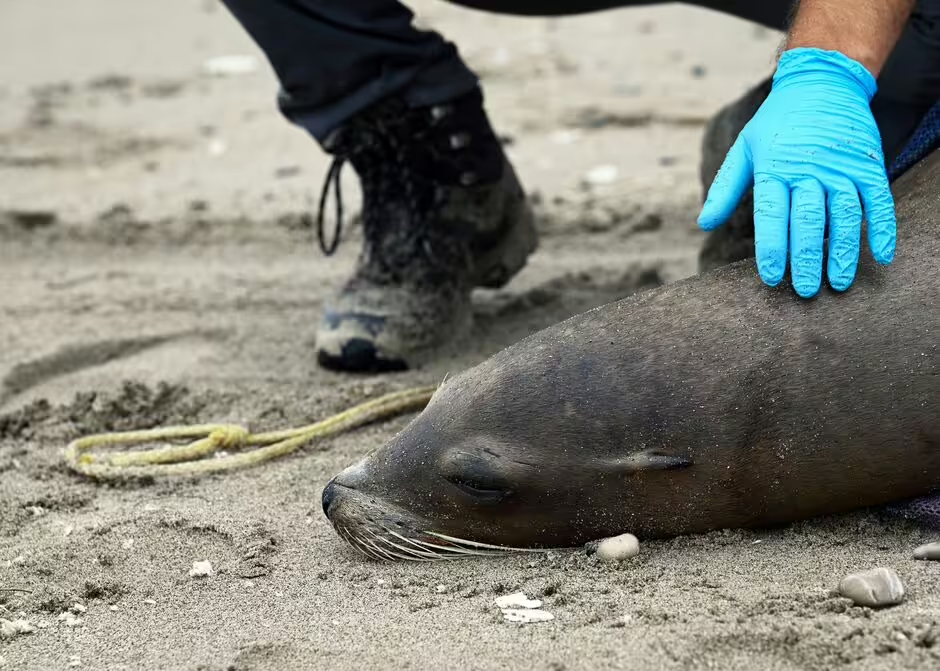
A significant number of sea lions have been found stranded along a vast stretch of California’s coastline, showing symptoms indicative of poisoning by a harmful algal bloom.
Neurotoxin culprit: Domoic acid
Experts have identified domoic acid, a neurotoxin, as the cause of the sea lions’ distress. This toxin primarily impacts the brain and heart, leading to severe health issues.
The Marine Mammal Center in Sausalito has been actively responding to the crisis. Since July 29, the center has treated 90 sea lions in San Luis Obispo County, the majority of which are females.
Simultaneously, the Channel Islands Marine and Wildlife Institute has been inundated with nearly 100 daily reports of sick sea lions along the coasts of Santa Barbara and Ventura counties since July 26.
Public awareness and challenges
“The good news is that people realize something is wrong and know who to call,” stated Ruth Dover, Managing Director of the Channel Islands Marine and Wildlife Institute. “The bad news is that many of these animals are really suffering. Unfortunately, many animals are dying on the beach before we have a chance to rescue them. This indicates a high level of exposure to domoic acid.”
To date, the institute has rescued 45 sea lions exhibiting symptoms of domoic acid poisoning.
Common occurrence of domoic acid outbreaks
According to NOAA Fisheries, the California coast frequently experiences outbreaks of domoic acid poisoning. Teams from NOAA Fisheries rescue affected sea lions and admit them to rehabilitation facilities where they receive treatment. The treatments include fluids to flush the toxin from their bodies and anti-seizure medications if necessary.
The role of upwelling in agal bloom severity
Experts explain that the severity of algal blooms is often influenced by the strength of oceanic upwelling, which supplies essential nutrients to the algae. NOAA Fisheries notes that strong upwelling is a common phenomenon from spring to summer, driven by winds that draw cold water up from the deep ocean along the coast.
The ongoing crisis highlights both the challenges and the importance of public awareness and timely response in addressing the impacts of harmful algal blooms on marine life.