
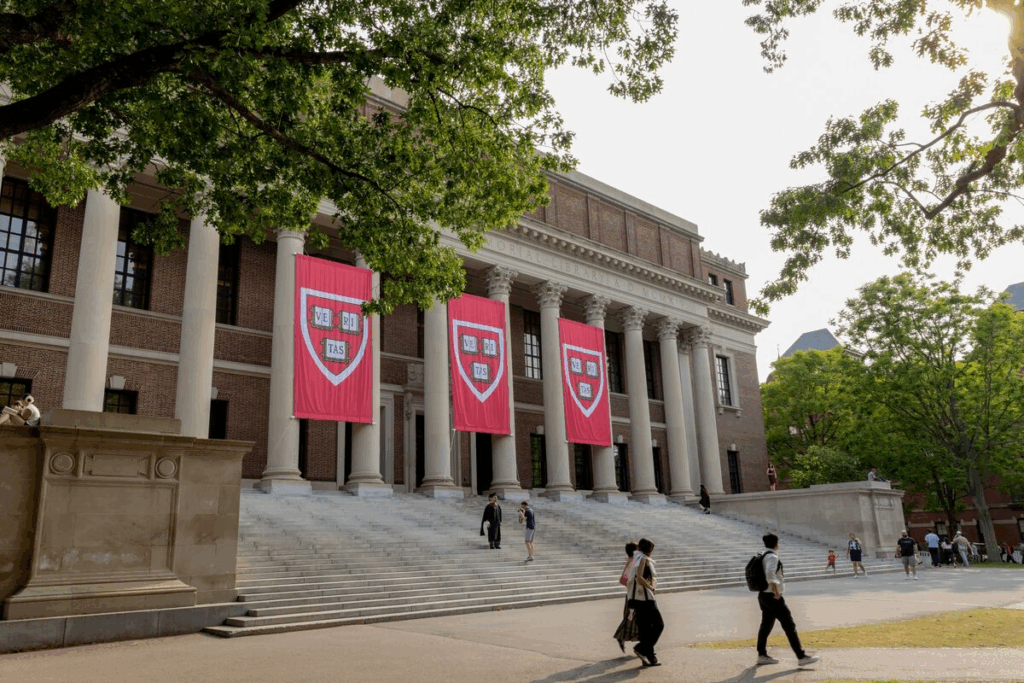
Harvard University, the world’s richest and oldest university, has begun layoffs at its School of Engineering and Applied Sciences, citing “enormous financial pressure” stemming from recent federal funding cuts and new taxes imposed under the Trump administration.
The decision marks one of the most visible signs yet of the escalating tensions between elite U.S. universities and the federal government over funding, free speech, and political influence.
Why Harvard is cutting staff now
David Parkes, dean of the John A. Paulson School of Engineering and Applied Sciences (SEAS), announced the layoffs on Thursday, describing them as “painful but unavoidable.”
“We cannot bridge the budgetary gap without reducing our workforce,” Parkes wrote in a statement. “This shift is placing enormous financial pressure on every school across the university and our peer institutions around the country.”
According to The Boston Globe, which first reported the story, around 40 staff members will be affected, though the university declined to confirm the exact number.
Parkes attributed the decision to multiple policy changes in Washington, including:
- A forthcoming increase in the endowment tax.
- A reduction in federal research funding recovery rates.
- Shifts in how research grants are allocated.
He said these changes reflect a “fundamental shift in the relationship between research universities and the federal government.”
Harvard’s $53 billion endowment under strain
Despite its vast $53 billion endowment, Harvard relies heavily on federal research funding, particularly for its engineering and science programs. According to its most recent financial report, SEAS receives 37% of its operating revenue from sponsored research—most of it federal.
The White House this year froze more than $2 billion in federal research funds to Harvard amid ongoing disputes with the Trump administration. Though some funds—around $46 million—have since been reinstated following a court ruling in Harvard’s favor, the broader financial impact remains severe.
The political backdrop: Trump vs. Harvard
The funding freeze followed months of escalating tension between President Donald Trump and Harvard’s leadership. The president accused the university of fostering antisemitism after Hamas’ October 2023 attack on Israel, and later expanded his criticism to include alleged political bias, ties to China, and diversity initiatives.
In late September, Trump said a settlement deal between the university and the Department of Education was “close,” claiming Harvard might pay about $500 million and open trade schools as part of a broader agreement.
“All you have to do is paper it,” Trump said to Education Secretary Linda McMahon during an Oval Office signing.
No official deal has been announced since.
Legal victory offers brief relief—but not resolution
Harvard notched a major legal win last month when a federal judge ruled that the Trump administration violated the university’s free speech rights by cutting off funding. The court ordered some grants to be reinstated.
However, the administration has appealed the ruling, keeping the dispute alive. The uncertainty has left university departments—especially research-intensive schools like SEAS—scrambling to adjust budgets and staffing.
“Even with reinstated grants, we’re facing a structural shift,” a Harvard administrator told Bloomberg anonymously. “The financial model universities have relied on for decades is being tested.”
What’s next for Harvard and higher education?
The layoffs at Harvard could be an early sign of broader turbulence for U.S. higher education. Several universities that depend on federal research support are bracing for similar budget cuts and possible layoffs if Washington tightens oversight or funding streams.
Experts warn that reduced federal backing could slow innovation, STEM research, and academic partnerships across the country—areas traditionally driven by elite universities like Harvard, MIT, and Stanford.
“If top universities scale back research, it could ripple through the entire ecosystem—affecting startups, technology transfer, and even national competitiveness,” said Michael Crow, president of Arizona State University, in a recent interview with The Chronicle of Higher Education.
Meanwhile, the Trump administration’s tougher stance on endowment taxation—framed as a push to make wealthy universities “pay their fair share”—could force institutions to rethink how they use large investment returns to fund teaching and research.
A shifting landscape for academia
For Harvard, the staff cuts may be just the beginning. Internal discussions reportedly include restructuring several administrative offices and consolidating research initiatives to manage long-term costs.
The episode also underscores a broader redefinition of the relationship between elite universities and federal power—a shift from collaboration toward confrontation.
Whether Harvard and Washington reach a settlement or continue their legal battle, the fallout is likely to reshape how America’s top research universities navigate politics, funding, and accountability in the years ahead.
TL;DR
- Harvard University is laying off about 40 staff from its engineering school.
- The move follows new federal taxes, funding cuts, and strained relations with the Trump administration.
- The school says it faces “enormous financial pressure” as federal research funding is reduced.
- Harvard recently won a legal case restoring $46 million in grants, but larger funding disputes remain unresolved.
- The case may signal a broader financial reckoning for elite U.S. universities.