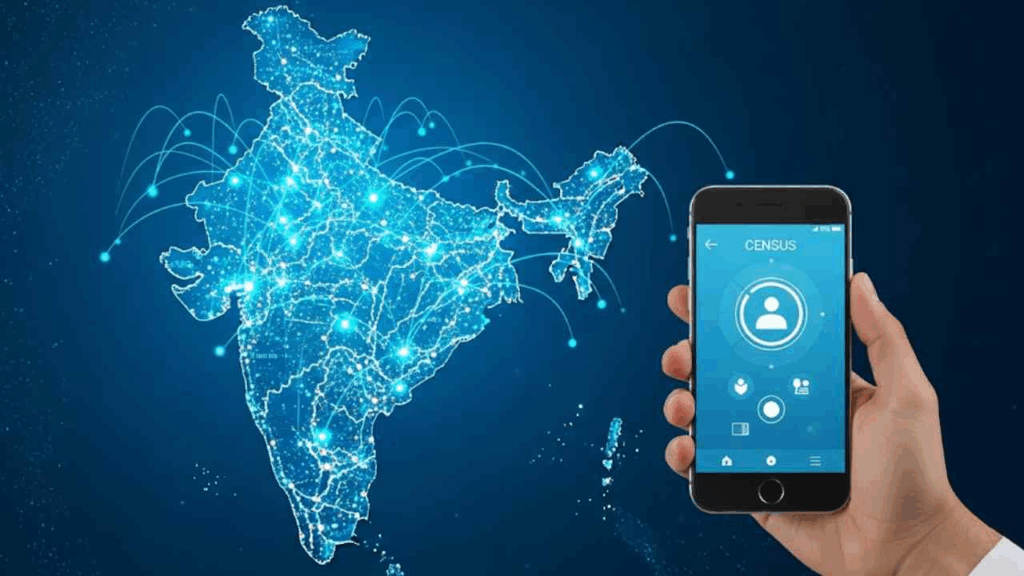
India’s next national headcount is officially on the calendar—and it’s unlike any census the country has ever attempted. Union Minister Ashwini Vaishnaw has confirmed that Census 2027 will be the nation’s first fully digital census, backed by a major technology overhaul, caste enumeration, and one of the largest field deployments in Indian administrative history.
The Census is the world’s biggest data-collection exercise, and this round will shape policy decisions, welfare schemes, resource allocation, and political representation for years to come. Here’s a clear look at what’s changing, why it matters, and how the process will unfold.
What Makes Census 2027 Different?
The shift to a digital-first model is the standout feature. For the first time, every household entry and demographic detail will be recorded electronically.
Key upgrades include:
- Mobile app-based data collection (Android & iOS)
- A centralised Census Management & Monitoring System (CMMS) for real-time oversight
- Self-enumeration — a first in India’s census history
- Electronic caste data collection during the Population Enumeration phase
- Web-mapping tools like the Houselisting Block (HLB) Creator for improved accuracy
- Security systems built specifically for this large-scale digital operation
If this works the way the government intends, it could dramatically cut errors, delays, and inconsistencies that earlier censuses struggled with.
How Will Census 2027 Be Conducted?
The process will unfold in two major phases—both digitally coordinated, but with boots on the ground.
Phase 1: House Listing & Housing Census (April–September 2026)
Enumerators will record details about every structure and household, from the type of dwelling to basic amenities.
Phase 2: Population Enumeration (February 2027)
This is where demographic data—including family size, age, education, occupation, and now caste—is collected.
Special Areas
Snow-bound and non-synchronous areas such as:
- UT of Ladakh
- Parts of Jammu & Kashmir
- Himachal Pradesh
- Uttarakhand
…will complete their enumeration earlier, in September 2026.
The Human Scale
Despite the digital tools, this remains a massive human effort:
- About 30 lakh field functionaries
- Mostly, government school teachers work in addition to their day jobs
- Additional supervisory staff at the district and state levels
- All officials will receive designated honoraria
Why a Digital Census Matters
Governments rely on census data to decide everything from funding for schools to the number of seats each state gets in Parliament. Moving this process online is more than a tech upgrade—it’s a structural shift.
Better Data Quality
- Real-time monitoring reduces duplication or gaps.
- Digital forms limit manual errors.
- Geo-tagging via HLB tools improves mapping accuracy.
Faster Delivery
Traditionally, census data takes years to fully publish. With digital workflows, the lag could shrink dramatically.
Census-as-a-Service (CaaS)
A new concept for India, CaaS means ministries can access:
- Clean
- Machine-readable
- Actionable
datasets at the click of a button.
What’s the Plan for Caste Enumeration?
The Cabinet Committee on Political Affairs approved caste enumeration for Census 2027, marking a major policy turning point.
What this means:
- Caste data will be collected electronically during the Population Enumeration phase.
- This allows granular insights into social stratification.
- It may influence welfare schemes, reservation policies, and socio-economic planning.
How Will Security and Privacy Be Protected?
Whenever a database of this scale goes digital, privacy concerns follow. Vaishnaw emphasized that the census design incorporates dedicated data-protection measures, though details are not yet public.
Areas to watch:
- Encryption standards
- Authentication for self-enumeration
- Access controls for ministries
- Storage and disposal policies for raw data
These are critical questions for future reporting.
What Role Can Citizens Play?
For the first time, India will allow self-enumeration, likely through:
- A secure app or web portal
- Multifactor authentication (expected)
- Integration with identity documents (to be confirmed)
This option may be especially useful for:
- Urban residents
- Tech-literate households
- Gated communities and large housing societies
Field enumerators will still verify information as needed.
Challenges Ahead
Digital infrastructure may be robust in large metros, but rural and remote areas still face obstacles:
- Patchy internet
- Limited smartphone access
- Varying levels of digital literacy
The government has not yet explained how offline backups, syncing delays, or device failures will be addressed.
What Comes Next?
The government has approved ₹11,718 crore for the census, covering digital systems, field logistics, and caste enumeration costs. As India moves toward a fully digital count, expect more public communication campaigns and training programs for the three million-plus workers involved.
This census won’t just record India’s population—it will reflect how India’s governance adapts to a digital future.
TL;DR
- Census 2027 will be India’s first fully digital census.
- Conducted in two phases: housing (2026) and population (2027).
- Includes caste enumeration, approved by the Cabinet Committee on Political Affairs.
- Involves 30 lakh field workers, mobile apps, real-time monitoring tools, and a self-enumeration option.
- Aims for faster, cleaner, and more accurate data delivery, but digital infrastructure gaps remain a concern.