
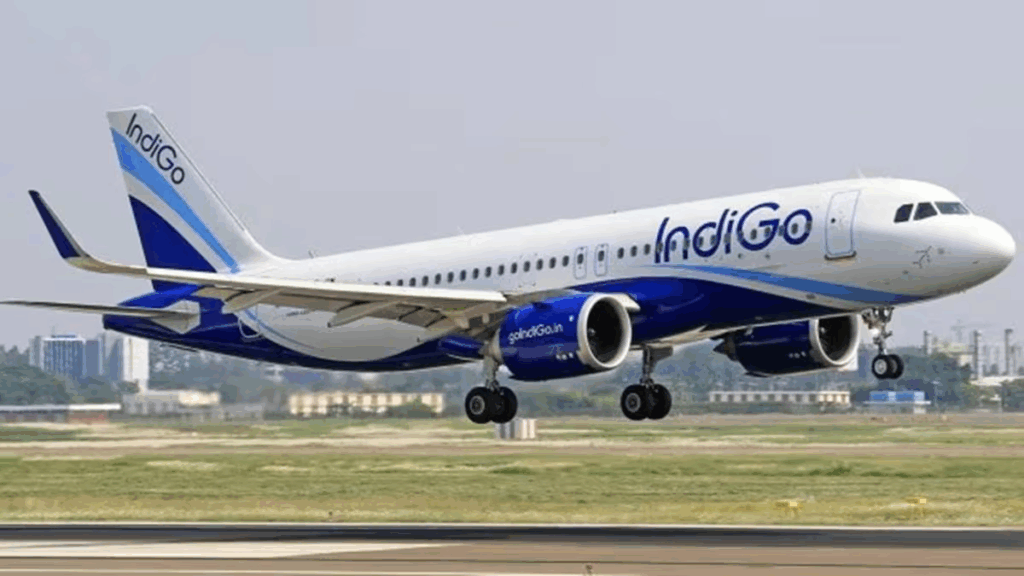
India’s civil aviation sector is facing one of its most disruptive crises in recent memory. With IndiGo, the country’s largest airline by market share—canceling more than 1,000 flights in just four days, domestic airfares surged to unprecedented levels.
A single Kolkata–Mumbai ticket touched ₹90,000, while some Mumbai–Bhubaneswar seats sold for ₹84,000-plus, prices typically associated with last-minute international travel—not routine domestic routes.
To prevent the situation from escalating further, the Ministry of Civil Aviation (MoCA) has invoked emergency powers and imposed temporary caps on airfares, warning airlines of strict enforcement and immediate corrective action for any violation.
The move aims to stabilize the system, restore passenger confidence, and prevent opportunistic fare spikes as India’s busiest carrier grapples with a deepening operational breakdown.
What Triggered the IndiGo Crisis?
A massive crew shortage, worsened by policy changes
IndiGo has been operating under intense strain due to:
- A severe shortage of cockpit and cabin crew
- The rollout of new Flight Duty Time Limitation (FDTL) rules mandating additional weekly rest for pilots
- Scheduling disruptions that cascaded across major hubs
As the new norms kicked in, hundreds of crew members were rendered unavailable simultaneously, creating a bottleneck that spiraled into mass cancellations.
The government’s intervention
The center eventually withdrew the newly introduced weekly-rest rule to stabilize operations—an extremely rare step indicating the gravity of the crisis.
Yet the cancellations continued long enough to create a supply-demand shock, sending fares soaring across all carriers, not just IndiGo.
How High Did Airfares Go?
For several routes, airfares surged to levels never seen in India’s domestic aviation market.
Examples of one-way fares this week:
- ₹90,000 — Kolkata → Mumbai (SpiceJet)
- ₹84,485 — Mumbai → Bhubaneswar (Air India)
- ₹40,000–₹60,000+ — Several Delhi, Bengaluru, and Hyderabad sectors
Prices typically seen on long-haul international flights were suddenly showing up on searches for routine domestic travel.
Why did fares spike so quickly
- IndiGo accounts for nearly two-thirds of all domestic flights.
- With over 1,000 flights canceled in four days, capacity collapsed across key metro airports.
- Other airlines filled the gap—but with limited fleet size, their inventory sold out rapidly, triggering algorithmic fare escalation.
What Do the New Emergency Fare Caps Mandate?
MoCA has issued a formal directive requiring strict compliance with newly prescribed fare ceilings across all carriers.
Key elements of the directive:
- Temporary fare caps to prevent surge pricing
- Zero rescheduling fees for passengers on affected flights
- Mandatory refunds for all canceled or disrupted flights
- Refund deadline: 8 PM on Sunday, December 7, 2025
- Immediate regulatory action for:
- Overcharging
- Delayed refunds
- Non-compliance with the directive
The government emphasized that the caps will remain in force until IndiGo’s operations stabilize and domestic connectivity returns to normal.
How Passengers Are Being Affected
Stranded travelers, missed events, and skyrocketing costs
Airports in Delhi, Bengaluru, and Hyderabad—three of India’s busiest hubs—saw:
- Hundreds of arrivals and departures abruptly canceled
- Passengers stranded overnight
- Corporate travelers and families paying international-level prices to reach domestic destinations
- Long queues at counters for refunds and rebooking
IndiGo’s crisis has exposed how dependent India’s aviation ecosystem has become on one airline.
Ripple effects beyond IndiGo
Other carriers saw:
- Overbooked flights
- Higher loads on connecting routes
- Difficulty in scaling capacity quickly due to crew and fleet constraints
The duopoly of IndiGo and Air India, which now control nearly 86% of the domestic market, has made pricing extremely sensitive to disruptions—a trend experts have warned about for years.
Why the Government Acted So Quickly
1. A consumer protection crisis
With fares hitting ₹1 lakh, the government risked facing allegations of leaving passengers unprotected during an industry meltdown.
2. Potential impact on essential travel
December is already a high-demand season, with:
- Students returning home
- Business travel surging
- Holiday traffic peaking
Uncontrolled fares could create inequity and chaos for essential journeys.
3. Broader economic implications
Air travel disruptions can:
- Delay business deals
- Disrupt supply-chain personnel movement
- Impact tourism-heavy states such as Goa, Kerala, and Rajasthan
A prolonged fare spike would ripple across industries.
What Happens Next?
Short-term outlook
- IndiGo is expected to gradually restore operations as crew availability stabilizes.
- Fare caps will stay in place until cancellations drop and seat supply normalizes.
- Airline financials may take a hit, but regulators are prioritizing consumer fairness.
Medium-term questions for the industry
This crisis raises deeper concerns:
- Are Indian airlines operating with razor-thin staffing margins?
- Should FDTL norms be phased in more gradually to avoid operational shock?
- Is India too dependent on one dominant carrier?
- Should price caps be built into emergency aviation protocols?
A regulatory review seems likely, especially around pilot fatigue rules and industry-wide scheduling resilience.
Potential long-term reforms
Experts suggest:
- Strengthening crew pipeline development
- Increasing fleet diversification
- Revising airfare algorithm transparency rules
- Creating a crisis-management framework similar to EU261 for passenger rights
TL;DR: India’s Airfare Crisis Explained
- IndiGo canceled 1,000+ flights in 4 days due to crew shortages and FDTL changes.
- Domestic airfare skyrocketed—some routes hit ₹90,000–₹1,00,000.
- The government imposed emergency fare caps and refund mandates.
- Refunds must be processed by Dec 7, 8 PM.
- Crisis exposes structural issues in India’s aviation sector, including overreliance on IndiGo.