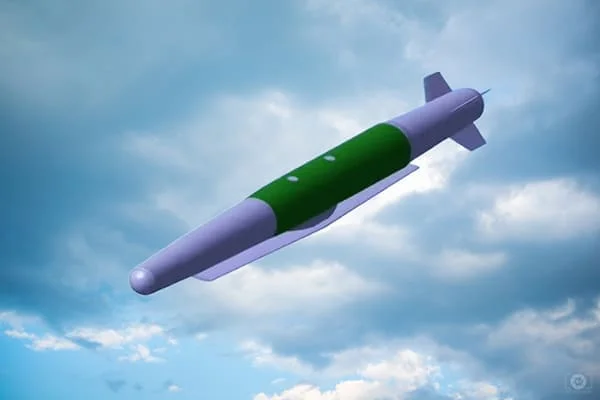
India has quietly crossed an important threshold in modern aerial warfare.
The successful maiden flight trial of the Tactical Advanced Range Augmentation system, better known as TARA, marks the first time India has demonstrated an indigenous glide kit capable of converting conventional unguided bombs into precision-guided standoff weapons.
The test, conducted jointly by the Defence Research and Development Organisation and the Indian Air Force off the Odisha coast, is more than a routine weapons trial. It signals a deeper shift in India’s military thinking: achieving longer-range precision strikes without relying exclusively on expensive missile systems.
That matters because modern warfare increasingly rewards reach, survivability, and affordability as much as raw firepower.
What Is TARA?
TARA — short for Tactical Advanced Range Augmentation — is essentially a modular glide weapon kit.
In simple terms, it attaches to existing unguided airdropped bombs and transforms them into guided glide weapons capable of travelling farther and hitting targets more accurately.
Once released from an aircraft, the weapon uses the following:
- Aerodynamic lift
- Guidance systems
- Flight control mechanisms
to glide toward its target instead of falling directly downward like a traditional gravity bomb.
The operational advantage is straightforward:
- Aircraft can strike targets from safer distances
- Pilots spend less time inside hostile air defence zones
- Older bomb inventories become more effective without replacing them entirely
This approach has become increasingly popular globally because it offers a cheaper route to precision warfare.
Why Glide Kits Matter in Modern Combat
Traditional unguided bombs force combat aircraft to fly relatively close to enemy positions.
That creates major risks in contested airspace defended by:
- Surface-to-air missile systems
- Radar-guided anti-aircraft weapons
- Electronic warfare networks
A glide kit changes that equation.
By extending the bomb’s range after release, the launching aircraft can remain farther away while still conducting precision strikes.
That stand-off capability is especially important in regions with dense air defence coverage, including the kind of operational environments India could face along its western and northern borders.
Why TARA Is Significant for India
The concept of glide bombs is not new internationally.
The United States, Russia, China, and several NATO air forces already operate similar systems that convert legacy bombs into precision-guided munitions.
But TARA is important because it represents India’s first indigenous system in this category.
According to officials, the weapon was developed by Research Centre Imarat along with multiple DRDO labs and Indian industry partners.
That matters strategically for several reasons.
India Wants to Reduce Dependence on Imported Precision Weapons
Precision-guided weapons are expensive.
Cruise missiles and advanced stand-off munitions often cost hundreds of thousands, or even millions of dollars per unit.
Glide kits offer a cheaper alternative for missions that do not require highly advanced missile systems.
Instead of building entirely new weapons from scratch, militaries can:
- Upgrade existing bomb stockpiles
- Extend operational utility
- Lower procurement costs
- Increase strike inventory rapidly during conflict
For India, indigenous development also reduces dependence on foreign suppliers during wartime or geopolitical crises.
Cost Is Becoming a Battlefield Variable
One of the defining lessons from recent conflicts, especially in Ukraine and the Middle East, is that cost efficiency now matters almost as much as technological sophistication.
Modern militaries are learning that:
- Cheap precision weapons can overwhelm expensive defences
- Large stockpiles matter in prolonged wars
- Affordable stand-off strike systems improve sustainability
That broader trend explains why glide bomb programs have accelerated globally.
India’s entry into this category suggests its defence planners are adapting to the economics of modern warfare rather than focusing only on premium high-end missile platforms.
How TARA Fits Into India’s Broader Defence Modernisation Push
The TARA test comes during a period of rapid military modernization across India’s armed forces.
In recent years, India has accelerated indigenous development programs involving:
- Hypersonic technologies
- Air defence systems
- Naval strike missiles
- Drones and loitering munitions
- Electronic warfare systems
The government’s “Atmanirbhar Bharat” defence manufacturing push has placed heavy emphasis on building domestic weapons ecosystems instead of relying primarily on imports.
The Indian Air Force Needs More Affordable Precision Options
The Indian Air Force already operates advanced stand-off weapons, including the following:
- BrahMos air-launched cruise missiles
- Spice precision-guided bomb kits
- Hammer precision weapons acquired from France
But those systems are relatively expensive and limited in number.
TARA potentially fills an operational gap between the following:
- Conventional unguided bombs
- Premium long-range precision missiles
That middle layer is increasingly important in high-intensity warfare where ammunition consumption rates can become enormous.
How TARA Compares With Existing Glide Bomb Systems
Globally, TARA falls into a category of weapons often compared to systems such as:
- The US JDAM-ER (Joint Direct Attack Munition-Extended Range)
- Russia’s UMPK glide bomb kits
- China’s LS-series precision glide bombs
These systems share a common philosophy:
Convert cheap “dumb bombs” into relatively inexpensive precision weapons.
However, TARA’s exact specifications, including:
- Range
- Guidance accuracy
- Payload compatibility
- Navigation systems
have not yet been fully disclosed publicly.
That is typical during early testing phases.
Potential Future Upgrades
India could eventually expand the TARA family into multiple variants featuring the following:
- GPS and satellite navigation
- Anti-jamming capabilities
- Different warhead classes
- Extended glide ranges
- Network-enabled targeting
Future iterations could also integrate with India’s growing drone ecosystem, creating new low-cost strike combinations.
Why This Matters Strategically in South Asia
India’s security environment increasingly involves heavily defended operational theatres.
Both China and Pakistan continue investing in the following:
- Integrated air defence systems
- Radar networks
- Missile interception capabilities
That raises the value of weapons that allow aircraft to launch attacks from safer distances.
Stand-off precision weapons reduce pilot exposure while preserving operational flexibility.
They also complicate enemy defence planning because glide bombs can be deployed in larger numbers than expensive cruise missiles.
A Shift Toward Volume Precision Warfare
Modern conflicts suggest future wars may require the following:
- Large quantities of affordable guided munitions
- Fast replenishment cycles
- Scalable strike capability
TARA fits squarely within that evolving doctrine.
Instead of depending solely on elite, high-cost missile inventories, India appears to be building a layered strike architecture that combines:
- Premium long-range missiles
- Mid-tier glide bombs
- Loitering munitions
- Drone-enabled strike systems
That layered approach improves operational endurance during prolonged conflicts.
What Comes Next for TARA?
The maiden trial is only the beginning.
The system will likely undergo the following:
- Additional flight testing
- Accuracy validation
- Environmental qualification
- Integration trials with multiple aircraft platforms
Eventually, the Indian Air Force could deploy TARA-equipped bombs across frontline fighter fleets.
Potential platforms may include:
- Sukhoi Su-30MKI
- Dassault Rafale
- HAL Tejas
If successfully operationalized at scale, TARA could become one of the most cost-effective additions to India’s precision strike arsenal.
And in an era where modern warfare increasingly rewards affordable precision over sheer expenditure, that may prove just as important as developing the next headline-grabbing missile system.