
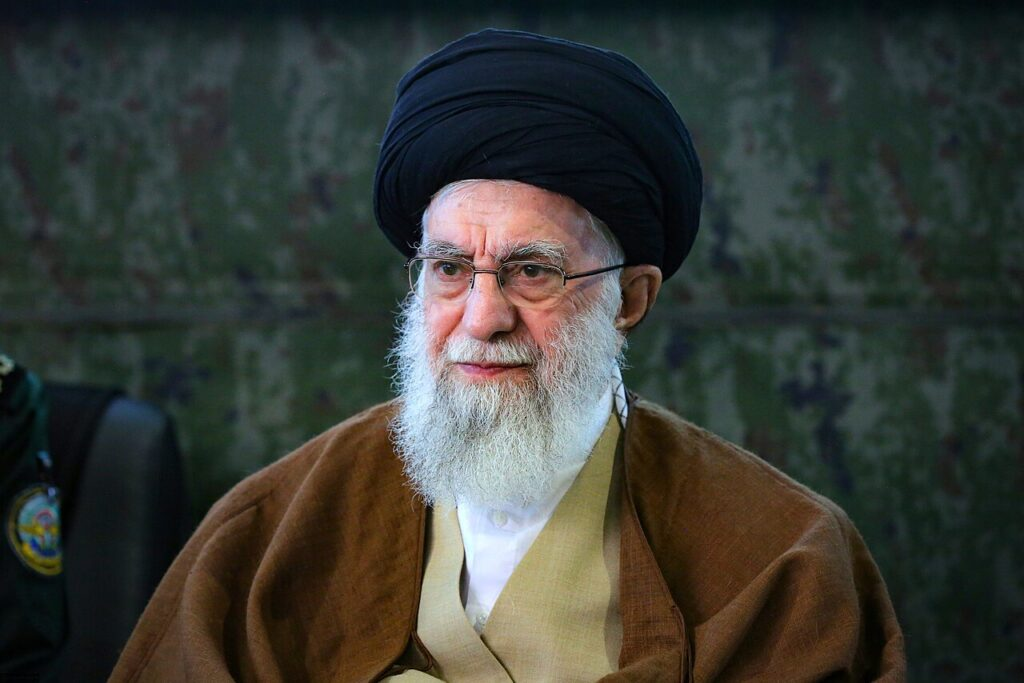
As protests swell across Iran and the economy shows fresh signs of strain, a striking claim has entered the global conversation: that Iran’s supreme leader may already be preparing an escape route. A report citing intelligence assessments suggests Ayatollah Ali Khamenei has a contingency plan to flee Tehran if unrest spirals out of control—potentially to Moscow—after renewed warnings from Donald Trump.
The allegation is unverified and politically charged. But its timing, following U.S. military action in Venezuela and amid Iran’s most serious demonstrations in years, has sharpened debate over whether the Islamic Republic is approaching a tipping point.
Below is what’s driving the unrest, what the report actually claims, and why comparisons to other fallen regimes are resurfacing now.
What is fueling the current wave of protests in Iran?
An economy under pressure, fast
Iran’s protests erupted in late December after the national currency hit historic lows. The rial’s plunge has translated into immediate pain at the household level:
- Currency collapse: About 1.45 million rials to the U.S. dollar by December 2025
- Infation spikes: Food prices up roughly 72%; medical goods up about 50%
- Tax shock: A proposed 2026 budget includes a 62% tax increase
For many Iranians, these numbers are not abstractions. They mean shrinking savings, unaffordable groceries, and rising medical costs—conditions that have historically catalyzed mass dissent.
Political demands are back on the streets
Unlike narrower economic protests of the past, chants this time increasingly call for regime change. Videos circulating online show demonstrators invoking Reza Pahlavi, the exiled son of Iran’s last shah, as a symbolic alternative to clerical rule. At least a dozen people—including members of the security forces—have reportedly been killed since protests began, based on official tallies. The scale and tone echo the 2022–23 movement sparked by the death of Mahsa Amini, which shook the regime but ultimately fell short of forcing structural change.
What does the report claim about Khamenei’s exit plan?
A contingency, not confirmation
The report, cited by The Times, references intelligence assessments suggesting Khamenei has planned an emergency departure from Tehran with a tight circle of aides and family members—possibly fewer than two dozen people.
One source quoted is Beni Sabti, a former Iranian who later worked for Israeli intelligence. Sabti claims Moscow would be the most likely destination, arguing that Khamenei “admires” Vladimir Putin and sees Russia as culturally and politically compatible.
There is no independent confirmation that such a plan is active, or that Khamenei intends to use it. Still, the mere circulation of the claim reflects heightened anxiety within and outside Iran about regime stability.
Why Moscow?
Russia has long served as a geopolitical backstop for sanctioned or isolated leaders. The comparison being drawn is to Bashar al-Assad, whose survival has depended heavily on Moscow’s military and diplomatic support. For critics of Tehran, the analogy is meant to suggest a familiar endgame when internal legitimacy erodes.
How does Trump’s warning change the equation?
The Venezuela precedent
The report’s impact is magnified by recent U.S. actions elsewhere. In early January, Washington announced a dramatic operation against Venezuela that ended with the arrest of Nicolas Maduro. According to U.S. officials, Maduro was flown via the USS Iwo Jima to detention in the United States and now faces federal charges.
Whether one views that operation as law enforcement or coercive regime change, its message was unmistakable.
“We’re watching it very closely”
Trump has explicitly linked Iran’s protests to U.S. red lines. He warned that if Iranian authorities respond with lethal force, the country could be “hit very hard” by the United States. In a separate social media post, he wrote that the U.S. was “locked and loaded.”
For Tehran, the implication is twofold:
- Internal repression now carries a higher external risk.
- The U.S. is signaling willingness to escalate beyond sanctions.
Is Iran really on the brink of regime change?
Reasons analysts urge caution
History counsels restraint in predicting imminent collapse. Iran’s security apparatus remains formidable, and the state has repeatedly weathered crises that looked existential in the moment. Protest movements—while broad—still face coordination challenges and severe repression.
Why this moment still feels different
That said, several factors distinguish the current unrest:
- Economic depth: The scale of inflation and currency erosion is unprecedented in recent years.
- Political breadth: Calls for regime change are more explicit and more visible.
- Geopolitical pressure: U.S. signaling, combined with regional volatility, narrows Tehran’s room for maneuver.
Taken together, these dynamics don’t guarantee regime change—but they do raise the cost of maintaining the status quo.
What should readers watch next?
Key indicators over the coming weeks include:
- Security force cohesion: Signs of defections or hesitation would be significant.
- Elite messaging: Any public absence or unusual communication from Khamenei will be scrutinized.
- International moves: New sanctions, diplomatic shifts, or military posturing could reshape calculations.
TL;DR
- Iran is facing its most serious protests in years amid economic freefall.
- A report claims Khamenei has a contingency plan to flee—possibly to Russia—though this remains unverified.
- Trump’s warnings and the U.S. action against Venezuela have intensified speculation about regime vulnerability.
- Regime change is not inevitable, but the convergence of economic, political, and geopolitical pressures makes this a critical moment.