
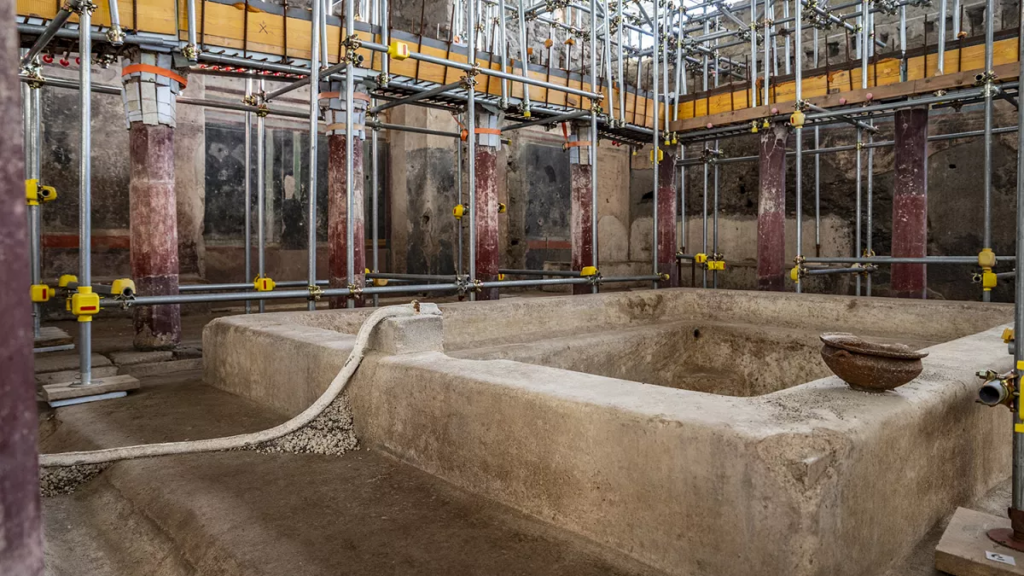
A spectacular glimpse into ancient Roman luxury
Archaeologists in Pompeii have made a remarkable discovery: a sprawling private bathhouse buried for nearly 2,000 years beneath layers of volcanic rock and ash. The find, described as a “once-in-a-century” event, offers a rare glimpse into the opulent lifestyles of the ancient Roman elite.
The bathhouse includes a series of hot, warm, and cold rooms adorned with exquisite artwork and a grand plunge pool. This newly unearthed complex is part of a larger residence that archaeologists have meticulously studied for years. Despite extensive excavations, approximately one-third of Pompeii remains hidden beneath volcanic ash.
Dr. Gabriel Zuchtriegel, director of the Archaeological Park of Pompeii, explained the extraordinary preservation of the site:
“It’s these spaces that really are part of the ‘Pompeii effect’ – it’s almost as if the people had only left a minute ago,” he told the BBC.
The luxurious bathhouse is believed to have belonged to a prominent family, potentially that of Aulus Rustius Verus, a well-known politician in Pompeii.
A luxury reserved for the elite
“There are just a few houses that have a private bath complex, so it was something really for the wealthiest of the wealthy,” Dr. Zuchtriegel added.
The grandeur of the residence, combined with its private bathhouse, suggests that it was designed to reflect both power and affluence.
Skeletons reveal the tragic last moments
The excavation also uncovered two skeletons within the house, shedding light on the horrifying last moments of Pompeii’s residents during the eruption of Mount Vesuvius in 79 AD. The remains belonged to a woman aged between 35 and 50 and a teenage boy. According to Dr. Sophie Hay, an archaeologist at Pompeii, the two individuals experienced immense trauma as the volcanic pyroclastic flow engulfed their home.
“The woman was still alive while he was dying – imagine the trauma – and then this room filled with the rest of the pyroclastic flow, and that’s how she died,” Dr. Hay told the BBC.
At the time of their deaths, the boy was clutching a set of keys, while the woman held gold and silver coins and jewelry. “She was probably someone higher up in society,” Dr. Hay explained. She could have been the wife of the house owner —or maybe an assistant looking after the wife. We just don’t know.”
A window into ancient Roman society
This extraordinary discovery provides archaeologists with invaluable insights into the daily lives and social hierarchies of ancient Pompeii. The preservation of the bathhouse and its tragic occupants continues to captivate experts and the public alike, as Pompeii remains one of the most compelling archaeological sites in the world.