
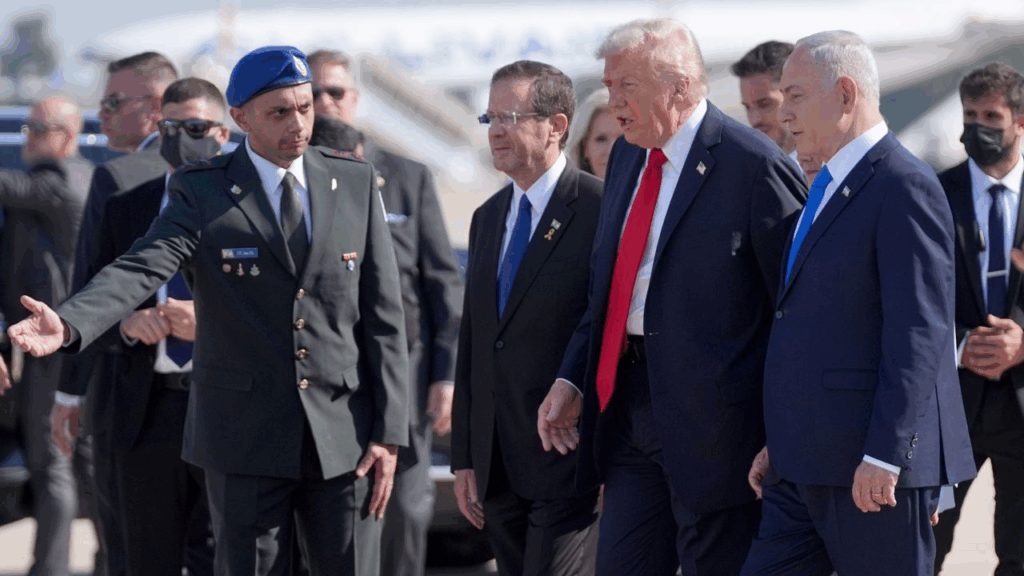
In a historic breakthrough ending two years of brutal conflict, Hamas on Monday released all remaining Israeli hostages as part of a U.S.-brokered ceasefire deal. The release marks a turning point in the Gaza war and coincides with President Donald Trump’s arrival in Tel Aviv to discuss the implementation of the peace framework that brought the ceasefire into effect.
What happened in the latest hostage release?
According to Israel’s public broadcaster, the final group of 13 Israeli hostages was handed over to the International Committee of the Red Cross in Khan Yunis in southern Gaza. This followed an earlier release of seven hostages, marking the complete liberation of all captives held since Hamas’s surprise October 2023 attack on Israel.
Crowds across Israel watched live broadcasts of the transfers, erupting in cheers as Red Cross convoys crossed into Israel. Many families had waited more than 730 days for the safe return of their loved ones.
All freed hostages were taken to an IDF facility near Reim for immediate physical and psychological evaluations before being reunited with their families.
Names of those released
The first group included brothers Gali and Ziv Berman, Matan Angrest, Alon Ohel, Omri Miran, Eitan Mor, and Guy Gilboa-Dallal.
The second group comprised Bar Kupershtein, Evyatar David, Yosef-Chaim Ohana, Segev Kalfon, Avinatan Or, Elkana Bohbot, Maxim Herkin, Nimrod Cohen, David Cunio, Matan Angrest, Eitan Mor, Rom Braslabski, and Ariel Konio.
While their medical conditions remain undisclosed, Israeli authorities confirmed that all were safely transported into Israeli territory.
What did the deal involve?
The release comes under a ceasefire agreement brokered by President Donald Trump, marking his most consequential diplomatic achievement since returning to the White House. The truce was finalized after weeks of indirect negotiations involving Egypt, Qatar, and the U.S. and includes a large-scale prisoner exchange.
Under the terms:
- Hamas released all Israeli hostages held since 2023.
- Israel is set to release 1,950 Palestinian prisoners, including 250 serving life sentences for deadly attacks, as well as 1,700 detainees taken from Gaza during the war.
- The exchange will occur in stages, monitored by international observers.
An international task force led by Israel’s hostage coordinator,, Gal Hirsch, will also continue searching for the remains of up to 28 hostages believed dead but not yet recovered.
Trump’s arrival signals a new phase in Gaza diplomacy
President Trump landed in Tel Aviv on Monday, accompanied by senior U.S. and regional officials. The visit underscores Washington’s central role in mediating the ceasefire and shaping what Trump has described as a “New Gaza Framework,” a blueprint for reconstruction, governance, and long-term security.
“The war is over. You understand that?” Trump told reporters aboard Air Force One before landing. “Everybody’s excited. This is a very special moment.”
His visit follows months of shuttle diplomacy by U.S. envoys aimed at convincing both sides to halt the fighting and agree on a phased roadmap toward stability.
Israel reacts with relief and reflection
For many Israelis, the moment represents both relief and reckoning. Since the 2023 attacks that sparked the war, the country has been consumed by nightly news segments counting days since the hostages’ capture. Citizens wore yellow ribbons and held weekly rallies in Tel Aviv and Jerusalem, demanding government action.
The emotional release of hostages is now seen as the symbolic closure of a traumatic national chapter. However, political tension remains high. Critics of Prime Minister Benjamin Netanyahu accuse him of mishandling the war and delaying negotiations for political survival.
Under growing international pressure and amid domestic protests, Netanyahu’s government ultimately agreed to the Trump-led ceasefire, which included concessions many in his coalition had long resisted.
How Gaza and the Palestinians are responding
In Gaza, Palestinians are awaiting the release of their own prisoners, a politically explosive issue. For many in the West Bank and Gaza, those held by Israel are viewed as “freedom fighters,” while Israel classifies them as terrorists.
Celebrations have been muted amid Israeli warnings against public gatherings. Still, the exchange represents a rare moment of tangible progress after two years of relentless bombardment that left Gaza’s cities in ruins and its population in crisis.
Humanitarian agencies expect a massive influx of aid following the truce, with the U.N. and international NGOs preparing emergency convoys to address famine-level food shortages and widespread displacement.
What happens next?
While the ceasefire has ended active hostilities, the future of Gaza remains uncertain. Key issues yet to be resolved include:
- Governance: Who will administer Gaza once Israeli troops withdraw?
- Security: How will international observers ensure compliance with the truce?
- Reconstruction: Can billions in promised aid reach civilians without empowering Hamas?
Regional analysts suggest Trump’s presence signals the U.S. intends to play a hands-on role in shaping postwar Gaza, similar to past American-led peace frameworks in the region.
TL;DR
- All Israeli hostages held by Hamas since 2023 have been released under a U.S.-brokered ceasefire.
- President Donald Trump arrived in Tel Aviv to oversee the next phase of peace talks.
- 1,950 Palestinian prisoners are expected to be freed in exchange.
- The deal ends two years of war that devastated Gaza and strained Israeli politics.
- Focus now shifts to reconstruction and governance in postwar Gaza.