
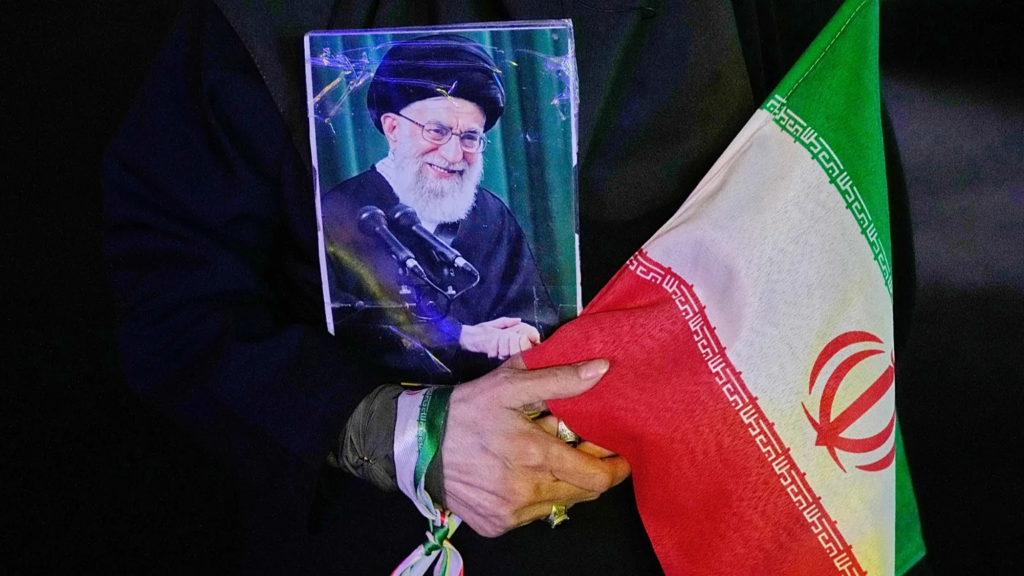
Iran has unveiled an extensive state funeral program for Ayatollah Ali Khamenei, outlining nearly a week of mourning ceremonies across the country’s most significant political and religious centers. The funeral schedule includes public tributes, official state ceremonies, and large-scale processions before culminating with the late Supreme Leader’s burial at the Imam Reza Shrine in Mashhad.
According to Iranian Foreign Ministry spokesperson Esmail Baghaei, the ceremonies are expected to attract delegations from more than 100 countries, including heads of state, foreign ministers, special envoys, and senior government officials. If realised, it would mark one of Iran’s largest international diplomatic gatherings in recent years.
The funeral comes amid heightened regional tensions following the conflict referred to by Iranian officials as Operation Epic Fury, which they say resulted in Khamenei’s assassination and dramatically altered the Middle East‘s security landscape.
TL;DR
- Iran has announced a six-day state funeral for Ayatollah Ali Khamenei.
- Ceremonies will begin in Tehran before moving through Qom and ending with burial in Mashhad.
- Iranian officials say delegations from over 100 countries are expected to attend.
- The funeral follows what Iranian authorities describe as Khamenei’s assassination during Operation Epic Fury.
- Officials portray the ceremonies as both a national farewell and a major diplomatic event.
- Several key claims should be independently verified before publication.
What is Iran’s funeral plan for Ayatollah Ali Khamenei?
Iran’s Foreign Ministry has released a detailed itinerary for a nationwide mourning program stretching across several days.
The schedule reflects the importance of Khamenei’s position as Iran’s Supreme Leader and seeks to combine public mourning, religious observances, and official state ceremonies.
Reported funeral schedule
Friday, July 3
- Official tribute ceremony begins at 8:00 a.m. in Tehran.
- Attendance by senior Iranian officials.
- Arrival of foreign dignitaries and international delegations.
- Public mourning ceremonies commence.
July 4–5
- Commemorative events at the Imam Khomeini Mosalla in Tehran.
- Religious ceremonies and public gatherings.
- Continued arrival of foreign delegations.
Monday, July 6
- State funeral procession through Tehran.
Tuesday, July 7
- Funeral procession moves to Qom.
- Religious ceremonies at one of Shiite Islam’s most important clerical centers.
Thursday, July 9
- Funeral procession reaches Mashhad.
- Burial at the Imam Reza Shrine is one of the holiest sites in Shiite Islam.
Why is Mashhad significant?
The final stage of the funeral will reportedly take place in Mashhad, Iran’s holiest city and Khamenei’s birthplace.
His burial is scheduled at the Imam Reza Shrine, one of Shiite Islam’s most revered pilgrimage destinations. The shrine attracts millions of pilgrims annually and carries immense religious symbolism for Iran and the broader Shiite Muslim world.
Choosing Mashhad reinforces both Khamenei’s personal ties to the city and the religious significance of the funeral.
Why is Qom included in the funeral procession?
The funeral cortege will also travel through Qom, widely regarded as the center of Iran’s Shiite religious establishment.
Qom houses many of Iran’s leading seminaries and clerical institutions, making it a natural stop for ceremonies honouring a Supreme Leader who served as both the country’s highest political authority and its highest-ranking religious figure.
Large crowds are expected to participate in public mourning during the procession through the city.
Iran expects one of its largest international gatherings
Iranian officials say representatives from more than 100 countries are expected to attend the funeral ceremonies.
According to the Foreign Ministry, invitations have been extended to:
- Heads of state
- Foreign ministers
- Senior government officials
- Special envoys
- Diplomatic delegations
If attendance reaches the projected level, the event would rank among Iran’s largest diplomatic gatherings in recent years.
However, Iran has not publicly released a complete list of confirmed attendees, making it important to distinguish between expected participation and officially confirmed delegations.
What did Iran say about the funeral?
Foreign Ministry spokesperson Esmail Baghaei described the ceremony as an event extending beyond Iran’s borders.
According to Baghaei, the funeral represents:
- A national farewell for Iran.
- A religious event for Shiite Muslims.
- A symbolic gathering for regional allies.
- An opportunity for international partners to express solidarity.
Iranian officials have consistently framed the ceremonies as carrying political, diplomatic, and religious significance simultaneously.
Why does the funeral matter politically?
Beyond its religious dimension, the funeral is expected to serve several political purposes.
Demonstrating institutional continuity
The ceremonies are likely to project stability as Iran enters a new phase of leadership following the reported death of its Supreme Leader.
Diplomatic engagement
With numerous foreign delegations expected, the funeral could become an important venue for bilateral meetings and regional diplomacy alongside official mourning.
Public unity
Large public gatherings may also be intended to demonstrate national cohesion during a period of political uncertainty.
What happens next for Iran?
The conclusion of the funeral ceremonies will likely mark the beginning of a significant transition for the Islamic Republic.
Attention will shift toward:
- The country’s evolving leadership structure.
- Regional security developments.
- Iran’s diplomatic relationships.
- Domestic political stability following the reported assassination.
How smoothly Iran manages this transition could have implications for both domestic governance and broader Middle East geopolitics.
Questions that still require confirmation
Several important details remain unverified or incomplete at the time of writing:
- Has the reported assassination of Ayatollah Ali Khamenei been independently confirmed by multiple international sources?
- Which world leaders have officially confirmed attendance?
- What security arrangements has Iran implemented for the ceremonies?
- Has the full funeral itinerary been formally published by the Iranian government?
- What succession process is underway within Iran’s political system?