
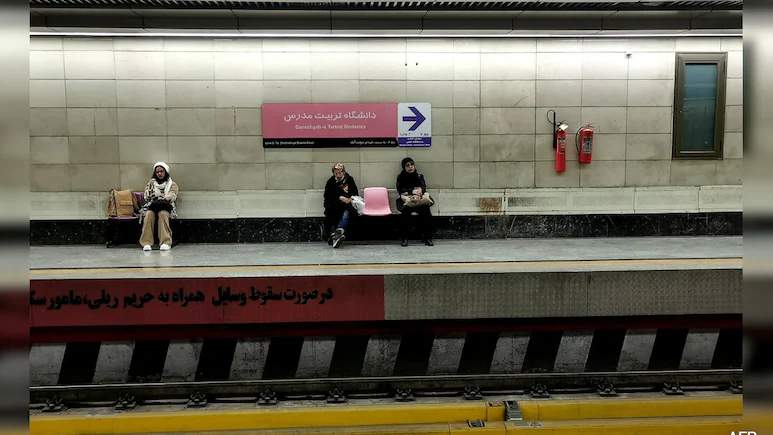
The conflict involving Israel, Iran, and the United States has taken a sharper turn, with a new and highly specific warning: civilians in Iran have been urged to stay away from trains and railway infrastructure for 12 hours.
While brief, the advisory carries significant implications, both militarily and politically.
What exactly did Israel warn?
The Israeli military issued the alert via its Persian-language social media account, directly addressing Iranian civilians.
Key points from the advisory
- Avoid all train travel across Iran
- Stay away from railway lines and infrastructure
- Time-bound warning lasting 12 hours
The message emphasized that being near trains or tracks could endanger civilian lives, suggesting potential military activity targeting or affecting those areas. The advisory was posted on Tuesday on its Persian-language account on X.
Why are railways being singled out?
Warnings like this are rarely random. Rail networks are often critical in wartime.
Strategic importance of railways
Railways can be used to:
- Transport military equipment and weapons
- Move troops and logistics across regions
- Support supply chains during conflict
By issuing a public warning, Israel may be signaling:
- Possible targeting of transport infrastructure
- Efforts to reduce civilian casualties before strikes
- Psychological pressure on both civilians and authorities
What happened before this warning?
The advisory follows a series of escalating military developments.
Recent events
- Joint airstrikes by the U.S. and Israel inside Iran
- Reports of infrastructure damage in Tehran
- Civilian casualties reported in Lebanon after air-delivered munitions
One reported strike allegedly destroyed the Rafi-Nia Synagogue in Tehran, though such claims require independent verification.
How has Iran responded?
Iran has rejected a U.S.-backed ceasefire proposal and instead introduced its own conditions.
Iran’s proposed terms include:
- Guarantees against future attacks
- A permanent end to hostilities
- Lifting of international sanctions
- Halting Israeli operations in Lebanon
In exchange, Iran proposed reopening the strategically vital Strait of Hormuz, albeit with a controversial fee structure for passing ships.
Why the Strait of Hormuz matters
The Strait of Hormuz is one of the world’s most critical oil chokepoints.
Its global importance
- A significant portion of the world’s oil passes through it
- Disruptions can impact global energy prices
- Military tensions there have worldwide economic consequences
Any threat involving the strait raises stakes far beyond the region.
What has Donald Trump said?
Donald Trump has taken a hardline stance in response to Iran’s proposal.
Key statements
- Called Iran’s response a “step, but not enough”
- Warned of massive retaliatory strikes
- Suggested Iran’s infrastructure could be destroyed “in one night”
Such rhetoric signals that diplomatic resolution remains uncertain—and escalation remains a real risk.
What does this mean for civilians?
The train warning highlights a critical reality: civilians are increasingly being drawn into the risk zone.
Immediate implications
- Disruption to daily life and travel
- Heightened fear and uncertainty
- Risk of unintended casualties near strategic targets
Warnings like these are often intended to minimize civilian harm, but they also indicate that military action could be imminent.
Is this a sign of a larger escalation?
The short answer: possibly.
Indicators of escalation
- Direct warnings to civilians in another country
- Continued airstrikes and counter-responses
- Breakdown of ceasefire negotiations
- Increasingly aggressive public statements
Taken together, these signals suggest the conflict could expand further if diplomacy fails.
What to watch next
The situation is evolving quickly. Key developments to monitor include:
- Whether railway infrastructure is actually targeted
- International diplomatic responses
- Movement in oil markets tied to the Strait of Hormuz
- Any renewed ceasefire negotiations
TL;DR
- Israel warned Iranian civilians to avoid trains for 12 hours
- The move likely signals potential targeting of transport infrastructure
- It follows U.S.-Israel airstrikes and rising regional tensions
- Iran has rejected a ceasefire and proposed its own conditions
- The situation remains volatile, with risks of further escalation