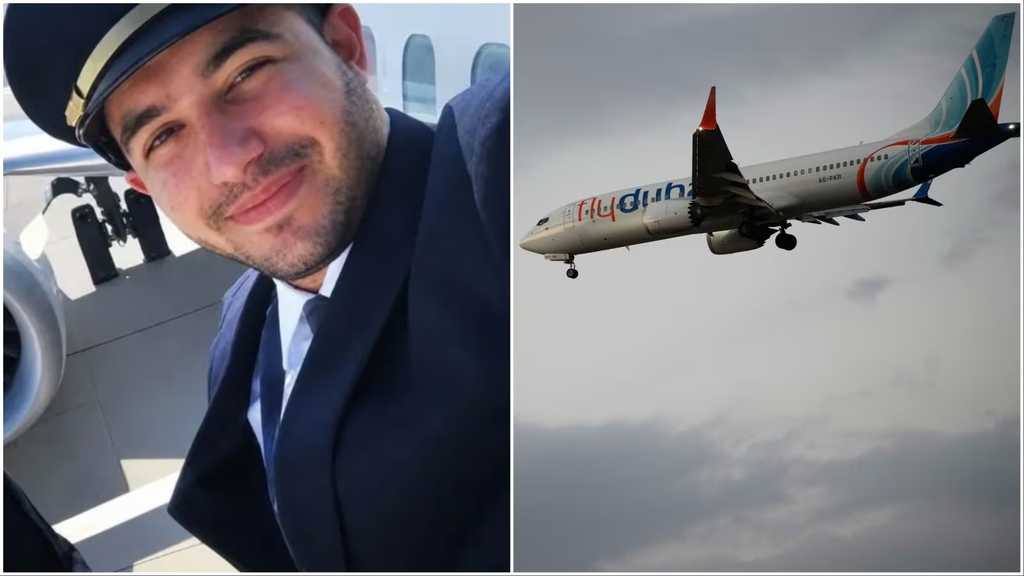
United Arab Emirates prosecutors say the co-pilot accused of attempting to hijack a Flydubai passenger flight and crash it into an Israeli airport began developing extremist views while studying in Australia in 2017.
Hamam al-Hammami, a 29-year-old Omani national, allegedly planned to seize control of Flydubai flight FZ1073, which was travelling from Dubai to Tel Aviv on September 30. The aircraft narrowly avoided disaster after the co-pilot attacked the captain, prompting crew members and passengers to intervene.
UAE Attorney General Hamad Saif al-Shamsi said on October 9 that investigators had traced the suspect’s radicalization to his time at RMIT University in Melbourne.
According to the UAE’s state news agency, WAM, investigators believe al-Hammami became influenced by extremist literature and online material promoting terrorist organizations and suicide attacks.
Prosecutors also said the suspect drew inspiration from the September 11, 2001, attacks in the United States and allegedly intended to carry out a similar operation targeting Ben Gurion Airport in Israel.
The allegations mark the most detailed public account yet of the suspected motive behind the mid-air incident. However, investigations remain ongoing, including an Australian Federal Police inquiry into al-Hammami’s time in the country and any possible links to extremism.
What did UAE prosecutors reveal about the co-pilot’s radicalization?
Al-Shamsi said investigators identified 2017 as the period when al-Hammami first began showing signs of extremist beliefs.
During that time, the suspect was studying in Australia, where prosecutors allege he encountered radical material through reading and online content.
“During that period, he was influenced by takfiri [radical] ideology through reading extremist literature and following online content glorifying terrorist organisations and suicide attacks,” the attorney general said, according to WAM.
The term “takfiri” generally describes an extremist ideological position in which individuals or groups declare other Muslims to be unbelievers. The term has been associated with violent extremist movements, although it should not be treated as representative of Islam or Muslims more broadly.
According to the UAE investigation, al-Hammami acknowledged being inspired by the September 11 attacks and allegedly developed the idea of carrying out a similar operation using an aircraft.
Prosecutors said the suspect also described preparing himself psychologically and physically for the alleged plot.
These details come from the UAE prosecution’s account of the investigation and the suspect’s reported statements. The Australian inquiry is still examining his background and possible connections.
How did the Flydubai flight attack unfold?
The incident occurred on September 30 aboard Flydubai flight FZ1073, which was travelling from Dubai to Tel Aviv with more than 170 passengers and crew.
According to investigators, al-Hammami attacked Captain Smit Machchhar inside the cockpit and attempted to take control of the aircraft.
Machchhar was seriously injured but managed to open the cockpit door and alert others to what was happening. Passengers and crew then intervened and restrained the accused co-pilot.
The attack caused the aircraft to lose altitude rapidly while flying over the region. The emergency was eventually brought under control with the assistance of other pilots travelling on the aircraft.
The plane made an emergency landing at Tabuk airport in northwestern Saudi Arabia, where the suspect was detained.
The incident prompted an international investigation involving authorities in the UAE, Israel and other countries concerned with the flight’s route and the suspect’s background.
Did the suspect plan to crash the aircraft into Israel’s main airport?
According to the UAE attorney general, investigators believe the alleged objective was to crash the aircraft into the passenger terminal at Ben Gurion Airport near Tel Aviv.
Al-Shamsi said the plot was intended to cause the greatest possible loss of life.
Prosecutors also said al-Hammami had used two earlier flights between Dubai and Tel Aviv to become familiar with the route and airport.
The UAE’s account suggests investigators believe the incident was a premeditated terrorist plot rather than a spontaneous confrontation inside the cockpit.
However, these details remain allegations in an ongoing criminal investigation. The authorities are continuing to examine the suspect’s motives, preparation and any possible involvement by other individuals.
Why was Australia part of the investigation?
Australian authorities are examining al-Hammami’s time in Melbourne after the UAE identified his studies there as an important period in his alleged radicalization.
The Australian Federal Police has confirmed that it is investigating his time in Australia and any links to extremism.
The suspect reportedly received an Australian student visa in 2014, arrived the following year to study and left the country in 2017. His visa was cancelled in 2019 after authorities determined that he was no longer enrolled in his course, according to the report.
A LinkedIn profile that was later deleted reportedly indicated that al-Hammami had studied at RMIT University.
The investigation raises questions about when his alleged extremist beliefs first emerged, whether warning signs were visible to anyone around him and whether information about his background was available to authorities or employers.
But the fact that he studied in Australia does not establish that the university or any institution he attended knew about, supported or was involved in the alleged plot.
Australian investigators will need to establish what, if anything, was known about his activities while he was in the country.
Was the alleged plan carried out independently?
The UAE attorney general said al-Hammami had admitted to acting alone and without the involvement of other individuals.
According to WAM, the suspect provided a detailed account of his alleged motives and the planning involved in the presence of his lawyer.
However, prosecutors said the investigation was continuing to verify his claim that he acted independently.
That distinction is important because investigators must establish whether the suspect had outside contacts, received assistance or was directed by another person or organization.
Authorities have not publicly established that a wider network was involved.
The investigation is also examining how the suspect’s alleged intentions went undetected during his professional career.
How did the suspect pass aviation checks?
The UAE attorney general said the investigation found that Flydubai’s security and professional checks had not identified signs that the suspect held extremist views or intended to carry out an attack.
That finding has prompted questions about the systems used to assess flight crew members and identify potential security threats.
Al-Hammami had previously worked in aviation, and reports have raised questions about whether concerns about his background had emerged before he joined Flydubai.
Australian and international reporting has also cited claims that he had faced restrictions on flying in Oman over concerns about his views. Those claims form part of the wider scrutiny surrounding the case and should be distinguished from the UAE attorney general’s official findings.
Investigators will need to determine what information was available to employers and aviation authorities, whether any warning signs were missed and whether existing screening procedures were adequate.
The case could have implications for airline recruitment, crew vetting, and the exchange of security information across borders.
What happens next in the investigation?
The UAE is leading the investigation into the alleged attack, while Australian authorities are examining the suspect’s time in Melbourne and any potential connections to extremist activity.
Investigators are expected to continue examining his background, professional history, digital activity, and contacts to establish whether the alleged plot was entirely self-directed.
The incident has also raised wider questions about aviation security and the ability of screening systems to detect threats that may emerge after someone has entered the industry.
For now, the most consequential claims come from the UAE attorney general’s account of the investigation. The assertion that al-Hammami developed extremist views while studying in Australia remains an allegation that authorities are still examining.
The September 30 incident could have resulted in a major loss of life. The intervention of the captain, other crew members, and passengers prevented the situation from becoming even more catastrophic.
As the investigation continues, the focus will remain on the suspect’s alleged motive, the timeline of his radicalization, and whether warning signs were missed before the flight took off.