
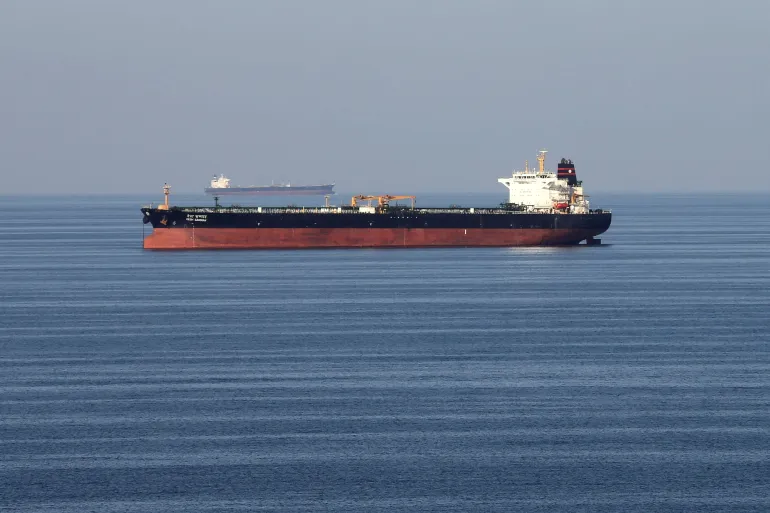
The Strait of Hormuz, one of the world’s most strategically important maritime chokepoints, has been thrust back into the spotlight after Iran announced its closure for a second time—just a day after reaching a deal with the United States aimed at ending months of conflict.
The decision, announced by Iran’s Islamic Revolutionary Guard Corps (IRGC), has sparked fresh concerns about energy markets, regional stability, and the future of the fragile US-Iran agreement.
Why Has Iran Closed the Strait of Hormuz Again?
Iran said the waterway will remain closed until several key conditions are fulfilled, despite the United States lifting its naval blockade on Iranian ports earlier this week.
In a statement broadcast through maritime communication channels, the IRGC argued that the agreement signed between Washington and Tehran has not been fully implemented.
According to the Iranian military force, three major conditions remain unmet:
- Israel’s complete withdrawal from Lebanon.
- Full removal of restrictions on Iranian maritime activity.
- Withdrawal of US military forces from the Persian Gulf and the wider region.
Until those conditions are satisfied, Iran says commercial and military vessels should avoid the Strait of Hormuz.
The IRGC further warned that any ship entering the area, despite its directive, could be targeted, significantly escalating tensions in one of the world’s busiest shipping corridors.
What Is the Strait of Hormuz and Why Does It Matter?
The Strait of Hormuz connects the Persian Gulf to the Gulf of Oman and the Arabian Sea. It serves as a critical route for global energy exports.
A Vital Artery for Global Oil Trade
Roughly one-fifth of the world’s oil supply typically passes through the narrow waterway, making it one of the most important transit points in international commerce.
Major oil-exporting countries that rely on the route include:
- Iran
- Saudi Arabia
- Iraq
- Kuwait
- Qatar
- United Arab Emirates
Any disruption to shipping through Hormuz can trigger immediate concerns over:
- Global oil prices
- Fuel costs
- Supply chain stability
- Inflation pressures worldwide
What Changed After the US-Iran Agreement?
The announcement comes just hours after a significant diplomatic breakthrough.
US Lifts Blockade on Iranian Ports
The United States Central Command reportedly ended a two-month blockade of Iranian ports following a memorandum of understanding signed by US President Donald Trump and Iranian President Masoud Pezeshkian.
The agreement was widely viewed as a step toward de-escalating a conflict that had raised fears of a broader regional war.
However, Iran’s latest move suggests that major disagreements remain over how the agreement should be interpreted and implemented.
Dispute Over “Complete” Implementation
A key question now centers on Iran’s claim that the lifting of restrictions has not been “complete.”
Iranian officials have not publicly detailed what additional measures they believe Washington must take. That ambiguity could become a major sticking point in future negotiations.
Diplomatic analysts often note that ceasefire agreements and memorandums of understanding frequently encounter challenges during implementation, especially when multiple regional actors are involved.
Why Were US-Iran Nuclear Talks Postponed?
The closure announcement coincided with another setback: the postponement of planned US-Iran nuclear discussions in Geneva.
The talks were expected to explore a long-term framework for resolving outstanding disputes linked to the recent conflict and Iran’s nuclear program.
Conflicting Explanations Emerge
US Vice President JD Vance had been scheduled to lead the American delegation but reportedly delayed his trip due to logistical issues, according to the White House.
However, regional media reports offered a different explanation.
A report from Al-Mayadeen, a broadcaster known for its proximity to Hezbollah-aligned viewpoints, claimed Iran was reconsidering participation because of Israel’s continued military operations in Lebanon.
Neither side has publicly confirmed the exact reason for the delay.
How Does Lebanon Fit Into the Dispute?
Iran’s latest statement makes clear that developments in Lebanon remain central to its calculations.
Tehran has repeatedly linked regional security arrangements to Israel’s military activities and the broader presence of US forces in the Middle East.
By tying the reopening of Hormuz to Israeli actions in Lebanon, Iran appears to be expanding the scope of negotiations beyond its bilateral agreement with Washington.
This approach could complicate diplomatic efforts because some of Tehran’s demands involve actors outside direct US control.
What Could Happen Next?
Several scenarios could unfold in the coming days:
1. Diplomatic Resolution
The United States, Iran, and regional mediators could clarify implementation timelines and reduce tensions, allowing shipping to resume normally.
2. Prolonged Maritime Standoff
Iran may continue restricting access to Hormuz while negotiations remain stalled, creating uncertainty for energy markets.
3. Escalation in the Region
If commercial vessels attempt to transit the strait despite Iranian warnings, the risk of military confrontation could increase significantly.
Why Global Markets Are Watching Closely
Energy traders and governments worldwide are likely monitoring the situation carefully because even short-term disruptions in the Strait of Hormuz can have far-reaching economic consequences.
Previous tensions involving the waterway have led to spikes in crude oil prices and increased shipping insurance costs.
While it remains unclear how long the latest closure will last, the announcement underscores the continuing fragility of regional diplomacy despite recent signs of progress between Washington and Tehran.
For now, the future of the US-Iran agreement may depend less on what was signed and more on whether both sides can agree on what implementation actually looks like.