
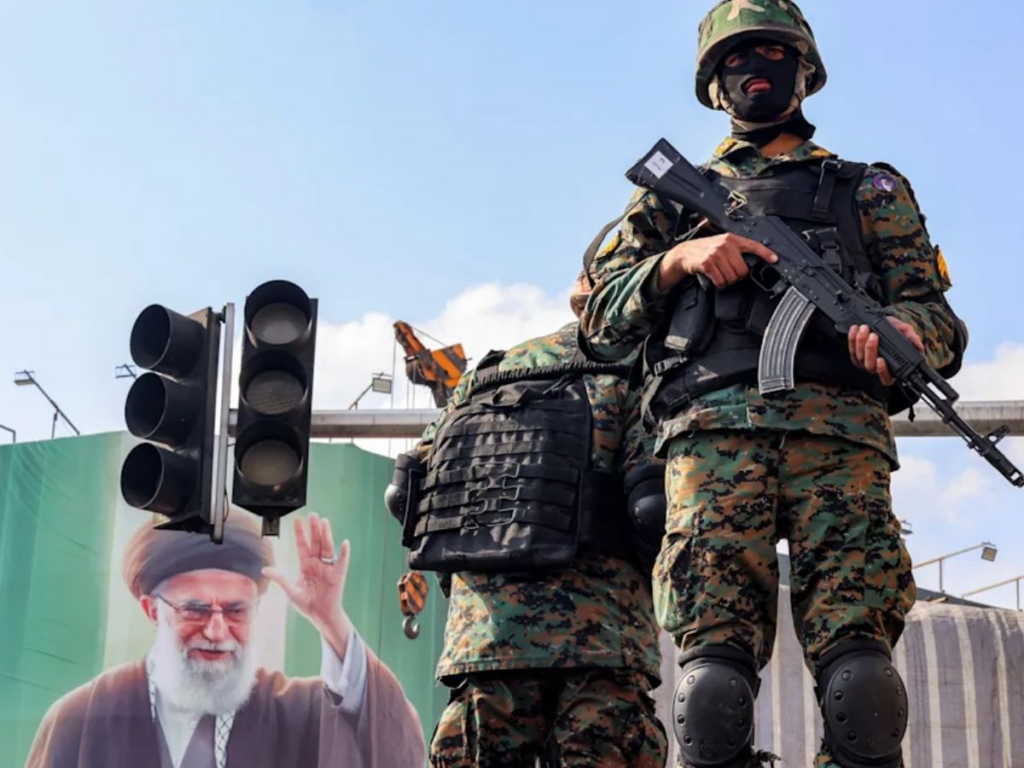
A new video from Iran’s military is adding a sharper edge to an already volatile standoff. Footage aired by state-linked media shows elite commandos in action, paired with a blunt message: “Come Close.” The timing coincides with the arrival of thousands of U.S. paratroopers from the 82nd Airborne Division in the Middle East—fueling questions about whether the conflict could shift from airstrikes to ground combat.
This is not a declaration of imminent war between the two countries. But it is a clear escalation in signalling, on both sides.
What Does Iran’s “Come Close” Video Actually Show?
The footage, broadcast by Press TV, highlights Iran’s elite army commandos in training and combat scenarios.

A Message Built for Deterrence
The video is less about new capabilities and more about communication. It:
- Showcases special forces in tactical drills
- Emphasizes readiness for close combat
- Pairs visuals with a direct English-language warning
The phrase “Come Close” is deliberate. It signals:
- A willingness to engage U.S. troops directly
- A warning against any potential ground invasion
- Confidence in Iran’s defensive posture
Psychological Warfare in Motion
Modern conflicts aren’t just fought with weapons—they’re shaped by perception.
This video functions as:
- A deterrence message to U.S. military planners
- A morale boost for domestic audiences
- A signal to regional allies and adversaries
Why Is the 82nd Airborne Deployment Significant?
The U.S. response, while not officially offensive, has raised the stakes.
Who Are the 82nd Airborne?
The 82nd Airborne Division is:
- One of the U.S. military’s most rapid-response forces
- Based at Fort Bragg
- Trained for airborne assault and quick deployment
Their presence typically signals:
- Crisis readiness
- Flexible response capability
- Preparation for multiple scenarios
What Has Been Deployed?
According to reporting from Reuters:
- Thousands of paratroopers have arrived in West Asia
- A brigade combat team is part of the deployment
- Support elements include logistics and command units
- Around 2,500 Marines had already reached the region
What It Does—and Doesn’t—Mean
U.S. officials have clarified:
- No final decision has been made on a ground invasion
- The deployment is about readiness, not commitment
Still, the scale and type of forces involved suggest the following:
- Planning for contingencies beyond air and naval operations
Is a Ground War Between the US and Iran Likely?
Not necessarily—but the risk is rising.
Current Reality
So far, the conflict has largely involved:
- Airstrikes
- Missile exchanges
- Proxy engagements
A ground invasion would mark a major escalation.
What Would Need to Change?
For U.S. troops to enter Iran directly:
- Political authorisation would be required
- Strategic objectives would need to justify the risk
- Regional and global consequences would be weighed heavily
Iran’s Position
Iranian officials have consistently warned:
- Any U.S. ground incursion would trigger “fierce retaliation”
- The conflict would expand beyond Iran’s borders
This includes:
- Potential involvement of regional militias
- Threats to critical infrastructure and shipping routes
Why Both Sides Are Signalling Instead of Acting
The current phase is defined by positioning, not execution.
Strategic Signalling Explained
Both countries are:
- Demonstrating capability
- Testing each other’s responses
- Avoiding irreversible escalation—for now
Why It Matters
This kind of signalling:
- Helps deter adversaries without direct conflict
- Keeps options open
- Influences global perception and alliances
The Role of President Donald Trump’s Strategy
The military buildup comes as Donald Trump weighs next steps.
Public Messaging vs. Military Moves
Trump has:
- Continued to speak about diplomacy publicly
- Simultaneously, the increased troop deployment was overseen
This dual approach is common in high-stakes conflicts:
- Diplomacy signals restraint
- Military buildup signals readiness
Why This Balancing Act Is Risky
Mixed signals can:
- Create uncertainty for adversaries
- Increase chances of miscalculation
- Escalate tensions unintentionally
How Close Is the Situation to Escalation?
Closer than before—but not at a breaking point yet.
Warning Signs to Watch
- Additional troop deployments
- Evacuation of civilians from key areas
- Sudden changes in diplomatic tone
- Movement of heavy ground equipment
What Hasn’t Happened (Yet)
- No official U.S. ground invasion plan
- No direct clashes between U.S. and Iranian ground forces
- No formal declaration of war
Why This Moment Feels Different
The combination of imagery and movement matters.
Visual + Physical Signalling
- Iran releases a confrontational military video
- The U.S. moves elite ground forces into the region
Individually, these are signals. Together, they:
- Reinforce each other
- Increase perceived risk
- Shift the narrative toward possible escalation
What Happens Next?
The situation remains fluid.
Possible Scenarios
- De-escalation
- Diplomatic channels regain traction
- Military presence stabilises
- Continued Standoff
- Ongoing signalling without direct conflict
- Proxy tensions persist
- Escalation
- Miscalculation leads to direct engagement
- Ground operations become a reality
TL;DR
- Iran released a video warning the U.S. to “Come Close,” signalling readiness for ground combat.
- The U.S. has deployed troops from the 82nd Airborne Division to the Middle East.
- No ground invasion has been confirmed—but preparations suggest contingency planning.
- Both sides are engaging in strategic signalling, not direct confrontation—for now.
- The risk of escalation is rising, but the outcome remains uncertain.