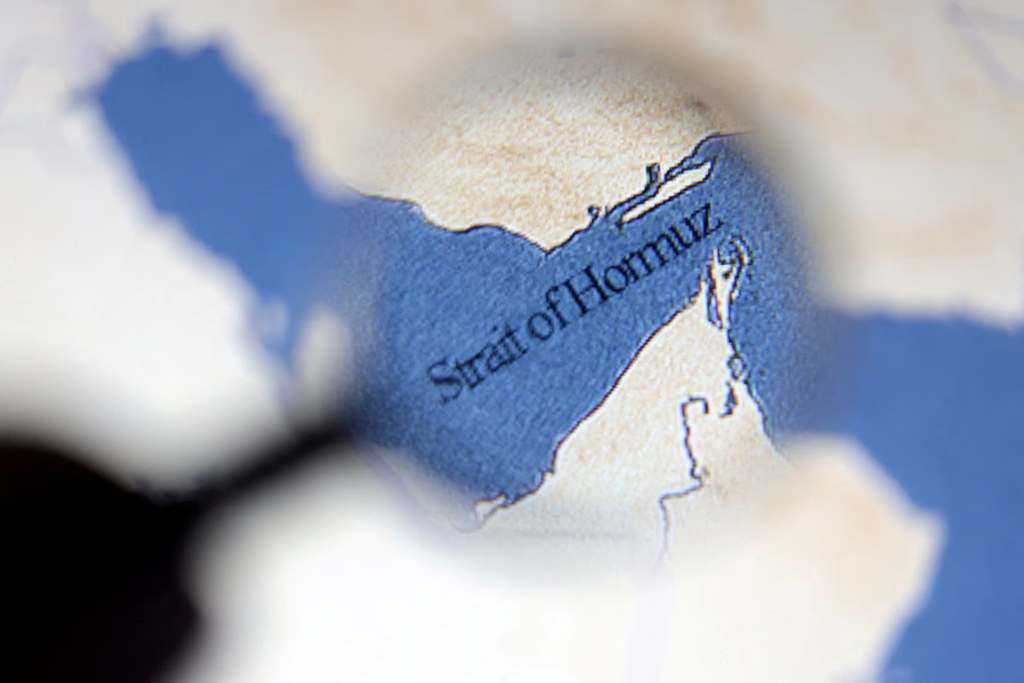
Iran has reportedly collected its first revenue from tolls imposed on ships passing through the Strait of Hormuz—a move that could reshape not just regional geopolitics, but also the economics of global energy trade.
The development comes amid heightened tensions involving the United States and Israel, with Tehran signaling that control over one of the world’s most critical energy corridors can be used not just as leverage, but as a source of income. “The first revenue received from the Strait of Hormuz tolls was deposited into the central bank account,” said deputy speaker of parliament Hamidreza Hajibabaei, according to Tasnim news agency.
What happened and why it matters
According to Iranian state-linked reporting, the first tranche of toll revenue has been deposited into the country’s central bank. While details remain sparse, the symbolism is clear: Iran is operationalizing a long-threatened policy.
This is not just about fees. It is about redefining control over a global chokepoint.
Roughly 20 percent of the world’s oil and liquefied natural gas flows through this narrow waterway connecting the Persian Gulf to the Gulf of Oman. Any disruption—or monetization—has ripple effects across global markets.
Why is the Strait of Hormuz so important?
A critical artery for global energy
The Strait of Hormuz is one of the most strategically significant maritime passages in the world.
- It handles about one-fifth of the global oil supply
- Major exporters like Saudi Arabia, Iraq, and the UAE rely on it
- Asian economies, including India and China, depend heavily on these shipments
Even minor disruptions here can trigger price volatility worldwide.
A narrow and vulnerable passage
At its narrowest point, the strait is only about 21 miles wide, making it:
- Easy to monitor
- Difficult to bypass
- Highly vulnerable to military escalation
This geography gives Iran a unique advantage, it sits along the northern coast of the strait.
Why is Iran charging tolls now?
A response to military and economic pressure
The tolls appear to be part of a broader strategy linked to ongoing tensions with the U.S. and its allies.
Recent developments include:
- A U.S. naval blockade targeting Iranian ports
- Escalation tied to regional conflicts involving Israel and Lebanon
- Iran’s intermittent closure and reopening of the strait
By imposing tolls, Tehran is effectively turning pressure into leverage.
Economic necessity
Sanctions and conflict have strained Iran’s economy. Monetizing transit through the strait offers the following:
- A new revenue stream
- A way to offset economic isolation
- Greater bargaining power in negotiations
In simple terms, Iran is converting geography into cash flow.
A selective toll system?
One of the more intriguing aspects of the policy is its selective enforcement.
Iran has indicated that some countries, such as India, may not be charged tolls.
What this suggests
- Iran is differentiating between “friendly” and “adversarial” nations
- Trade relationships are influencing maritime policy
- The toll system could become a diplomatic tool
For countries like India, this could mean short-term relief—but also long-term strategic uncertainty.
How are tolls being implemented?
Details remain unclear, but reports suggest Iran has explored unconventional mechanisms, including:
- Charging fees through alternative financial channels
- Considering cryptocurrency-based payments to bypass sanctions
- Using state-controlled systems to monitor and enforce compliance
This reflects a broader trend: sanctioned economies experimenting with parallel financial systems.
Global reaction and rising security concerns
The move has not gone unnoticed.
Multinational response efforts
Countries, including the United Kingdom and France, are reportedly in discussions with over 30 nations to secure navigation through the strait.
Potential steps include:
- Naval escort missions
- Joint maritime patrols
- Coordinated responses to disruptions
These efforts highlight the global stakes involved.
Risk of escalation
Charging tolls in a conflict environment introduces new risks:
- Ships may refuse to comply
- Naval confrontations could increase
- Insurance costs for shipping could surge
Even without direct conflict, uncertainty alone can disrupt supply chains.
What does this mean for global oil markets?
Immediate impact: volatility
Markets react quickly to uncertainty in the Strait of Hormuz.
Possible short-term effects include:
- Rising oil prices
- Increased shipping costs
- Supply chain delays
Long-term shifts
If tolls become normalized, the global energy system may adapt:
- Diversification of supply routes
- Increased investment in alternative pipelines
- Strategic reserves are becoming more critical
In effect, this could accelerate changes already underway in global energy logistics.
Where does the United States stand?
The U.S., under President Donald Trump, has pushed for the reopening of the strait while simultaneously increasing pressure on Iran through naval measures.
This creates a contradiction:
- Ensuring free navigation
- While escalating military and economic pressure
Iran’s toll policy can be seen as a direct counter to this strategy.
What happens next?
The situation remains fluid.
Key variables to watch:
- Whether toll collection becomes consistent or sporadic
- How shipping companies respond
- Whether military escorts become routine
- If diplomatic negotiations alter the current trajectory
One thing is clear: the Strait of Hormuz is no longer just a transit route. It is now an active instrument of geopolitical strategy.
TL;DR
- Iran has collected its first revenue from tolls on the Strait of Hormuz
- The move comes amid tensions with the U.S. and Israel
- Around 20 percent of the global energy supply passes through the Strait
- Iran appears to be selectively enforcing tolls based on diplomatic relationships
- The policy could impact global oil prices, shipping costs, and regional security.