
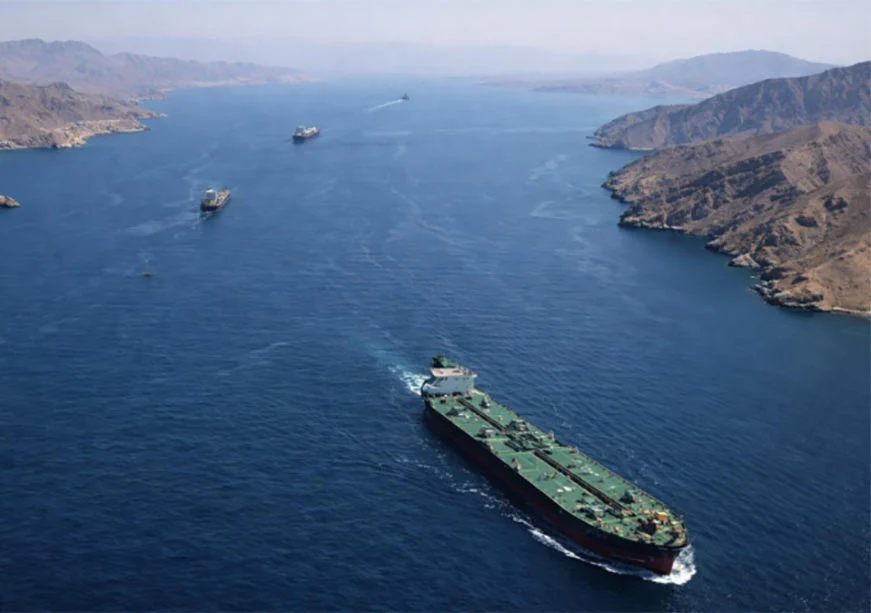
A fresh flashpoint has emerged in the Middle East as Iran reportedly halted tanker movement through the Strait of Hormuz, one of the world’s most critical النفط corridors. The move, reported by an outlet linked to Iran’s Islamic Revolutionary Guard Corps, comes in direct response to Israeli strikes on Hezbollah positions in Lebanon.
The development adds a volatile new layer to an already fragile regional situation, raising alarms over global energy security and maritime safety.
What happened in the Strait of Hormuz?
According to reports, Iranian naval forces issued warnings to multiple oil tankers attempting to transit the strait, effectively blocking passage through the narrow but vital waterway.
Key developments
- Tankers received direct warnings from Iranian naval units
- Vessel movement through the strait slowed or stopped
- Shipping operators began reassessing routes and risks
While there is no confirmation of physical seizures or attacks, even verbal threats in this corridor can disrupt traffic significantly.
Why is Iran blocking the Strait of Hormuz?
The reported اقدام appears to be retaliation for recent Israeli strikes targeting Hezbollah in Lebanon.
Strategic signaling
By targeting the Strait of Hormuz, Iran is sending a message that:
- Regional conflicts will carry global consequences
- Economic الضغط can be used as leverage
- Maritime routes are part of the broader battlefield
This is not the first time Tehran has used the strait as a pressure point, but the timing makes it particularly significant.
Expanding the conflict footprint
The move suggests the conflict is no longer confined to direct military exchanges. Instead, it is spreading into:
- Energy markets
- Global trade routes
- International shipping halted
Consider adding a map showing global oil flows through the Strait of Hormuz to illustrate its importance.
Why the Strait of Hormuz matters so much
The Strait of Hormuz is one of the most critical chokepoints in the global economy.
Key facts
- Roughly one-fifth of the world’s oil passes through it
- It connects the Persian Gulf to international markets
- Major النفط exporters rely on it for shipments
Any disruption—whether physical or psychological—can ripple across global markets within hours.
Immediate market implications
- Oil prices typically spike on disruption fears
- Shipping insurance costs rise sharply
- Supply chains face delays and uncertainty
A useful addition here would be a chart showing oil price movements during past Hormuz disruptions.
How are global markets and shipping reacting?
Even the threat of disruption can trigger rapid responses across industries.
Shipping sector response
- Tankers may delay entry into the strait
- Alternative routes are limited and costly
- Maritime protocols are being tightened
Energy market response
- Traders factor in supply risk premiums
- Governments monitor strategic reserves
- Import-dependent nations prepare contingency plans
Suggested external source: U.S. Energy Information Administration (EIA) for real-time data on oil flows through Hormuz.
What does this mean for regional stability?
This development underscores how quickly the conflict can escalate beyond traditional battlefields.
A widening situation
The situation now connects multiple fronts:
- Israel-Hezbollah conflict in Lebanon
- US-Iran tensions
- Maritime disruptions in the Iranian region
Each front influences the others, creating a feedback loop of escalation.
Risks ahead
- البحرية incidents involving commercial vessels
- Miscalculation leading to direct confrontation
- Broader economic fallout
The longer the disruption persists, the higher the вероятность of unintended escalation.
What happens next?
The situation remains highly fluid, with several possible outcomes.
Other scenarios
- Iran eases restrictions under diplomatic pressure
- Increased naval presence from the US and allies
- Escalation into direct maritime confrontation
- Temporary standoff followed by negotiations
Much will depend on how quickly diplomatic channels can respond—and whether restraint holds.
TL;DR
Iran has reportedly halted tanker movement through the Strait of Hormuz, warning vessels and disrupting a key global oil route. The move appears to be retaliation for Israeli strikes on Hezbollah and raises serious concerns about energy security and regional stability.