
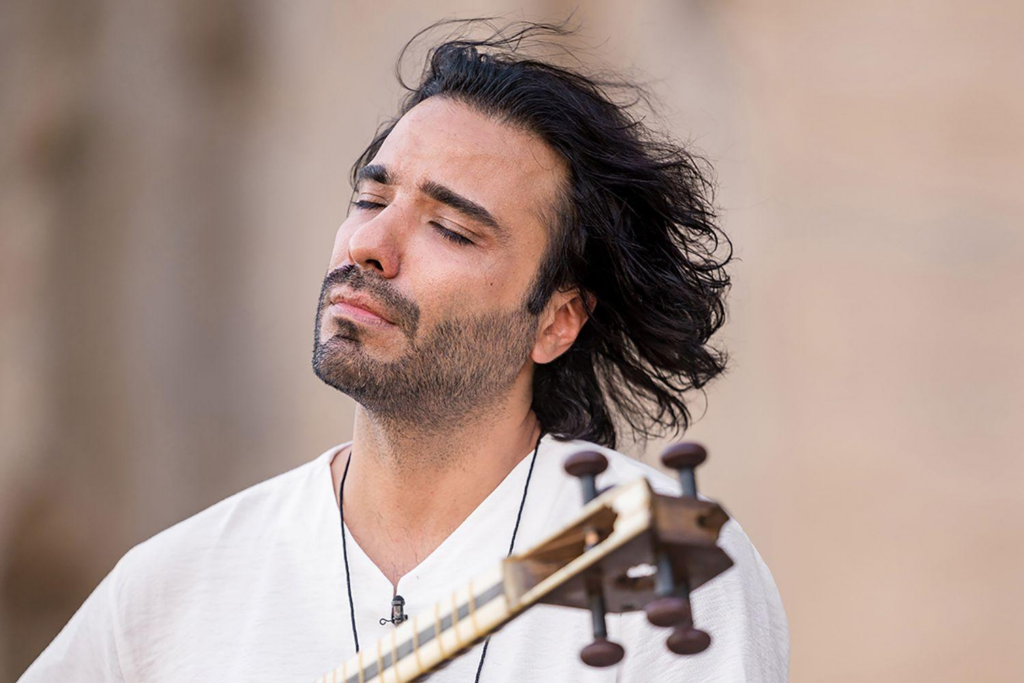
As geopolitical tensions sharpen between the United States and Iran, an unexpected scene unfolded outside a major power facility near Tehran. An Iranian musician sat cross-legged on a mat, calmly playing a traditional instrument, turning a potential flashpoint into a moment of quiet symbolism.
The performance by Ali Ghamsari comes at a time when threats of military escalation, including warnings from Donald Trump, have raised fears of strikes on Iran’s critical infrastructure. Against that backdrop, the act has resonated far beyond music.
What happened at the Damavand power plant?
The performance took place outside the Damavand Power Plant, one of the country’s key energy sites.
A moment captured on video
Clips shared widely on social media show Ghamsari:
- Seated in a traditional setting outdoors
- Playing the tar, a long-necked Persian string instrument
- Speaking directly to viewers about peace and stability
In the video, he expresses hope that his music might “help keep the lights in homes from going out,” a line that blends poetic intent with the stark reality of potential infrastructure attacks.
Why this location matters
The choice of venue was deliberate. The Damavand plant is:
- Symbolically tied to civilian life and energy security
- Among the types of infrastructure reportedly threatened in recent rhetoric
By performing there, Ghamsari transformed a strategic site into a cultural stage.
Why did this performance happen now?
The timing is inseparable from escalating tensions around the Strait of Hormuz, a critical global oil route.
The geopolitical trigger
Recent warnings from President Trump included:
- A deadline tied to reopening the Strait of Hormuz
- Threats of large-scale strikes on Iranian infrastructure
- Specific mention of power plants and bridges as potential targets
These statements have heightened anxiety within Iran, especially around civilian facilities.
A cultural response to political pressure
Ghamsari’s performance appears to function as:
- A symbolic act of defiance
- A plea for peace
- A reminder of the human cost behind strategic decisions
It’s not unusual for artists to respond to political crises, but the setting and timing here amplify the message.
What are Tehran’s “human chains” and why are they significant?
Alongside the performance, Iranian authorities have reportedly encouraged young citizens to form symbolic “human chains” around key infrastructure sites.
What the initiative involves
- Youth groups assembling at power plants
- Participation from students, artists, and athletes
- Formation of human rings around critical facilities
The idea, according to officials, originated from young people themselves and was later supported by government bodies.
What message it sends
These human chains carry layered meaning:
- Civilian presence as a symbolic deterrent
- National solidarity during external pressure
- A visual statement aimed at global audiences
How does art function in moments of conflict?
Ghamsari’s performance is part of a long tradition where art intersects with crisis.
Art as resistance
Music and performance can:
- Challenge narratives without direct confrontation
- Humanize abstract geopolitical conflicts
- Create emotional resonance that policy statements cannot
Art as communication
Unlike official messaging, artistic acts:
- Cross language barriers
- Travel quickly via social media
- Invite interpretation rather than dictate it
In this case, a single performance reframed a military narrative into a cultural one.
What does this moment reveal about modern conflict?
This episode highlights how warfare, media, and culture now overlap in real time.
Key dynamics at play
- Social media amplifies symbolic acts instantly
- Civilian spaces become part of strategic narratives
- Individuals, not just governments, shape global perception
The power of imagery
A lone musician outside a power plant offers a stark contrast:
- Industry vs. art
- Threat vs. calm
- Destruction vs. preservation
That contrast is precisely why the moment has gained traction.
Why this story matters beyond Iran
While rooted in a specific geopolitical moment, the implications are broader.
The evolving nature of protest
Modern protest is no longer confined to marches or speeches. It includes:
- Performances in symbolic locations
- Digital storytelling through viral clips
- Hybrid forms of activism blending art and politics
The global audience factor
Events like this are not just local:
- They are consumed by international audiences in real time
- They influence public opinion beyond borders
- They shape narratives that policymakers cannot fully control
TL;DR
- Iranian musician Ali Ghamsari performed outside a major power plant amid rising US-Iran tensions
- The act followed threats of strikes on Iranian infrastructure tied to the Strait of Hormuz
- Tehran has also encouraged symbolic “human chains” around key facilities
- The moment highlights how art, protest, and geopolitics intersect in modern conflicts