
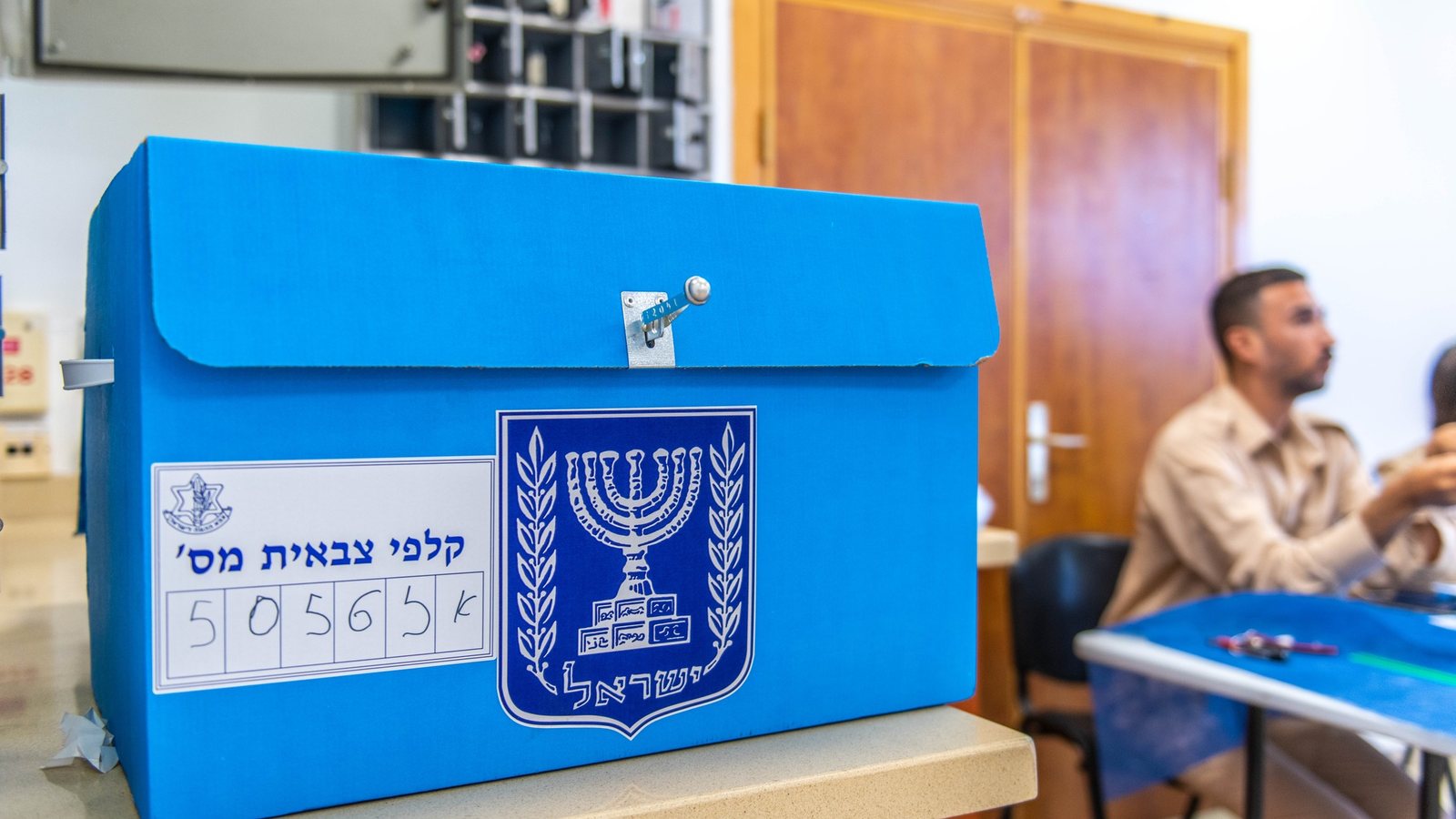

Israelis vote on Tuesday, October 27, in an election for all 120 seats in the Knesset, the country’s parliament. The final three TV polls put former army chief Gadi Eisenkot’s Yashar party ahead of Prime Minister Benjamin Netanyahu’s Likud. Neither camp reached the 61 seats needed to govern.
That gap is the story to watch. In Israel, winning the most seats doesn’t make you prime minister. Building a 61-seat coalition does. The polls suggest small parties near the cutoff and the Arab-majority lists could decide whether anyone gets there.
Americans have a direct stake. President Donald Trump gave Netanyahu his “Complete and Total Endorsement” on Truth Social on October 18, Al Jazeera reported, and Netanyahu said he was “so honoured and humbled.” Bloomberg’s Dan Williams called the endorsement “unusually explicit” in a report republished by The Spokesman-Review. The vote also lands one week before the US midterms on November 3, where control of the Senate is up.
Polls are open 7 a.m. to 10 p.m., with no mail ballots
Most polling stations open at 7 a.m. and close at 10 p.m. Israel time, which is 1 a.m. to 4 p.m. Eastern. Anyone in line at closing can still vote, The Jerusalem Post’s voter guide says. Small communities, hospitals and prisons keep shorter hours, and election day is a national holiday.
About 7.3 million citizens aged 18 and over are eligible. The register lists 7,331,981 voters, up 543,177 since 2022, Haaretz reported. Nobody has to register. The state builds the list from the population registry.
Unlike the US, where mail voting is now routine, Israel does not recognize absentee ballots. Voters must appear in person and show ID, according to a Library of Congress legal explainer.
The exceptions are narrow. Diplomats and state emissaries voted at 101 stations in 99 missions abroad from October 15. Soldiers have voted since October 21 at about 850 military stations, some inside Gaza, Lebanon and Syria, The Times of Israel reported.
Voting itself is low-tech. Behind a screen, each voter picks one printed paper slip marked with a party’s Hebrew letters, seals it in a light blue envelope and drops it in the box.
Netanyahu, Eisenkot and the parties on the ballot
The Times of Israel counts 37 lists on the ballot. These are the ones the final polls put in the Knesset:
- Likud, led by Netanyahu, 77, Israel’s longest-serving prime minister. He is on trial on corruption charges, which he denies, Al Jazeera notes.
- Yashar, led by Eisenkot, a former military chief of staff and the opposition’s likeliest candidate for prime minister.
- Together (B’Yachad), a joint list of former prime ministers Naftali Bennett and Yair Lapid.
- Other opposition-side lists: Avigdor Liberman’s Yisrael Beytenu and Yair Golan’s Democrats.
- Netanyahu’s current partners: Itamar Ben-Gvir’s Otzma Yehudit, Bezalel Smotrich’s Religious Zionism, and the ultra-Orthodox Shas and United Torah Judaism.
- The Arab-majority lists Ra’am and the Joint List. The Supreme Court unanimously overturned bans on both on October 2, Al Jazeera reported.
When the outgoing Knesset dissolved in July, Netanyahu’s coalition held 60 of the 120 seats.
What the final polls show
Israel bans publishing polls in the last days of a campaign, so the final round came out on Friday, October 23. Ynetnews compiled the three TV network surveys:
| Poll | Yashar | Likud | Together | Opposition bloc | Netanyahu bloc | Arab lists |
|---|---|---|---|---|---|---|
| Kan 11 | 22 | 20 | 14 | 52 | 50 | 14 |
| Channel 12 | 23 | 21 | 15 | 56 | 50 | 14 |
| Channel 13 | 22 | 19 | 14 | 54 | 50 | 16 |
In every poll, the Netanyahu bloc stands at 50 and the opposition falls short of 61 without the Arab lists. Two small lists, People of Israel and the Reservists party, polled between 2.4% and 3.1% in most surveys, just under the threshold. If one of them clears it, it would take four seats from somewhere else.
Trump’s endorsement doesn’t appear to have moved many voters. In a Channel 12 poll cited by Bloomberg, 64% said it wouldn’t influence them, 17% said it made them less likely to back Netanyahu and 12% said it reinforced a Likud vote.
Why first place may not decide who governs
Israel hands out seats nationally, in proportion to each list’s vote. A list needs 3.25% of valid votes to enter the Knesset, which works out to four seats. No party has ever won 61 seats alone, the Library of Congress notes, so every Israeli government is a coalition.
The law sets the deadlines. Formal results must be published by November 4, according to a JTA guide carried by The Times of Israel.
President Isaac Herzog then has seven days to pick a Knesset member to try to form a government. That person doesn’t have to lead the biggest party. The nominee gets 28 days, plus a possible 14-day extension.
If two nominees fail and the Knesset can’t agree on a third, it dissolves and Israel votes again.
Until a new government is sworn in, Netanyahu’s government stays on in a caretaker role. That has happened often: this is Israel’s sixth national election since 2019.
A NIS 690 million operation, by the committee’s count
The Central Elections Committee, headed by Supreme Court Justice Noam Sohlberg, runs the vote. Its budget is NIS 690 million, about $222 million, according to a committee statement reported by The Times of Israel on October 25. That buys 12,018 polling stations, 18,000 ballot boxes and about 100,000 election-day workers.
The committee printed about 450 million ballot slips, or roughly 11.5 million per list, at a plant in Kiryat Gat. Every list’s slips go to every booth, and the law requires a 30% surplus over the voter count, JFeed reported.
The committee also says 6,209 stations are accessible to voters with disabilities. About 50,000 people sat roughly 2,140 training classes, and inspectors have 15,000 cameras to document irregularities. Travel is free on 660 intercity bus routes and all Israel Railways lines, JFeed reported.
The committee has also been busy in court. It had received more than 276 campaign petitions by October 25, nearly five times the 2022 total, according to Ynet as cited by The Times of Israel. The same report notes that many campaign videos and ads now use AI, and that the committee can order content removed but can’t stop others from reposting it. Our earlier look at why betting markets favored Eisenkot covers how that race took shape.
Polls close at 10 p.m. Tuesday, 4 p.m. Eastern. Ballots from soldiers and other double-envelope voters are handled separately and added later. Once the committee certifies the count, Herzog’s seven-day clock to pick a nominee starts.