
Amid escalating protests and speculation over regime stability in Iran, questions swirled this week over whether Supreme Leader Ayatollah Ali Khamenei had fled the country. Some reports even suggested he could seek refuge in Russia if the United States pursued a Venezuela-style regime change operation.
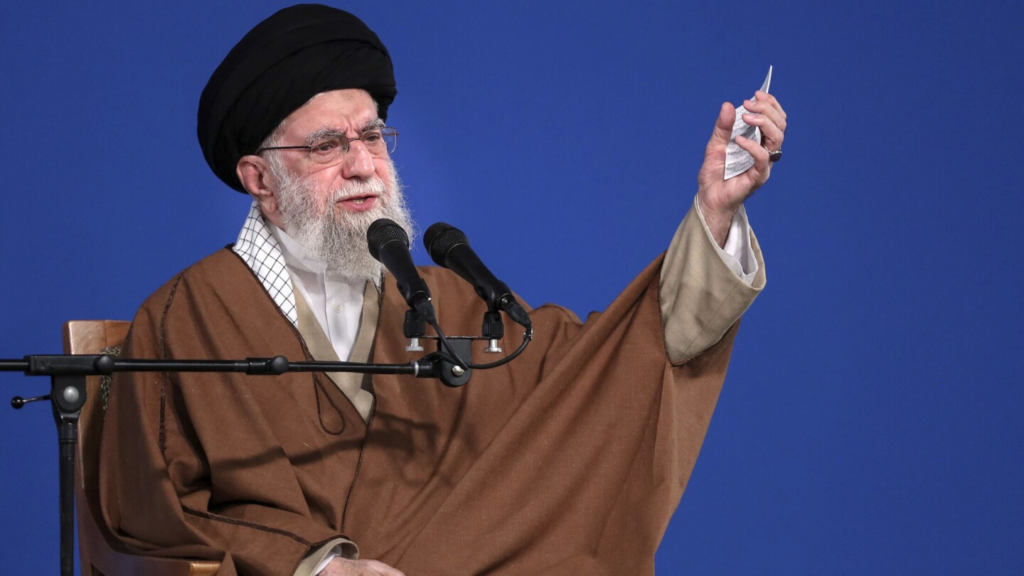
However, those claims were put to rest on Friday. According to multiple reports, Khamenei has not left Iran and remains in Tehran, where he publicly addressed the nation after Friday prayers, directly responding to U.S. President Donald Trump’s warnings and ongoing nationwide protests.
Khamenei Responds After Friday Prayers
In a televised address aired by Iranian state media, Khamenei struck a defiant tone, rejecting foreign interference and warning protesters of a forceful response.
“The Islamic Republic will not tolerate unrest,” Khamenei said, urging Iran’s youth to remain united and warning that internal divisions only benefit external enemies.
In what appeared to be a veiled threat, he indicated that security forces would act decisively against demonstrators, directly challenging Trump’s public support for protesters.
He also dismissed the U.S. president personally, accusing him of having hands “stained with the blood of Iranians,” as crowds chanted “Death to America!” in footage broadcast nationwide.
Trump’s Warning to Tehran
President Trump has repeatedly warned Iranian authorities against using violence on peaceful protesters.
Last week, he said the U.S. would “come to their rescue” if demonstrators were violently suppressed. In an interview aired Thursday with conservative radio host Hugh Hewitt, Trump reiterated the warning:
“They’ve been told very strongly, if they do that, they’re going to have to pay hell.”
Khamenei, however, dismissed Trump’s comments, saying protesters were destroying their own streets “to please the president of the United States.”
Iran Signals Hardline Crackdown
Iran’s judiciary chief, Gholamhossein Mohseni-Ejei, reinforced the leadership’s stance, vowing severe punishment for protesters.
“Punishment will be decisive, maximum, and without any legal leniency,” he said.
State media has increasingly referred to demonstrators as “terrorists,” language that rights groups warn often precedes violent crackdowns, similar to previous protest waves in Iran.
Internet Shutdown Amid Protests
As unrest spread, Iran’s authorities cut off internet access and international phone calls, isolating the country digitally.
Despite the blackout, short videos circulated online showing protesters chanting against the government near bonfires, with debris strewn across streets in Tehran and other cities.
Iranian state outlets blamed the violence on “terrorist agents” backed by the U.S. and Israel, reporting unspecified casualties without further details.
Why Iran Is Facing Nationwide Protests
Iran has experienced repeated waves of protests in recent years, driven by economic collapse, sanctions, and political repression.
- Following a 12-day conflict and tightening sanctions, Iran’s currency crashed.
- In December, the rial fell to 1.4 million to the U.S. dollar, triggering widespread anger.
- Protesters have openly chanted against Iran’s theocratic leadership, an unusually bold move.
Analysts say it remains unclear why authorities have not yet launched a full-scale crackdown, though Friday’s statements suggest that could soon change.
Speculation Over Khamenei Fleeing Iran
Reports suggesting Khamenei might flee to Russia emerged amid comparisons to Venezuela, where regime leaders have relied on foreign allies to survive internal unrest.
However, his public appearance and address appear designed to project control and authority, signaling that Iran’s leadership is not preparing to step aside, at least for now.
Bottom Line
Despite rumors of a possible exit, Ayatollah Ali Khamenei remains in Iran, confronting protests with defiance and warning of harsh consequences. With the internet cut, tensions escalating, and U.S. warnings growing sharper, Iran appears headed toward another dangerous crossroads.