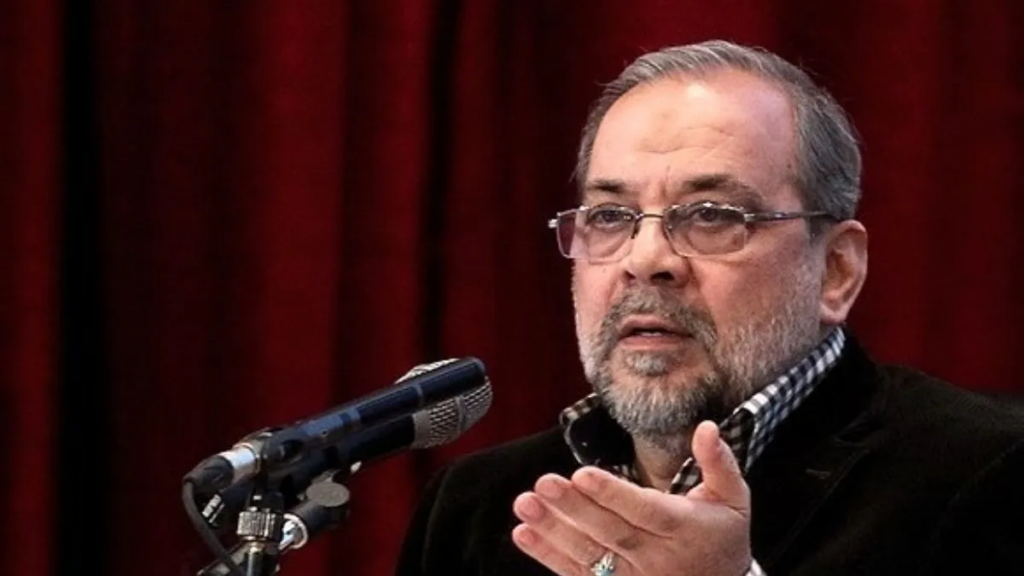
Iran has appointed Brigadier General Mohammad Bagher Zolghadr as the new secretary of the Supreme National Security Council (SNSC), signaling a rapid restructuring of its top security leadership following a wave of devastating airstrikes. The move, confirmed on March 24, comes at a moment of acute instability for the Islamic Republic.
Approved by Supreme Leader Mojtaba Khamenei and formalized by President Masoud Pezeshkian, Zolghadr’s appointment follows the death of his predecessor, Ali Larijani, in a targeted strike last week.
What is the significance of Mohammad Bagher Zolghadr’s appointment?
Zolghadr’s elevation to one of Iran’s most powerful security posts is not just a personnel change—it reflects a broader attempt to stabilize governance after what analysts describe as an unprecedented decapitation of Iran’s leadership.
A former commander in the Islamic Revolutionary Guard Corps (IRGC), Zolghadr is seen as a hardline insider with deep ties to Iran’s security apparatus. His appointment suggests continuity in Iran’s strategic posture, even as its leadership structure undergoes emergency rebuilding.
Why the SNSC role matters
The Supreme National Security Council is central to Iran’s decision-making on:
- National defense and military strategy
- Nuclear policy
- Foreign relations during crises
- Coordination between civilian and military leadership
In times of conflict, the SNSC effectively becomes the state’s nerve center.
What happened in the US-Israel strikes on Iran?
Zolghadr’s appointment follows a large-scale military campaign launched on February 28, reportedly involving coordinated operations by the United States and Israel.
Key developments from the strikes
- Initial strikes targeted leadership compounds in Tehran
- Follow-up operations throughout March hit the military and intelligence infrastructure
- Secondary strikes eliminated replacement leadership figures
The campaign represents one of the most significant escalations in Middle East conflict dynamics in recent years.
Which top Iranian leaders were killed?
The strikes reportedly resulted in the deaths of several high-ranking officials, marking an extraordinary loss for Iran’s leadership.
Reported casualties include:
- Supreme Leader Ali Khamenei
- IRGC Commander-in-Chief Mohammad Pakpour
- Chief of General Staff Abdolrahim Mousavi
- Defense Minister Aziz Nasirzadeh
- SNSC Secretary Ali Larijani
- Basij chief Gholamreza Soleimani
This level of simultaneous leadership loss is unprecedented in the Islamic Republic’s history.
How is Iran restructuring its leadership?
With multiple top officials killed in quick succession, Iran has been forced into rapid institutional reorganization.
Key shifts underway
- Consolidation of authority under Mojtaba Khamenei
- Fast-tracked appointments to critical military and political roles
- Increased reliance on IRGC-linked leadership figures
- Emergency coordination between remaining state institutions
Zolghadr’s appointment fits into this broader pattern of prioritizing experienced security insiders.
What is the status of US-Iran diplomacy?
Even as military tensions remain high, there are signs—albeit conflicting—of possible diplomatic engagement.
On March 23, former US President Donald Trump announced a five-day pause in planned strikes on Iranian infrastructure. According to his statement, the pause is intended to create space for negotiations.
Key points from the US position
- Temporary halt on attacks targeting energy infrastructure
- Conditional continuation based on progress in talks
- Emphasis on achieving a “complete resolution”
However, Iran has publicly rejected claims that talks are progressing positively.
Iran’s response
- Denied the existence of “productive” negotiations
- Maintained a firm stance against US narratives
- Continued internal consolidation rather than outward compromise
This disconnect highlights the uncertainty surrounding diplomatic efforts.
Why does this moment matter for global geopolitics?
The developments in Iran carry implications far beyond its borders.
1. Leadership decapitation and state resilience
The scale of leadership loss raises questions about the following:
- Continuity of governance
- Military command integrity
- Internal political stability
Yet Iran’s rapid appointments suggest a system designed to absorb shocks.
2. Risk of further escalation
Despite the temporary pause, the situation remains volatile:
- Miscalculations could trigger broader regional conflict
- Proxy actors may become more active
- Energy markets could face disruption
3. Uncertain diplomatic pathways
Conflicting narratives from Washington and Tehran indicate the following:
- Lack of synchronised communication
- Fragile or nonexistent negotiation frameworks
- High stakes for any potential agreement
Who is Mohammad Bagher Zolghadr?
While not a globally prominent figure, Zolghadr has long been embedded in Iran’s security ecosystem.
Background highlights
- سابق (former) senior commander in the IRGC
- Experience in internal security and strategic planning
- Known for alignment with hardline factions
His appointment suggests that Iran is prioritizing control and continuity over reform during the crisis.
What happens next?
Iran’s immediate focus will likely remain on stabilizing its leadership and maintaining internal cohesion.
Key things to watch
- Further leadership appointments
- Military posture and retaliation decisions
- Signals of real diplomatic engagement
- Internal public response within Iran
The next few weeks could define whether this moment leads to escalation, negotiation, or prolonged instability.
TL;DR
- Iran appointed Mohammad Bagher Zolghadr as SNSC chief after major leadership losses
- Strikes reportedly killed top officials, including Ali Khamenei
- Mojtaba Khamenei is overseeing rapid restructuring
- The US announced a temporary pause in strikes, but Iran denies meaningful talks
- The situation remains highly volatile with global implications