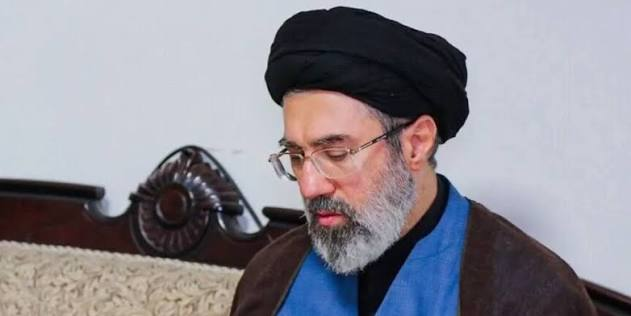
Iran’s Supreme Leader Mojtaba Khamenei has remained largely out of public view for months, and the unusual silence has once again triggered speculation about his health.
Unverified reports circulating in regional media and intelligence-linked accounts have claimed that Khamenei is in critical condition after injuries sustained in the February 28 strike that killed his father and predecessor, Ayatollah Ali Khamenei. Iranian officials have repeatedly rejected reports that he is incapacitated.
The uncertainty has become more significant because Mojtaba Khamenei is not an ordinary political figure. As Iran’s Supreme Leader, he holds authority over the country’s armed forces, judiciary and broad strategic direction. Any prolonged inability to exercise that authority could therefore have consequences far beyond his personal health.
What is known about Mojtaba Khamenei’s health?
The central problem is that there is no independently verified public medical information about Khamenei’s current condition.
Iranian officials have provided conflicting or incomplete accounts since the February 28 attack. Some officials have said he suffered only minor injuries, while other reports have described much more serious wounds.
In May, an Iranian health ministry public relations official said Khamenei had been hospitalized after the attack and received stitches for wounds, including an injury to his leg. The official rejected reports that he had suffered disfigurement or lost a limb.
Other Iranian officials have described him as being in good health. In May, a senior official in the Supreme Leader’s office said Khamenei was in “full health” and dismissed reports of serious injuries.
That leaves a substantial information gap. The Iranian government says the Supreme Leader remains active, but the lack of regular public appearances has made those assurances difficult to independently assess.
Why has Mojtaba Khamenei been absent from public view?
Khamenei has maintained an unusually low public profile since succeeding his father in March.
Reuters reported in July that he had not appeared publicly since his appointment and had also been absent from major events surrounding his father’s funeral. Sources cited by the news agency said he had suffered facial and other injuries during the February attack and was recovering while making decisions behind the scenes.
There is another possible explanation: security.
The February strike demonstrated that Iran’s senior leadership could be directly targeted. Iranian officials have argued that keeping the Supreme Leader out of public view is necessary to protect him from further attacks.
An Iranian ambassador said in March that Khamenei remained safe and active and that his absence was connected to heightened security measures.
Security concerns are therefore plausible. But months without a conventional public appearance have created a separate political problem: the government must convince both Iranians and foreign governments that the country’s ultimate decision-maker is alive, functioning and in command.
What happened to the video released by Iran?
Iranian state-linked media recently released a short video appearing to show Khamenei meeting advisers.
The footage was significant because it represented a rare visual appearance after months of uncertainty. However, the video was undated, meaning it does not independently establish when it was recorded or provide a clear picture of his current health.
Iran has also indicated that more footage could be released.
A senior Basij official said additional documentation showing Khamenei among the public and meeting armed forces commanders would be released to counter speculation surrounding his health and absence.
The development matters because a current, independently verifiable public appearance would provide considerably more information than an undated clip.
For now, the video should be treated as evidence that Iranian authorities want to demonstrate his continued presence, rather than conclusive proof of his physical condition.
Why does his health matter so much to Iran?
The Supreme Leader occupies the most powerful position in Iran’s political system.
The president manages the executive branch, but the Supreme Leader has ultimate authority over major areas including the armed forces and national security. The position also carries enormous influence over foreign policy and the country’s broader political direction.
That makes the health of the person holding the office a strategic issue.
If Khamenei were temporarily incapacitated, Iran could potentially continue functioning through existing institutions and officials. But if he were unable to exercise authority for an extended period, questions about who has the final say could become increasingly difficult to avoid.
This is particularly important because Khamenei is a relatively new Supreme Leader. Iran’s Assembly of Experts selected him in March after his father was killed in the February 28 strikes.
His succession itself was extraordinary. He inherited the position during a major conflict and amid intense pressure on Iran’s political and military establishment.
Could Khamenei’s absence create a power struggle?
Potentially, although there is no evidence that a formal succession crisis is underway.
The Islamic Revolutionary Guard Corps is one of the most powerful institutions in Iran and has played a central role in the country’s security and foreign policy. Khamenei’s political network has also been closely associated with the Guard.
If the Supreme Leader were unable to make decisions, competing centers of power could become more important.
Possible pressure points could include:
- The Islamic Revolutionary Guard Corps and its senior commanders
- Senior clerics involved in Iran’s leadership institutions
- President Masoud Pezeshkian and his administration
- Political factions favoring either confrontation or diplomacy
- The institutions responsible for determining a future Supreme Leader
Reuters reported in July that Khamenei’s continued absence was already creating concerns about the legitimacy and sustainability of an unusually secretive form of leadership.
That does not mean Iran is on the verge of political collapse. It means that uncertainty at the top becomes more consequential when the country is simultaneously dealing with war, economic pressure and negotiations with foreign powers.
Has Mojtaba Khamenei actually been making decisions?
There is evidence that Iranian authorities say he has remained involved in governing.
Iranian state media reported that President Masoud Pezeshkian met Khamenei in late July. According to Reuters, the meeting covered military affairs and economic issues including foreign exchange, energy use and international economic relations.
That is important because it indicates that Iranian officials continue to portray Khamenei as an active decision-maker rather than merely a symbolic leader.
At the same time, Pezeshkian has reportedly offered differing descriptions of his access to the Supreme Leader. He previously said interactions were increasing, but later described communication as “very difficult.”
The discrepancy is one reason the health story continues to attract attention.
Why are the rumors so difficult to verify?
The information environment surrounding Iran is unusually opaque.
During wartime, governments have strong incentives to control information about senior leaders. Confirming serious illness could affect military calculations, domestic confidence and diplomatic negotiations.
At the same time, opposition groups, foreign intelligence services and regional media outlets may have their own incentives to amplify reports about instability inside Iran.
That means claims about Khamenei’s health need to be separated into three categories:
- Confirmed: Iran has officially presented him as alive and exercising his role.
- Reported but disputed: Sources have described serious injuries from the February strike.
- Unverified: Claims that he is dying, incapacitated or unable to govern.
The third category should not be presented as established fact.
Why his health is a national security issue
The concern is bigger than whether one politician is sick.
Iran’s Supreme Leader has a direct role in decisions involving the country’s military and strategic posture. During a period of confrontation with the United States and Israel, uncertainty over whether the Supreme Leader can communicate and issue decisions could influence how Iran’s adversaries interpret its intentions.
It could also affect internal calculations.
A visible and functioning Supreme Leader can provide a clear chain of command. An absent leader can force officials, commanders and political factions to interpret his intentions or operate with greater autonomy.
That is why even an apparently simple question about Khamenei’s health has become a geopolitical issue.
What happens if Mojtaba Khamenei cannot continue?
Iran has constitutional mechanisms for leadership succession, although exactly how they would operate in an extraordinary wartime situation would depend on the circumstances.
The Assembly of Experts is responsible for selecting the Supreme Leader. It was this body that selected Mojtaba Khamenei after the death of his father. (Al Jazeera)
A prolonged incapacity could therefore eventually force Iran’s political establishment to confront a succession question.
But there is an important distinction between temporary incapacity and death.
If Khamenei remains alive but unable to appear publicly, the government could attempt to preserve his authority through advisers, written messages and senior officials. If he were permanently unable to perform the role, pressure for a formal succession process would become much greater.
What should readers make of the latest reports?
The most defensible conclusion is that Mojtaba Khamenei is alive and that Iranian authorities continue to portray him as actively involved in governing, but his exact medical condition remains unclear.
There is credible reporting that he was injured in the February 28 attack. There are also repeated Iranian assurances that his injuries were limited and that he remains capable of performing his duties.
The recent video and reported meeting with Pezeshkian provide additional evidence that Iranian officials are attempting to demonstrate his continued role. But an undated video cannot independently settle questions about his present health.
For now, claims that Mojtaba Khamenei is “on his deathbed” should therefore be treated as unverified.
What is not speculative is the political importance of the uncertainty itself. In a country where the Supreme Leader occupies the center of the political, military and religious power structure, prolonged silence at the top can become a national security problem even before a formal leadership crisis begins.
TL;DR
Mojtaba Khamenei’s prolonged absence from public view has fueled claims that Iran’s Supreme Leader is critically ill after being wounded in the February 28 strike that killed his father. Iranian officials deny that he is incapacitated and say he continues to govern.
A recent undated video and a reported late-July meeting with President Masoud Pezeshkian support Tehran’s claim that Khamenei remains active, but they do not independently establish his current medical condition.
The bigger issue is political. Because the Supreme Leader has enormous authority over Iran’s military and strategic affairs, prolonged uncertainty over his ability to govern could affect both domestic power dynamics and Iran’s behavior toward its foreign adversaries.