


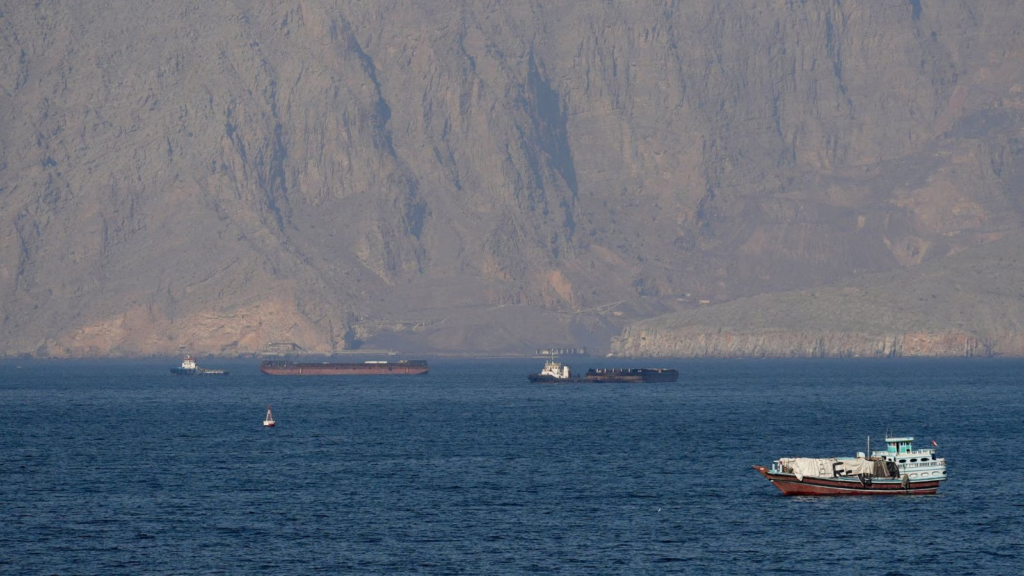
Tensions in the Middle East escalated sharply on Saturday after reports that Iranian forces opened fire on merchant vessels attempting to pass through the Strait of Hormuz. The incident, which reportedly forced at least two Indian tankers to reverse course, underscores just how fragile the current ceasefire remains—and how quickly global trade routes can become flashpoints.
Early details remain limited, but multiple sources point to a coordinated enforcement of a renewed Iranian blockade of one of the world’s most critical shipping corridors.
What Happened in the Strait of Hormuz?
According to maritime security reports, merchant vessels navigating the Strait of Hormuz came under gunfire from Iranian forces. The incident reportedly occurred about 20 nautical miles northeast of Oman.
The United Kingdom Maritime Trade Operations (UKMTO), which monitors shipping threats in the region, said a tanker was approached and fired upon by two gunboats linked to Iran’s Islamic Revolutionary Guard Corps (IRGC).
Key developments:
- Gunboats opened fire on at least one tanker
- Two Indian vessels reportedly turned back after the incident
- Multiple ships received radio warnings from Iranian naval forces
- Iran declared renewed restrictions on passage through the Strait
Despite the confrontation, UKMTO said the targeted tanker and its crew were safe, though the vessel’s identity has not been disclosed.
Were Indian Tankers Targeted?
Iranian state media claimed that two Indian vessels were forced to retreat westward after being warned and fired upon by Iranian naval units.
One of the vessels was described as:
- An Indian-flagged VLCC (Very Large Crude Carrier)
- Carrying approximately 2 million barrels of Iraqi oil
While independent confirmation is still emerging, the report highlights how quickly commercial shipping—including Indian energy imports—can become entangled in geopolitical tensions.
Why Is the Strait of Hormuz So Critical?
The Strait of Hormuz is one of the most strategically important waterways in the world.
Why it matters:
- Roughly 20% of global oil supply passes through it
- It connects the Persian Gulf to international markets
- It is a chokepoint just 21 miles wide at its narrowest
Any disruption—even temporary—can ripple across global energy markets.
What Triggered the Latest Escalation?
The reported firing came just hours after Iran announced it was reimposing restrictions on the strait, reversing a brief reopening tied to negotiations with the United States.
Iran’s position:
In a televised statement, Iranian military officials accused Washington of:
- Failing to uphold commitments made during ceasefire discussions
- Continuing a naval blockade targeting Iranian-linked shipping
Iran warned that:
- The strait would remain under “strict control”
- No vessels would be allowed passage under current conditions
What Has the US Said?
While there has been no immediate detailed response to this specific incident, US policy in the region remains firm.
Donald Trump has previously stated:
- Iran had agreed to reopen the Strait
- The US would maintain naval pressure until a broader deal is finalized
This creates a volatile standoff:
- Iran asserts control over the waterway
- The US insists on freedom of navigation
That tension is now playing out directly in commercial shipping lanes.
How Are Ships Being Warned?
Shipping sources told Reuters that several vessels received direct radio communications from Iranian naval forces.
The message:
- The Strait of Hormuz is closed
- No ships are permitted to pass
- Vessels must turn back immediately
This type of communication is significant. It signals:
- Active enforcement, not just a symbolic declaration
- Willingness to use force to back restrictions
What Does This Mean for Global Trade?
Even limited disruptions in the Strait of Hormuz can have outsized consequences.
Immediate risks:
- Delays in oil shipments
- Increased insurance costs for vessels
- Rising freight and energy prices
Broader implications:
- Heightened volatility in global oil markets
- Increased pressure on alternative routes and reserves
- Greater military presence from global powers
India, which relies heavily on imported oil, is particularly exposed to such disruptions.
Iran’s Messaging: Strength and Deterrence
As reports of the incident emerged, Mojtaba Khamenei issued a strong statement praising Iran’s military capabilities.
He emphasized:
- The effectiveness of Iran’s drone operations
- The readiness of its navy to confront adversaries
The tone was clear: Iran is signaling both capability and intent.
A Pattern of Escalation
This incident fits into a broader pattern of rising tensions across key maritime chokepoints.
Recent developments include:
- Increased surveillance and naval activity in the Gulf
- Disruptions tied to US-Iran negotiations
- Reports of drone and naval confrontations
Together, these suggest a region where:
- Ceasefires are fragile
- Miscalculations are possible
- Commercial shipping is increasingly at risk
What Happens Next?
The situation remains fluid, but several scenarios are likely:
In the short term:
- Increased naval escorts for commercial vessels
- Rerouting of some shipments
- Heightened alert levels across shipping networks
In the longer term:
- Renewed diplomatic efforts to stabilize the strait
- Potential escalation if incidents continue
- Greater involvement from international maritime coalitions
TL;DR
- Iranian gunboats reportedly fired on merchant vessels in the Strait of Hormuz.
- Two Indian tankers were forced to turn back, according to media reports.
- Iran has reimposed restrictions on the waterway, citing US actions.
- The US maintains its stance on freedom of navigation.
- The incident highlights growing risks to global oil supply and shipping routes.