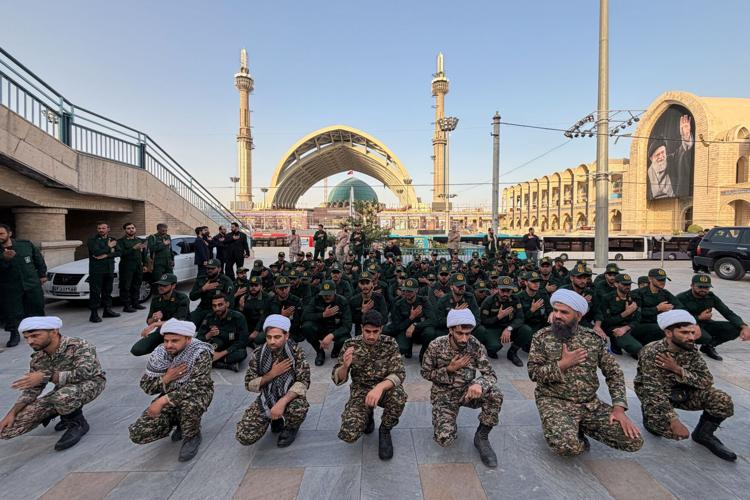
The funeral of Iran’s late Supreme Leader, Ayatollah Ali Khamenei, began in Tehran four months after his reported assassination, raising questions about why one of the country’s most significant state ceremonies was postponed for so long.
Iranian officials have attributed the delay primarily to wartime security concerns during the conflict involving Iran, Israel, and the United States. The extended timeline has also prompted questions about how Ayatollah Ali Khamenei’s body was preserved, given Islamic burial traditions that generally favor prompt funerals.
Here’s a closer look at the reported reasons behind the delay and what is known about the preservation of his remains.
Why was Ayatollah Ali Khamenei’s funeral delayed?
According to Iranian officials and multiple media reports, the primary reason for postponing the funeral was security.
Ayatollah Ali Khamenei was reportedly killed on February 28 during strikes carried out amid the conflict involving Iran, Israel, and the United States.
At the time, military operations were still underway, making any large public gathering a potential security risk.
Officials reportedly concluded that holding a state funeral during active hostilities could expose hundreds of thousands of mourners, senior government figures, and religious leaders to further attacks.
Security concerns during wartime
Several factors reportedly influenced the decision:
- Continued military operations during the conflict.
- Concerns about additional airstrikes.
- The safety of Iran’s senior political and military leadership.
- The logistical challenge of securing massive public gatherings.
Large state funerals in Iran traditionally attract enormous crowds, making security planning especially complex during periods of armed conflict.
Were there rumors about a temporary burial?
Yes.
In the weeks following Khamenei’s reported death, speculation circulated that his body had been temporarily buried.
Iranian officials rejected those claims, maintaining that the delay resulted from wartime conditions rather than any deviation from planned funeral arrangements.
Authorities stated that the body remained preserved while preparations continued for a full state funeral once security conditions improved.
Where was Khamenei’s body kept?
Although Iranian authorities have not publicly disclosed the exact location, experts believe the body was most likely stored in a refrigerated forensic or mortuary facility.
Unlike some Western funeral practices, Islamic tradition generally discourages chemical embalming except under exceptional circumstances.
Because of that, specialists say refrigeration would have been the most likely method of preservation.
Counterterrorism expert Dr. Mohammed Omar told Fox News Digital that Shiite Islamic law allows delayed burial in exceptional situations and that preserving a body through refrigeration would be religiously permissible if approved by senior clerical authorities.
He also noted that Iranian forensic facilities routinely preserve bodies for extended periods when necessary.
Does Islam allow delayed burials?
In most circumstances, Islamic tradition encourages burial as soon as possible after death.
However, religious scholars acknowledge exceptions when extraordinary circumstances make immediate burial impossible.
Examples may include:
- Armed conflict.
- Natural disasters.
- Criminal investigations.
- Public safety concerns.
- Transportation or security issues.
Under Shiite jurisprudence, religious authorities may grant exemptions when unusual conditions require delaying funeral rites.
What does Ayatollah Ali Khamenei’s funeral schedule include?
The funeral ceremonies extend over several days and involve multiple cities important to Shiite Islam.
According to Iranian officials and media reports:
Tehran
The coffin is scheduled to lie in state at Imam Khomeini Grand Mosalla, allowing the public to pay their respects.
A large funeral procession is planned through central Tehran before the cortege leaves the capital.
Qom
The procession will continue to Qom, one of Iran’s most important centers of Shiite religious scholarship.
Ceremonies are expected to include visits between the Shrine of Fatima Masumeh and Jamkaran Mosque.
Iraq
Reports indicate the coffin will also be taken to Iraq for ceremonies in:
- Najaf.
- Karbala.
Both cities are among the holiest sites in Shiite Islam and hold deep religious significance for millions of believers.
Final burial in Mashhad
The funeral is expected to conclude with Khamenei’s burial near the Shrine of Imam Reza in Mashhad.
The location reportedly reflects Khamenei’s personal wish to be buried close to one of Shiite Islam’s most revered figures.
Who is expected to attend?
Iran’s Foreign Ministry has stated that officials from more than 100 countries are expected to participate in various funeral events.
The ceremonies are likely to include:
- Foreign government delegations.
- Senior Iranian officials.
- Religious leaders.
- Military representatives.
- Large numbers of mourners.
Some reports have suggested that Iran’s new Supreme Leader, Mojtaba Khamenei, may not attend portions of the public ceremonies, although Iranian authorities have not officially confirmed those reports.
Why is this funeral significant?
Beyond honoring Iran’s longest-serving modern leader, the funeral serves several broader purposes.
It represents:
- A major religious event for Shiite Muslims.
- A demonstration of state continuity following a leadership transition.
- An opportunity for Iran to host foreign delegations despite recent regional tensions.
- A symbolic display of national unity after months of conflict.
The extended ceremonies also reflect Khamenei’s influence over Iran’s political, religious, and military institutions during nearly four decades in power.
The bottom line
The four-month delay in Ayatollah Ali Khamenei’s funeral appears to have been driven primarily by wartime security concerns rather than religious custom.
While Islamic tradition generally favors prompt burial, experts say exceptional circumstances can justify delayed funerals, with refrigeration providing a religiously acceptable method of preserving the body until ceremonies can safely take place.
As Iran concludes one of the most significant state funerals in its modern history, the ceremonies also underscore the political and religious importance of the country’s late supreme leader.
TL;DR
- Ayatollah Ali Khamenei’s funeral began about four months after his reported death.
- Iranian officials said the delay was caused by security concerns during the ongoing war.
- Authorities reportedly wanted to avoid the risk of mass casualties during funeral gatherings.
- Experts say Khamenei’s body was likely preserved in refrigerated cold storage rather than chemically embalmed.
- The funeral includes ceremonies across Iran and reported visits to Iraq’s major Shiite holy cities before burial in Mashhad.