
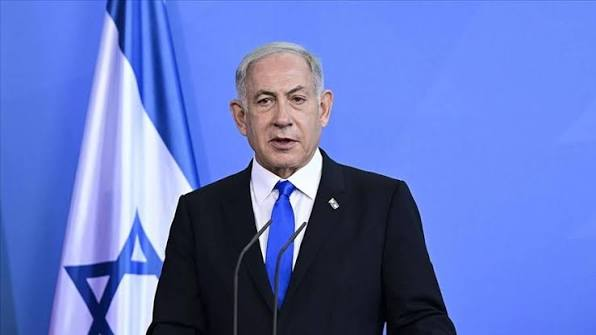
Israeli Prime Minister Benjamin Netanyahu’s office has categorically denied a report published by The New York Times alleging that U.S. officials worried Israel might assassinate senior Iranian negotiators during sensitive diplomatic talks earlier this year.
According to the newspaper, American officials became increasingly concerned after an April ceasefire temporarily halted hostilities involving Israel, Iran, and the United States. The report claimed Washington believed attacks on key Iranian political figures could derail diplomatic negotiations and trigger another round of regional conflict.
Netanyahu’s office responded swiftly, dismissing the story as “fake news” and “a complete fabrication of reality”.
The disagreement highlights a broader issue extending beyond one disputed report: whether the United States and Israel remain fully aligned on how to deal with Iran after months of military escalation.
TL;DR
- Netanyahu has rejected a New York Times report alleging Israel considered targeting Iranian negotiators.
- The report claims U.S. officials privately warned Iran through regional intermediaries.
- Washington reportedly feared such attacks would collapse ongoing diplomacy.
- Neither the United States nor Iran has officially confirmed the report.
- The episode underscores growing strategic differences between Washington and Jerusalem despite their close alliance.
What did The New York Times report claim?
The New York Times reported that U.S. intelligence and diplomatic officials feared Israel could target two of Iran’s highest-ranking political figures involved in diplomatic outreach:
- Iranian Foreign Minister Abbas Araghchi
- Parliament Speaker Mohammad Bagher Ghalibaf
According to the report, these concerns intensified in the weeks following the April 8 ceasefire, when Washington shifted its attention toward preventing renewed fighting and encouraging diplomatic engagement.
The newspaper further alleged that U.S. officials used regional intermediaries to communicate with Tehran, warning that its senior representatives could face assassination attempts.
Neither Washington nor Tehran has publicly confirmed those claims.
How did Netanyahu respond?
Israel’s response was immediate and unequivocal.
The Prime Minister’s Office posted on X that the report was entirely false, describing it as:
“Fake news.”
It also called the article “a complete fabrication of reality,” rejecting every major allegation contained in the report.
Israeli officials have not provided additional details beyond the public denial, nor have they addressed specific elements of the report individually.
The sharp language reflects how seriously Israel views suggestions that it would undermine ongoing diplomacy with targeted killings.
Why were these Iranian officials reportedly significant?
According to the report, American officials viewed Abbas Araghchi and Mohammad Bagher Ghalibaf as essential participants in any future negotiations between Tehran and Washington.
Although Israel had reportedly considered numerous senior Iranian leaders as military targets during the height of the conflict, U.S. officials allegedly believed eliminating negotiators after the ceasefire would have several consequences:
- End diplomatic talks immediately
- Destroy fragile confidence-building efforts
- Increase the likelihood of renewed military conflict
- Make future negotiations significantly more difficult
This distinction illustrates a recurring challenge in international diplomacy: military objectives and diplomatic priorities do not always align, even among close allies.
The reported incident involving Ghalibaf’s aircraft
One of the report’s most dramatic claims concerns an alleged incident on April 12.
According to the newspaper, Iranian intelligence warned that Israeli fighter aircraft had entered Iranian airspace through Iraq with the intention of intercepting Parliament Speaker Mohammad Bagher Ghalibaf’s plane.
Iranian security officials reportedly instructed the aircraft to make an emergency landing in Mashhad.
The incident has not been independently verified, and neither Iran nor the United States has publicly confirmed it.
Without official corroboration, the claim remains part of the newspaper’s reporting rather than a fact.
Does the report point to growing US-Israel differences?
Perhaps the report’s most significant implication is not the alleged assassination concern itself, but what it suggests about the evolving relationship between Washington and Jerusalem.
Throughout the conflict, both governments shared the objective of weakening Iran’s military capabilities. However, according to the report, their strategies increasingly diverged as the conflict progressed.
Israel’s reported focus
Israel reportedly continued emphasising military pressure by targeting senior Iranian political and military figures.
Washington’s reported priority
The Trump administration, according to the report, gradually shifted toward limiting further escalation and creating conditions for renewed diplomatic engagement.
This difference reflects a broader strategic question:
Should long-term regional stability be pursued primarily through military deterrence or negotiated settlements?
The answer remains a point of debate among policymakers in both countries.
The broader diplomatic backdrop
The report also references the reported killing of senior Iranian national security official Ali Larijani in March.
According to the New York Times, American officials viewed such actions as counterproductive because they removed individuals who might later participate in negotiations.
The report draws another comparison with a September 2025 strike in Doha that reportedly killed Hamas negotiators during active ceasefire discussions.
Whether these examples represent isolated military decisions or part of a broader Israeli strategy remains contested.
Netanyahu and Trump continue to project unity
Despite reports of private disagreements, public messaging from both governments has remained largely coordinated.
Netanyahu’s office confirmed that the Israeli prime minister recently spoke by phone with U.S. President Donald Trump while congratulating the United States on the 250th anniversary of American independence.
According to Israeli officials, both leaders agreed to meet in the United States in the near future to discuss regional security and continued strategic cooperation.
The conversation suggests that, despite tactical differences reported in the media, both governments continue to emphasize the strength of the U.S.-Israel alliance publicly.
Why this story matters
Whether or not the New York Times report ultimately proves accurate, it highlights an enduring challenge in Middle East diplomacy.
Military operations can eliminate perceived threats quickly, but they can also remove the very officials needed to negotiate ceasefires or peace agreements.
For Washington, diplomacy often requires maintaining communication channels—even with adversaries.
For Israel, national security considerations may prioritize eliminating individuals viewed as future threats.
These differing priorities can create friction even between longstanding allies.
As diplomatic efforts with Iran continue to evolve, questions about how military strategy intersects with negotiation are likely to remain central to U.S.-Israel relations.
What remains unconfirmed?
Several major elements of the report remain unverified:
- Whether U.S. officials actually warned Iran through intermediaries.
- Whether Israel considered targeting Abbas Araghchi or Mohammad Bagher Ghalibaf after the ceasefire.
- Whether Ghalibaf’s reported emergency landing occurred because of an Israeli interception threat.
- Whether disagreements between Washington and Jerusalem were as extensive as described.
Until additional official documentation or statements emerge, many of these claims remain based on anonymous sourcing reported by The New York Times.