
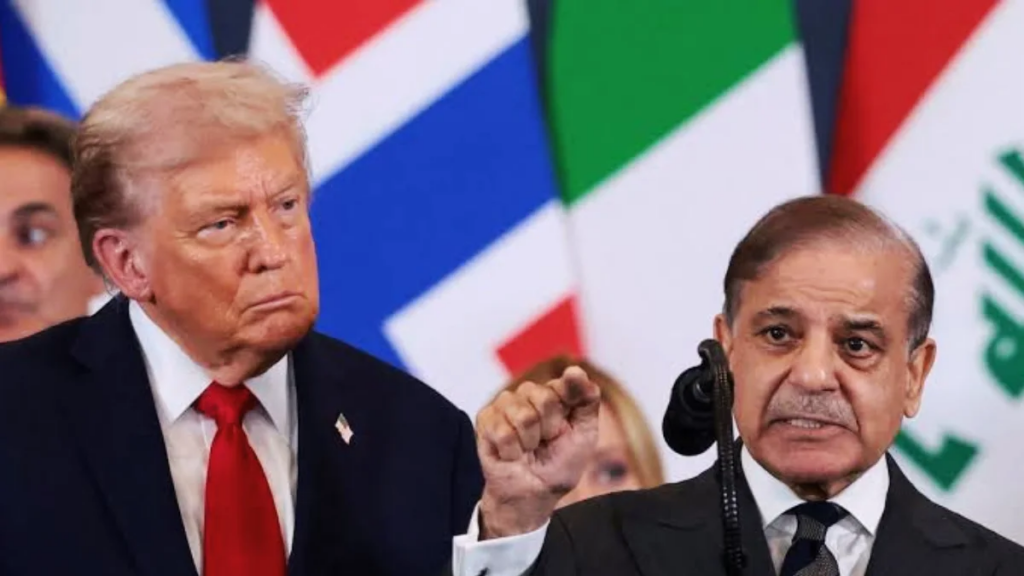
Pakistan has reportedly asked the United States for a $10 billion currency support facility, hoping its recent diplomatic role in facilitating communication during the Iran conflict will pave the way for stronger economic cooperation with Washington.
According to Reuters, Islamabad believes its mediation efforts have improved relations with the United States and created an opportunity to secure financial assistance that could strengthen Pakistan’s foreign exchange reserves and support its fragile economy.
If approved, the request would represent one of Pakistan’s largest bilateral financial appeals to Washington in recent years.
What is Pakistan asking the United States for?
According to Reuters, Pakistan has requested a five-year Bilateral Exchange Stabilization Support Facility from the U.S. Treasury.
The proposed arrangement would reportedly:
- Provide up to $10 billion in financial support.
- Help strengthen Pakistan’s foreign exchange reserves.
- Support the Pakistani rupee during periods of market volatility.
- Improve financial stability as economic reforms continue.
- Reduce reliance on emergency external financing.
The request was reportedly discussed with U.S. Treasury Secretary Scott Bessent.
As of now, the U.S. government has not publicly announced whether it will approve the proposal.
Why is Pakistan seeking financial support now?
Pakistan continues to face significant economic challenges despite recent progress under its International Monetary Fund (IMF) program.
The country remains under a $7 billion IMF Extended Fund Facility, which requires Islamabad to implement the following:
- Fiscal reforms.
- Higher tax collection.
- Reduced government spending.
- Structural economic reforms.
Pakistan narrowly avoided a sovereign default in 2023 after receiving a $3 billion IMF Stand-By Arrangement before transitioning to the larger IMF programme.
The IMF has also approved an additional $1.3 billion financing package focused on climate resilience and disaster preparedness.
Despite these measures, Pakistan’s economy continues to depend heavily on international financing and external support.
How does the Iran conflict relate to the request?
According to Reuters, Pakistani officials believe their diplomatic engagement during the recent U.S.-Iran crisis has strengthened ties with Washington.
Islamabad reportedly played a role in facilitating communication between the two countries during efforts to reduce regional tensions.
Pakistani policymakers now hope that the improved diplomatic relationship can translate into broader economic cooperation, including financial assistance and investment.
While Pakistan views diplomacy as an opportunity to deepen bilateral relations, there has been no official indication that the United States has linked mediation efforts to financial support.
What is an exchange stabilisation facility?
Unlike traditional IMF loans, an exchange stabilisation facility is designed to strengthen a country’s financial position by improving access to foreign currency.
Such arrangements can help governments:
- Increase foreign exchange reserves.
- Stabilise their national currency.
- Reduce pressure during periods of financial volatility.
- Improve investor confidence.
Reuters reported that Pakistan hopes such a facility would reduce dependence on emergency financing while giving policymakers greater flexibility during ongoing reforms.
What other economic cooperation is Pakistan pursuing?
Beyond the reported request for financial support, Pakistan has sought to expand economic ties with the United States in several areas.
Recent initiatives reportedly include:
- Discussions involving a stablecoin platform for cross-border payments through an affiliate of World Liberty Financial.
- Redevelopment plans for New York City’s Roosevelt Hotel.
- Increased U.S. investment in Pakistan’s mining sector.
- Development of the Reko Diq copper and gold project.
The U.S. Export-Import Bank has previously announced approximately $1.2 billion in financing related to the Reko Diq project, reflecting growing commercial engagement between the two countries.
Will the United States approve the request?
There is currently no public indication that Washington has agreed to provide the requested support.
Any decision would likely depend on multiple factors, including:
- Pakistan’s economic outlook.
- Progress under the IMF programme.
- U.S. foreign policy priorities.
- Congressional and Treasury considerations.
- The broader strategic relationship between Washington and Islamabad.
Financial assistance of this scale would require significant policy review and coordination within the U.S. government.
Why does this matter?
If approved, the proposed facility could provide Pakistan with additional financial stability during a period of economic adjustment.
It would also represent a notable improvement in U.S.-Pakistan economic relations after years of fluctuating diplomatic ties.
For Washington, any decision would likely balance economic considerations with broader geopolitical interests in South Asia and the Middle East.
At present, however, the proposal remains a reported request rather than a finalised agreement.
TL;DR
- Pakistan has reportedly requested a $10 billion exchange stabilisation facility from the United States, according to Reuters.
- Islamabad hopes its diplomatic role during the recent Iran conflict will lead to stronger economic cooperation with Washington.
- The proposed five-year facility would help strengthen Pakistan’s foreign exchange reserves and support the Pakistani rupee.
- Pakistan remains under a $7 billion IMF reform program while continuing broader economic restructuring.
- The country is also seeking increased U.S. investment in mining, financial technology, and infrastructure projects.
- The United States has not announced whether it will approve the reported request.