
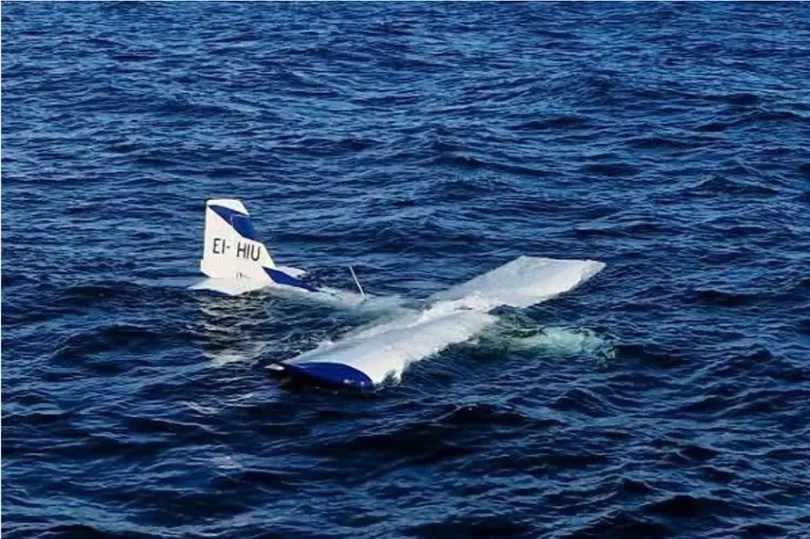
Two people escaped what could have been a deadly aviation accident after their light aircraft crashed into the sea off the coast of Wales. Instead of being trapped inside the wreckage, rescuers arrived to find both passengers calmly sitting on the wing of the partially submerged aircraft, wearing life jackets and waiting for help.
The remarkable rescue has drawn attention not only because of the unusual image of survivors perched atop a crashed airplane but also because it highlights how emergency preparedness, rapid rescue coordination, and quick decision-making can dramatically improve survival odds in aviation emergencies.
How did the plane crash into the sea off Wales?
The incident occurred at around 6 p.m. local time when a microlight aircraft experienced mechanical problems while flying toward Aberporth, a coastal village in Wales.
According to rescue officials, the aircraft had departed from Ireland and was expected to stop in Wales for refueling before continuing its journey to Italy. However, mechanical difficulties forced the pilot to make an emergency landing on the water.
A mayday call was issued shortly before the aircraft ditched into the sea, triggering a rapid emergency response involving multiple rescue agencies.
Emergency responders quickly reached the crash site
The rescue operation included:
- RNLI lifeboat crews from New Quay
- RNLI Cardigan crew
- HM Coastguard helicopter
- Welsh Ambulance Service
When rescuers reached the aircraft, they found both occupants alive and sitting on the wing while wearing life jackets.
Although neither passenger had visible injuries, both had spent time in cold seawater and were treated for exposure after being brought ashore.
Why were the passengers sitting on the wing?
The image of the passengers calmly sitting on the aircraft wing surprised even experienced rescue crews.
The wing remained above water after the emergency landing, providing a stable platform that kept both occupants out of the sea while they waited for rescue.
Their decision to remain with the aircraft likely made them significantly easier for emergency responders to locate.
Life jackets played a crucial role
Rescue officials confirmed that both passengers were wearing life jackets.
In emergency water landings, flotation devices dramatically improve survival chances by helping occupants remain buoyant if they need to enter the water or if the aircraft begins to sink.
While the passengers appeared shaken, rescuers reported that they remained conscious and responsive throughout the operation.
What happened after the rescue?
The passengers were safely transferred onto an RNLI lifeboat before being transported to shore.
Welsh Ambulance Service personnel evaluated both individuals at the main pier before taking them to a local hospital for observation.
Officials later confirmed that:
- Neither passenger suffered serious injuries.
- Both spent one night in the hospital.
- They were discharged the following day.
- They returned to Ireland by ferry after leaving the hospital.
The outcome was considered exceptionally positive given the circumstances of the crash.
What did rescuers say about the operation?
New Quay RNLI Coxswain Bernie Davies said crews responded immediately after receiving the emergency alert from Milford Haven Coastguard.
He explained that rescue teams quickly located the wrecked aircraft and recovered both passengers safely before providing immediate medical care.
Davies noted that the occupants were suffering from the effects of the cold but remained alert throughout the rescue.
After reaching shore, responsibility for their care was handed over to the Welsh Ambulance Service.
An unexpected connection from a previous rescue
New Quay RNLI navigator Rees-Tom Jones revealed an unusual coincidence following the rescue.
One of the rescued passengers turned out to be the neighbor of an Irish rower whom RNLI crews had rescued during a separate incident in 2021.
The rescued passengers later expressed their gratitude to everyone involved in the operation.
Why do water landings often depend on preparation?
Emergency water landings remain among the rarest scenarios in aviation, but survival rates improve considerably when several factors come together.
These include:
- A controlled landing rather than a high-speed impact
- Immediate distress calls
- Calm sea conditions
- Proper use of life jackets
- Rapid emergency response
- Remaining with the aircraft whenever it is safe to do so
In this case, all of those factors contributed to a successful rescue.
What makes this Wales plane crash especially remarkable?
Many aircraft ditchings result in passengers entering the water or evacuating onto inflatable rafts.
In contrast, rescuers arriving to find two people calmly sitting atop the wing of a floating aircraft is an extremely uncommon sight.
The incident demonstrates how effective emergency procedures, quick thinking, and coordinated rescue services can transform what might have been a tragedy into a successful rescue story.
It also highlights the critical role played by organizations like the Royal National Lifeboat Institution (RNLI), whose volunteers regularly respond to maritime emergencies around the United Kingdom.
TL;DR
A microlight aircraft flying from Ireland to Wales was forced to make an emergency landing in the sea after experiencing mechanical problems.
Both occupants safely escaped the aircraft and waited on the wing while wearing life jackets until RNLI lifeboat crews and a Coastguard helicopter arrived.
Neither passenger suffered serious injuries, and both were discharged from the hospital the following day before returning to Ireland.