


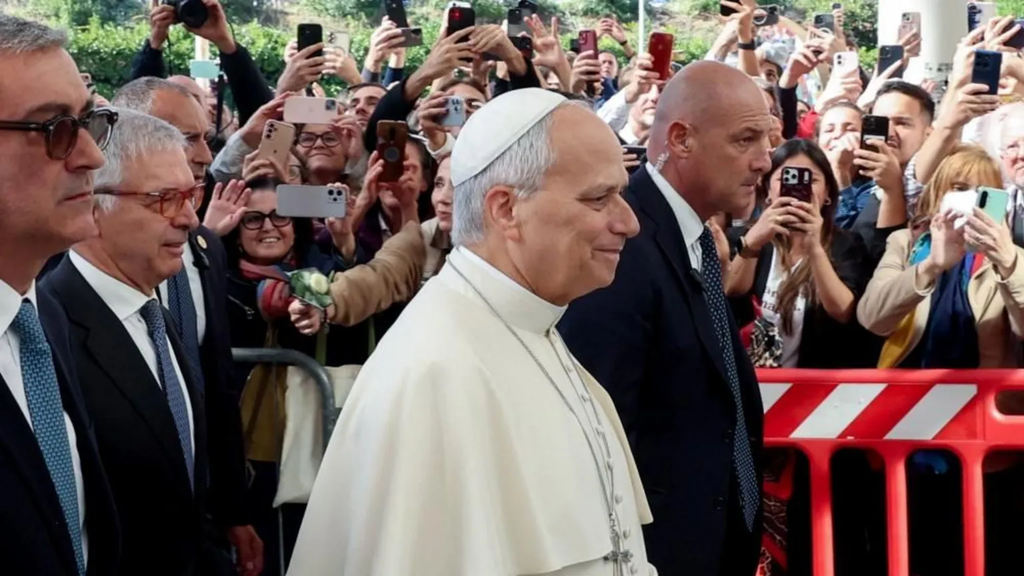
Pope Leo XIV has been diagnosed with lung adenocarcinoma after undergoing surgery to remove the lower lobe of his right lung, the Vatican announced in a medical bulletin. The 71-year-old pontiff underwent a 90-minute procedure at Rome’s Gemelli Hospital on Tuesday, October 13, 2026. The operation was successful, with no reported complications, although further tests are needed to determine whether the cancer has spread.
The diagnosis has prompted concern among Catholics worldwide, particularly following the health struggles of his predecessor, Pope Francis, who died in 2025. While the Vatican has offered reassuring updates about Leo’s immediate recovery, doctors are continuing to assess the extent of the disease and what treatment, if any, may be needed next.
The pope had announced on Sunday that doctors had discovered a nodule in his lung. He described the mass as well-contained and detected at an early stage, adding that his medical team had recommended its removal.
What Happened During Pope Leo XIV’s Lung Cancer Surgery?
According to the Vatican, the pope underwent surgery at Gemelli Hospital in Rome on Tuesday. Surgeons removed the entire lower lobe of his right lung, a procedure known as a lobectomy.
The Vatican said the operation was successful and that Leo awoke normally afterwards. He returned to his hospital room following a brief period of observation and reportedly had a peaceful night.
The decision to remove the entire lobe was intended to ensure that the procedure was sufficiently extensive. However, the precise surgical findings and whether additional treatment will be necessary have not yet been established in the information released by the Vatican.
The pontiff is expected to remain hospitalized for approximately one week while he recovers and undergoes further medical evaluation.
Large crowds gathered outside Gemelli Hospital ahead of his arrival. Supporters cheered as the pope waved and smiled from his car. Hospital staff welcomed him at the entrance, and he responded with a smile and a shrug when one person expressed sympathy.
The scenes reflected the concern surrounding the pope’s health, even as the Vatican emphasized that the immediate surgical outcome was encouraging.
What Is Lung Adenocarcinoma?
Lung adenocarcinoma is a type of non-small cell lung cancer. It develops in glandular cells, commonly in the outer portions of the lungs, and is the most frequently diagnosed subtype of lung cancer.
Although the diagnosis confirms that the nodule was cancerous, it does not, by itself, establish how advanced the disease is or what the patient’s long-term outlook will be.
Several factors influence the prognosis and treatment of lung adenocarcinoma, including the tumor’s size, its location, whether cancer cells have spread to nearby lymph nodes or other organs, and the patient’s overall health.
Why does early detection matter?
Detecting lung cancer before it spreads can give doctors more treatment options. For some patients with localized disease, surgery to remove the affected portion of the lung may be an important part of treatment.
However, the discovery of a nodule at an early stage does not automatically mean the cancer is confined to the lung. Doctors generally need pathology findings, imaging studies, and, where appropriate, lymph node assessments to determine the extent of the disease.
In Leo’s case, a Vatican source told Agence France-Presse that further tests were being conducted to establish whether the cancer had spread. Until those results become available, it would be premature to draw conclusions about the severity of his diagnosis or whether surgery will be sufficient.
What happens after a lobectomy?
Recovery following lung surgery varies from patient to patient. Doctors typically monitor breathing, oxygen levels, pain, mobility and signs of complications.
Depending on the final pathology results, a medical team may recommend observation alone or consider additional treatment, such as chemotherapy, targeted therapy, or immunotherapy. These options are not appropriate for every patient, and the decision depends on the cancer’s characteristics and stage.
The Vatican has not announced whether Leo will require further cancer treatment. Its updates so far have focused on the successful operation and the pope’s immediate postoperative condition.
What Is Known About the Pope’s Brother’s Cancer Diagnosis?
The pope’s health news has also drawn attention to a separate cancer diagnosis in his family. Reports have indicated that his brother, Louis Prevost, is being treated for multiple myeloma.
Multiple myeloma is a blood cancer that develops in plasma cells, a type of white blood cell found in the bone marrow. It is different from lung adenocarcinoma, which develops in lung tissue.
The two diagnoses should not be conflated. The available information does not establish a connection between the brothers’ illnesses, and their treatment needs and prognoses would depend on their individual medical circumstances.
The family news adds another personal dimension to an already difficult period for the pontiff, but the central medical questions surrounding Leo remain the extent of his lung cancer and his recovery from surgery.
What Happens Next for Pope Leo XIV?
The next phase will focus on postoperative recovery and the results of additional examinations.
The key developments to watch are:
- Pathology results: Further analysis of the removed lung tissue should help clarify the tumor’s characteristics and whether its removal achieved the intended result.
- Cancer staging: Doctors will need to establish whether the disease was confined to the removed tissue or has spread to lymph nodes or other parts of the body.
- Further treatment: The medical team may recommend monitoring alone or additional treatment, depending on the findings.
- Hospital discharge: The Vatican expects the pope to remain at Gemelli Hospital for approximately one week, subject to his recovery.
- Public schedule: His engagements remain suspended through October 20 to allow time for recuperation.
- Latin America visit: The planned November trip will depend on his medical progress and the advice of his doctors.
For now, the most important distinction is between a successful operation and a confirmed long-term outcome. The Vatican has reported encouraging immediate results, but further medical information is needed before the full implications of the diagnosis can be assessed.
Leo’s decision to disclose the lung nodule before surgery also gave Catholics an opportunity to understand why he was entering the hospital. His subsequent diagnosis has made the situation more serious than the initial announcement suggested, even as his doctors continue to evaluate the results.
For the Catholic community, the coming days will bring a mixture of hope and uncertainty. The pope has emerged from surgery without reported complications, but his longer-term recovery will depend on findings that have yet to be fully disclosed.