
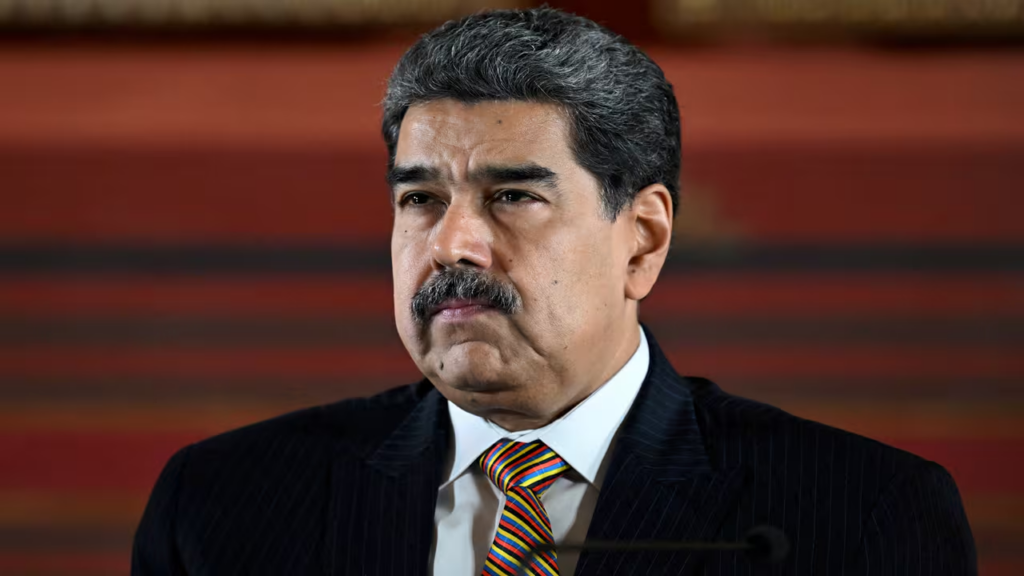

When US forces took Venezuelan President Nicolas Maduro into custody on Saturday, the operation didn’t begin—or end—in Caracas. It ran through Puerto Rico.
Roughly 800 kilometers from Venezuela, the US territory has quietly re-emerged as a forward military hub in the Caribbean. Former bases, dormant for years, were already hosting aircraft, personnel, and surveillance systems tied to the operation. According to reporting by Politico, Maduro’s first stop on American soil after his capture was Aguadilla, a former US Air Force base on Puerto Rico’s northwest coast.
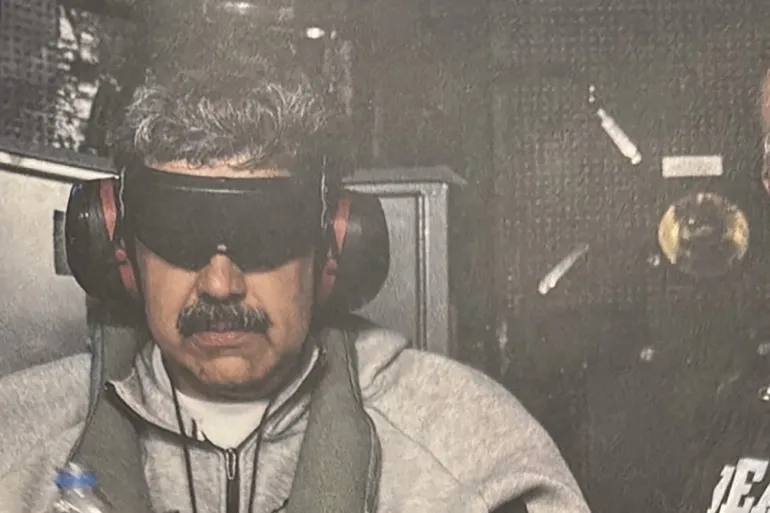
A single photograph released by President Donald Trump appeared to confirm it: a blindfolded, handcuffed Maduro clutching a bottle of Nikini-brand water—ubiquitous in Puerto Rico but rarely seen elsewhere.
Why was Puerto Rico critical to the US capture of Nicolas Maduro?
Puerto Rico offers the US military something few places can: proximity without vulnerability.
A strategic location in the Caribbean
Puerto Rico sits at a crossroads between:
- South America
- Central America
- The Atlantic shipping lanes
From the island, US forces can reach Venezuela in hours, not days. That makes it ideal for:
- Rapid air operations
- Drone surveillance
- Naval coordination
Unlike overseas bases, Puerto Rico is US territory. That eliminates diplomatic hurdles and speeds up operational decisions.
How former Puerto Rico bases were repurposed for US operations
Aguadilla: From closed base to operational hub
The Rafael Hernández Airport in Aguadilla was once Ramey Air Force Base, a Cold War-era installation. After its closure, it functioned mainly as a civilian airport.
In recent months, that changed.
Reports indicate the base hosted:
- Fighter jets
- Long-range drones
- Transport aircraft
The infrastructure—long runways, hardened facilities, coastal access, was already there. It just needed personnel and hardware.
Roosevelt Roads: A quiet revival
Roosevelt Roads Naval Station, shuttered in 2004, has also seen renewed military use. While not fully reactivated, parts of the base have supported logistics and naval coordination during heightened US activity near Venezuela.
What US military buildup preceded Maduro’s capture?
The arrest did not come out of nowhere. It followed months of escalating US military presence in the Caribbean.
Operation Southern Spear
Beginning in September 2025, the US launched Operation Southern Spear, deploying:
- Warships, including destroyers and amphibious assault ships
- Surveillance aircraft
- Around 12,000 troops across the region
A US Navy submarine armed with cruise missiles also operated near South America.
Maritime strikes and interdictions
From September onward, US forces carried out at least 35 strikes on vessels accused of transporting narcotics from Venezuela. According to US statements:
- Over 100 people were killed
- The operations targeted alleged drug-trafficking routes
These strikes steadily increased pressure on the Maduro government while establishing US dominance over regional waters.
Why Puerto Rico’s role had faded—and why it’s back
From World War II powerhouse to post–Cold War pullback
Puerto Rico was once central to US naval power:
- It protected approaches to the Panama Canal
- It anchored US dominance in the Caribbean
But after the Cold War:
- Military budgets tightened
- Strategic focus shifted to the Middle East and Asia
Public opposition also played a role. Protests over Navy bombing exercises in Vieques culminated in their cancellation in 2001, accelerating base closures across the island.
Trump-era reversal
Under President Trump, that retreat has been reversed.
Key developments include:
- Deployment of F-35 fighter jets to Puerto Rico in September
- Expanded naval patrols near Venezuela
- Increased intelligence and surveillance flights from the island
Puerto Rico, once again, became the nerve center for US military activity in Latin America.
How the capture of Nicolas Maduro was executed
While operational details remain classified, available reporting suggests a coordinated, multi-domain effort.
Air, sea, and intelligence coordination
Puerto Rico likely served as:
- A staging ground for aircraft
- A relay point for intelligence
- A secure location for detainee transfer
The fact that Maduro was first flown to Aguadilla underscores the base’s operational readiness.
The photograph that gave it away
President Trump’s photo release was more than symbolic.
Details analysts noticed:
- The Nikini water bottle, widely sold in Puerto Rico
- The tropical airport backdrop
- The absence of mainland US identifiers
Together, they pointed squarely to Aguadilla.
Why the US capture of Nicolas Maduro matters geopolitically
This was not just an arrest. It was a message.
Reasserting regional dominance
By using Puerto Rico as its hub, the US signaled:
- It intends to police the Caribbean aggressively
- It will act unilaterally if necessary
- Latin America remains a core strategic priority
China and Russia took notice. Chinese President Xi Jinping has already made veiled remarks criticizing US “bullying” behavior following the operation.
Implications for Latin American governments
For US allies and adversaries alike, the message was clear:
- Geography still matters
- US military reach in the region is intact
- Puerto Rico is no longer a backwater in defense planning
What comes next for Puerto Rico’s military role?
The island’s renewed importance raises unresolved questions.
Permanent expansion or temporary surge?
Key issues include:
- Will bases like Aguadilla see permanent military staffing?
- How will local communities respond?
- Will Congress fund long-term infrastructure upgrades?
Puerto Rico’s strategic value is clear, but political resistance could resurface.
TL;DR
- Puerto Rico was central to the US capture of Nicolas Maduro
- Former bases like Aguadilla were rapidly repurposed
- The operation followed months of US military buildup
- Puerto Rico has re-emerged as the US military hub in the Caribbean
- The move reshapes US–Latin America geopolitics
Why this story matters now
The capture of Nicolas Maduro is being framed as a singular event. It wasn’t.
It was the result of a deliberate strategy—one that placed Puerto Rico back at the heart of US power projection in the Western Hemisphere. For decades, the island faded from military relevance. Today, it’s once again where American strategy in Latin America begins.