
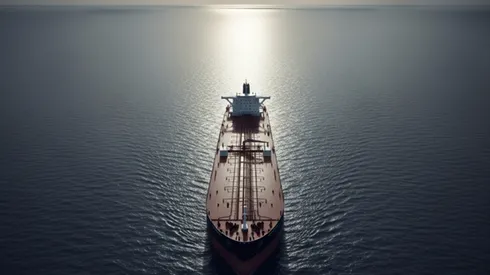
A sudden shift in global oil flows is unfolding in real time. The Russian oil tanker Aqua Titan has changed course mid-voyage, abandoning its original destination in China and redirecting toward India. The move isn’t isolated; it reflects a broader market realignment driven by geopolitics, supply disruptions, and a temporary policy window from the United States.
Here’s what’s happening, why it matters, and what it signals for global energy markets.
What happened to the Aqua Titan?
The Aqua Titan was initially headed to Rizhao port in China, carrying Urals crude loaded from a Baltic Sea terminal. But while sailing through Southeast Asian waters, the vessel made a sharp pivot and is now en route to New Mangalore, India, with an expected arrival around March 21.
This mid-voyage rerouting isn’t common in stable markets. It typically signals a sudden change in demand, pricing, or political conditions—often all three.
According to Bloomberg, the shift came after the U.S. granted India temporary flexibility to increase imports of Russian crude and petroleum products.
Why are Russian oil tankers diverting to India?
A temporary U.S. policy window
At the centre of this shift is a short-term concession by the United States. Washington has allowed India to continue purchasing Russian oil until April 4, giving refiners a limited window to secure supply.
This matters because sanctions and price caps have complicated global trade in Russian crude since 2022. Any relaxation—even temporary—can quickly reshape trade routes.
India’s urgent need for supply
India has rapidly increased purchases of Russian oil, buying roughly 30 million barrels in the week following the U.S. decision. The reason is straightforward:
- Supply disruptions from the Middle East
- Rising geopolitical tensions involving Iran
- The need to secure discounted crude to manage import costs
Russian Urals crude is often priced below global benchmarks, making it especially attractive during periods of volatility.
How widespread is this tanker diversion trend?
The Aqua Titan is not alone.
Data from Vortexa Ltd indicates that at least seven tankers carrying Russian oil have changed destinations mid-journey—from China to India.
Another example includes the Suezmax tanker Zouzou N., which initially sailed from Novorossiysk in the Black Sea toward China but later redirected to Sikka, a key Indian oil hub.
What this suggests
This isn’t random rerouting—it’s a coordinated market response:
- Traders are chasing higher margins in India
- Refiners are acting quickly to lock in supply
- Shipping routes are adapting in near real time
Why is China losing these cargoes—for now?
China remains one of the largest buyers of Russian oil. However, short-term dynamics can shift priorities.
Possible reasons for diversion:
- Pricing arbitrage: Indian refiners may be offering better netbacks
- Demand timing: Chinese refiners may already be stocked or slower to respond
- Policy timing: India’s temporary U.S. clearance creates a narrow buying window
This doesn’t mean China is permanently losing supply. It highlights how flexible—and opportunistic—the oil trade has become.
What does this mean for global oil markets?
1. Increased competition for discounted crude
India’s surge in buying tightens the availability of discounted Russian oil, which could:
- Push prices higher for late buyers
- Shift trade flows again once the U.S. window closes
2. Greater volatility in shipping routes
Mid-voyage diversions are becoming more common, which complicates:
- Freight pricing
- Delivery timelines
- Inventory planning for refiners
3. A more fragmented energy market
Sanctions, exemptions, and geopolitical tensions are creating parallel markets:
- Western-aligned supply chains
- Discounted crude networks (Russia, shadow fleets, alternative buyers)
How do tanker diversions actually work?
Changing a tanker’s destination mid-journey isn’t as simple as flipping a switch.
Key factors involved:
- Charter agreements: Buyers and sellers must renegotiate delivery terms
- Port logistics: Receiving terminals must have capacity
- Insurance and compliance: Especially complex with sanctioned cargo
- Freight economics: Longer routes mean higher shipping costs
Despite these hurdles, today’s digital tracking and trading systems allow rapid decisions—sometimes within hours.
What happens after April 4?
The current surge in Indian imports is tied to a deadline. Once the U.S. concession expires:
- India may scale back purchases
- Tankers could revert to original routes (including China)
- Prices for Russian crude could adjust downward again
The key unknown is whether the policy will be extended—or tightened.
Why this story matters beyond oil markets
This isn’t just about one tanker or even a handful of ships. It reflects a deeper shift:
- Energy trade is increasingly shaped by geopolitics, not just supply and demand
- Buyers like India are leveraging flexibility to secure favourable deals
- Traditional trade routes are becoming fluid and reactive
For businesses, policymakers, and investors, these shifts signal a more unpredictable energy landscape.
TL;DR
- The Aqua Titan diverted from China to India mid-voyage
- The move follows a temporary U.S. allowance for India to import Russian oil
- At least seven tankers have made similar route changes
- India is rapidly increasing its purchases to offset Middle East supply disruptions
- The shift highlights growing volatility and flexibility in global oil trade