
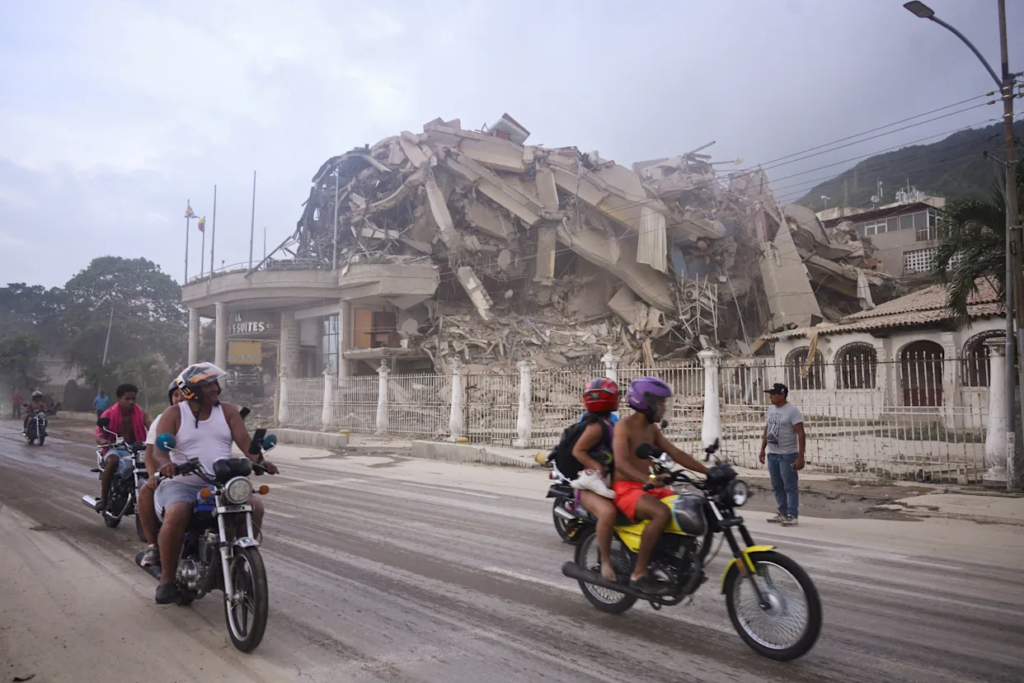
Venezuela is facing one of its worst natural disasters in decades after two powerful earthquakes struck within seconds of each other, killing at least 32 people, injuring more than 700, and leaving widespread destruction across the country.
The twin earthquakes, measuring magnitude 7.2 and 7.5, hit western Venezuela on June 24, sending shockwaves through Caracas and several neighboring states. Buildings collapsed, communications were disrupted, and emergency crews spent the night searching for survivors trapped beneath rubble.
Officials warn the death toll could continue to rise as rescue operations expand in some of the hardest-hit areas.
What happened in Venezuela?
According to preliminary seismic data, the first earthquake struck in Yaracuy state at a depth of about 22 kilometers (14 miles). Less than a minute later, a stronger magnitude 7.5 quake followed at a shallower depth of roughly 10 kilometers (6 miles).
While the epicenters were located west of Caracas, the shaking was felt across much of central and western Venezuela. Tremors were also reported in neighboring Colombia and parts of Brazil.
The combination of a powerful initial quake followed almost immediately by a second major event created a rare and particularly destructive scenario.
Seismologists say the second earthquake likely struck structures already weakened by the first, increasing the risk of collapse.
Why were the twin earthquakes so destructive?
Earthquakes are dangerous on their own, but two large events occurring back-to-back is uncommon.
A rare seismic sequence
Scientists say the close timing of the quakes intensified the damage.
Buildings that survived the first shock may have suffered critical structural weakening before being hit again seconds later.
The relatively shallow depth of the second earthquake also increased the intensity of ground shaking felt at the surface.
Urban vulnerability
Several of the hardest-hit areas include densely populated urban centers with older buildings and infrastructure.
Experts note that regions with aging construction, informal housing developments, and limited seismic retrofitting are particularly vulnerable during major earthquakes.
Which areas suffered the most damage?
La Guaira
Officials described the coastal state of La Guaira as a “disaster zone.”
Dozens of buildings reportedly collapsed, and rescue crews continue to search for survivors.
Field hospitals have been established to treat the injured as local medical facilities struggle to handle the influx of patients.
Caracas
The Venezuelan capital experienced widespread structural damage.
Several apartment buildings partially or completely collapsed, forcing residents into the streets overnight amid fears of additional aftershocks.
Witnesses described scenes resembling a war zone, with shattered concrete, twisted metal, and emergency crews digging through debris.
Falcon State
Authorities reported multiple building collapses in coastal communities.
At least 15 people were initially believed trapped in one collapsed structure, prompting large-scale rescue operations.
Human stories emerging from the disaster
As rescue efforts continue, firsthand accounts reveal the scale of the tragedy.
Many residents described receiving earthquake alerts only moments before violent shaking began.
Witnesses reported hearing walls crack, glass shatter, and entire buildings collapse.
Thousands of people spent the night outdoors in parks, parking lots, sports fields, and public squares, unwilling to return to damaged homes due to fears of aftershocks.
For many survivors, the emotional impact may last long after the physical rebuilding begins.
State of emergency declared
Acting President Delcy Rodríguez declared a nationwide state of emergency shortly after the earthquakes.
Authorities have taken several immediate measures:
- Suspension of classes nationwide
- Conversion of schools into emergency shelters
- Closure of gas supplies in some areas as a safety precaution
- Deployment of military and emergency personnel
- Launch of missing-person reporting systems
Officials have also urged residents to evacuate buildings showing signs of structural damage.
Airport closures and travel disruptions
The country’s main international gateway, Simón Bolívar International Airport, was closed after sustaining damage.
Several major airlines adjusted operations:
- Flight cancellations to Caracas
- Flexible rebooking policies
- Temporary suspension of some international routes
The disruptions are expected to continue as engineers assess airport infrastructure.
How many aftershocks have occurred?
Authorities reported at least 20 aftershocks within hours of the main earthquakes.
Aftershocks are common following major seismic events and can continue for days, weeks, or even months.
Some aftershocks can be strong enough to cause additional damage to already weakened buildings, which is why many residents remain outdoors.
International response gathers momentum
Governments and international organizations quickly offered assistance.
Support and aid commitments have come from:
- United States
- China
- France
- Spain
- Brazil
- Argentina
- Chile
- Organization of American States
The United States announced plans to deploy search-and-rescue teams, medical personnel, and emergency supplies.
Humanitarian organizations are also mobilizing resources for food, shelter, and medical assistance.
Could the death toll rise?
Unfortunately, experts believe it is possible.
Search-and-rescue operations remain underway in multiple collapsed buildings, particularly in La Guaira and Caracas.
The U.S. Geological Survey’s rapid earthquake assessment models initially suggested the disaster could potentially result in a much higher casualty count depending on the extent of structural failures and accessibility of rescue operations.
Officials caution that confirmed numbers may change significantly as more affected areas become reachable.
How does this compare with past Venezuelan earthquakes?
The disaster ranks among the strongest earthquakes to strike Venezuela in modern history.
Notable previous events include:
- 1900: Magnitude 7.6-7.7 earthquake east of Caracas
- 1967: Magnitude 6.7 earthquake near Caracas that killed more than 200 people
- 1997: Magnitude 6.9-7.0 earthquake in Sucre state
- 2018: Magnitude 7.2 offshore earthquake that caused hundreds of deaths
The 2026 twin earthquakes stand out because of the unusual sequence of two major shocks occurring almost simultaneously.
What happens next?
The coming days will focus on three priorities:
- Rescue operations for people still trapped.
- Emergency medical treatment and shelter for displaced residents.
- Structural assessments of buildings, roads, airports, and utilities.
Recovery is likely to take months, and potentially years, depending on the final scale of the damage.
For many Venezuelans, the immediate concern remains simple: finding loved ones, securing shelter, and staying safe as aftershocks continue.
TL;DR
- Two major earthquakes measuring 7.2 and 7.5 struck Venezuela within minutes.
- At least 32 people have been confirmed dead, and more than 700 have been injured.
- Caracas, La Guaira, Miranda, Falcon, and other regions suffered significant damage.
- Authorities declared a nationwide state of emergency.
- More than 20 aftershocks have already been recorded.
- International aid offers are arriving from the United States, Europe, Latin America, and Asia.
- Experts say the unusual back-to-back quakes amplified the destruction.