
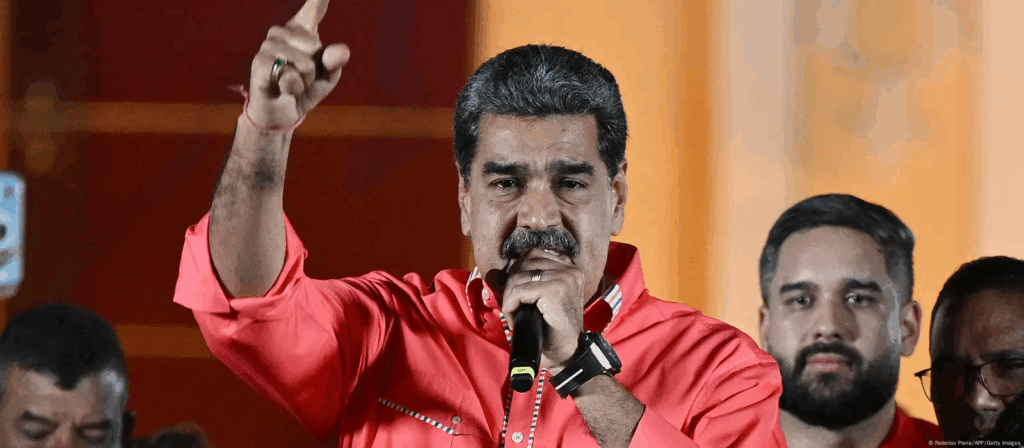
Venezuelan President Nicolás Maduro has once again become the focus of global headlines. In August 2025, the Trump administration announced that U.S. forces had bombed a drug-laden vessel departing Venezuela, killing 11 on board. Shortly before, Washington had doubled the bounty on Maduro—from $25 million to $50 million—for information leading to his arrest. The move reflects America’s growing pressure on the embattled leader, whom it accuses of being at the center of one of the world’s largest narco-trafficking networks.
But who exactly is Nicolás Maduro, why does the U.S. consider him a criminal threat, and how has he managed to hold on to power for over a decade?
What is Nicolás Maduro’s background?
Nicolás Maduro was born on November 23, 1962, in Caracas, into a working-class family. Before entering politics, he worked as a bus driver and union activist—a humble origin story he often cites to reinforce his image as a “man of the people.”
His rise within Venezuela’s socialist movement, known as Chavismo, was closely tied to Hugo Chávez, the charismatic president who transformed the country’s politics in the late 1990s.
- 2005–2006: Served as president of the National Assembly.
- 2006–2012: Held the position of Foreign Minister, managing Caracas’s ties with allies such as Cuba, Russia, and Iran.
- 2012–2013: Served as Vice President.
- 2013: Succeeded Chávez after his death, narrowly winning the presidential election.
Nicolás Maduro has since consolidated power through control of the military, state institutions, and loyalist networks.
How has Maduro’s rule affected Venezuela?
Maduro’s presidency has been marked by severe political and economic collapse, leaving Venezuela in turmoil:
- Hyperinflation and poverty: The country experienced inflation rates in the millions of percent, wiping out savings and salaries.
- Mass migration: Over 7 million Venezuelans have fled the country since 2015, creating one of the largest displacement crises in the world.
- Humanitarian crisis: Chronic shortages of food, medicine, and basic services persist.
- Political repression: Opposition leaders have been jailed, exiled, or barred from elections. Security forces and intelligence agencies have been accused of torture and extrajudicial killings, allegations highlighted by UN human rights reports.
While the U.S. and European Union label his government authoritarian and illegitimate, allies like Russia, China, Iran, and Cuba continue to provide financial, diplomatic, and security support.
Why does the U.S. want Nicolás Maduro?
The roots of Washington’s pursuit of Maduro lie in drug trafficking allegations that stretch back nearly a decade.
The “narco-state” accusations
In 2015, two nephews of Maduro’s wife, Cilia Flores—Efraín Antonio Campo Flores and Francisco Flores de Freitas—were arrested in Haiti in a DEA sting. They were later convicted in a U.S. federal court of conspiring to smuggle cocaine into the United States. Prosecutors alleged that the drug proceeds were intended to fund Maduro’s 2013 presidential campaign.
The case reinforced suspicions that Venezuela’s leadership was complicit in cocaine trafficking through the Caribbean, often using military and government-controlled facilities.
The Cabello connection
In 2018, the U.S. Treasury accused Diosdado Cabello, a senior Venezuelan politician and close Maduro ally, of orchestrating trafficking operations with support from the military. Cabello allegedly partnered with international networks, including ties to Hezbollah and Iran’s Quds Force.
U.S. charges of narco-terrorism
In March 2020, during Trump’s first presidency, the Department of Justice indicted Maduro and several top officials on charges of “narco-terrorism.” The indictment accused them of sending tons of cocaine to the U.S. with the intent of damaging public health and strengthening criminal networks.
Initially, Washington offered a $15 million reward for Maduro’s arrest. President Joe Biden later raised the figure to $25 million. Now, Trump has doubled it again to $50 million, underscoring the administration’s determination to see Maduro face trial in the U.S.
How does Nicolás Maduro respond to U.S. allegations?
Maduro has consistently denied any role in drug trafficking. He dismisses the charges as part of Washington’s “imperialist campaign” to topple Venezuela’s socialist government.
Venezuelan officials often counterattack with accusations of hypocrisy. In August 2025, after the U.S. doubled the bounty, Caracas mocked Washington by invoking the “Epstein Files,” suggesting the U.S. should confront scandals within its own power elite before targeting foreign leaders.
Despite diplomatic isolation in the West, Maduro continues to leverage alliances with Russia and China, which veto sanctions at the UN and provide loans, oil purchases, and military cooperation.
Why does Nicolás Maduro still remain in power?
Several factors explain Maduro’s political survival despite widespread crisis and external pressure:
- Military loyalty: The armed forces, deeply intertwined with Venezuela’s economy, remain loyal due to patronage networks and fear of prosecution.
- Control of institutions: From the judiciary to the electoral council, Maduro’s allies dominate state structures.
- Fragmented opposition: Internal divisions and failed attempts at unity have weakened anti-Maduro forces.
- Foreign backing: Support from Russia, China, Iran, and Cuba provides economic and security lifelines.
- Oil leverage: Despite sanctions, Venezuela still exports crude—sometimes clandestinely—ensuring revenue for the regime.
Why does this matter for the U.S. and the world?
The Maduro saga is not just about Venezuela. It intersects with global geopolitics, organized crime, and regional security:
- Drug trafficking: The U.S. alleges that Venezuelan networks play a pivotal role in supplying cocaine to North America.
- Migration crisis: Venezuela’s exodus destabilizes neighboring countries like Colombia, Brazil, and Peru.
- Geopolitical rivalry: Maduro’s alliances with U.S. adversaries—Russia, China, and Iran—make Venezuela a flashpoint in great power competition.
- Democracy and human rights: Washington frames its campaign as part of a broader fight against authoritarianism.
For the Trump administration, pushing harder on Maduro in 2025 also plays into domestic politics, particularly in swing states like Florida, where large Venezuelan and Cuban communities remain vocal opponents of socialist regimes.
TL;DR
Nicolás Maduro, Venezuela’s president since 2013, faces a $50 million U.S. bounty for alleged involvement in narco-trafficking. Washington accuses him and his allies of running a “narco-state,” citing cases involving family members and senior officials. Despite presiding over economic collapse and facing international sanctions, Maduro remains in power due to military loyalty, control of institutions, and support from Russia and China. His fate continues to shape regional stability and U.S. foreign policy.