
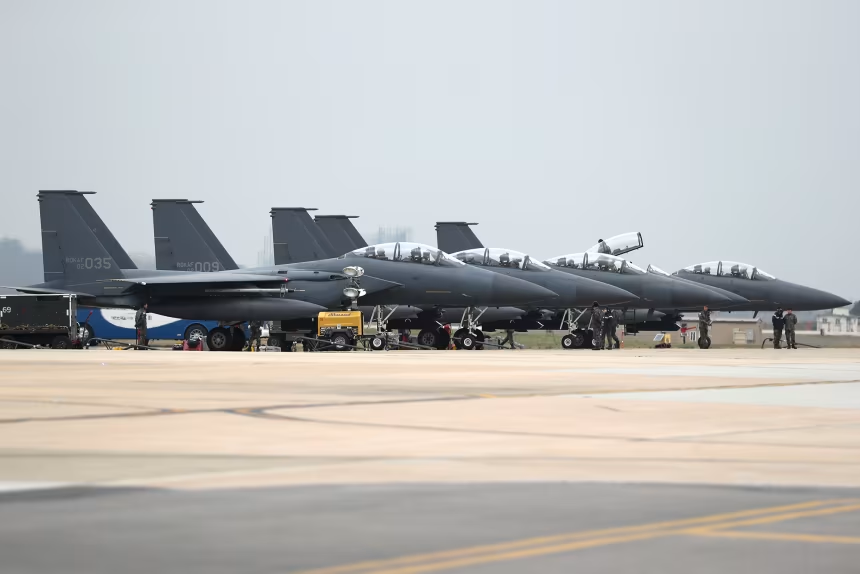
South Korea’s military is facing renewed scrutiny after an investigation revealed that a 2021 mid-air collision between two fighter jets was caused by pilots taking photos and videos during flight. The Republic of Korea Air Force issued a public apology following the findings, acknowledging lapses in discipline and oversight.
The incident, which caused significant damage but no injuries, is now being cited as a cautionary example of how distractions, even in highly controlled environments, can lead to serious consequences.
What Happened During the 2021 Fighter Jet Collision?
The collision took place in December 2021 during a formation flight near Daegu, involving two advanced F-15K fighter jets.
Key details from the investigation
- A wingman pilot attempted to capture images to mark his final flight with the unit
- He performed unplanned manoeuvres, including sharp climbs and banking
- Another pilot in the lead jet was filming video simultaneously
As the aircraft moved closer, both crews attempted evasive action. However, the wingman’s tail struck the lead jet’s wing.
The outcome
- Estimated damage: 880 million won (~$600,000)
- No injuries reported
- Both aircraft sustained structural damage
Why Were Pilots Taking Selfies Mid-Flight?
According to the Board of Audit and Inspection, the incident stemmed from a mix of personal motivation and weak enforcement of rules.
What the audit found
- The wingman pilot wanted a personal memento of his final mission
- Maneuvers were performed without proper clearance
- Filming during flight was not tightly regulated at the time
This combination created a situation where personal actions overrode standard safety protocols.
Who Was Held Responsible?
The audit placed primary responsibility on the wingman pilot, but did not stop there.
Accountability breakdown
- Wingman pilot:
- Found primarily responsible
- Suspended from flying duties
- Received severe disciplinary action
- Has since left the military
- Air Force leadership:
- Criticized for lax oversight
- Faulted for unclear or unenforced rules on in-flight filming
The pilot was also ordered to repay a portion of the repair costs, highlighting the seriousness of the violation.
Why This Incident Raises Broader Safety Concerns
While no lives were lost, the incident has sparked wider questions about discipline, technology use, and safety culture in modern air forces.
The risks of in-flight distractions
Fighter jet operations demand:
- Split-second decision-making
- Precise coordination
- Strict adherence to protocol
Even minor distractions—like adjusting a camera—can disrupt situational awareness.
Technology as a double-edged sword
The increasing presence of:
- Action cameras
- Smartphones
- Recording equipment
has introduced new risks in environments where focus is critical.
How Is the Air Force Responding?
Following the report, the Republic of Korea Air Force has pledged to tighten its safety framework.
Planned changes
- Stricter rules on in-flight filming and photography
- Clearer enforcement of flight discipline protocols
- Enhanced monitoring during formation flights
The goal is to prevent similar incidents and reinforce a culture where safety takes precedence over personal actions.
What This Means for Military Aviation
This case underscores a broader challenge facing modern militaries: balancing human behavior with advancing technology.
Key takeaways
- Human error remains a leading risk, even with advanced aircraft
- Clear policies and enforcement are essential
- Cultural discipline is just as important as technical training
For observers, the incident is less about a single mistake and more about systemic gaps that allowed it to happen.
TL;DR
- South Korea’s air force apologised for a 2021 mid-air collision
- Pilots were found to be taking selfies and filming during flight
- Unplanned maneuvers led to the crash between two F-15K jets
- Damage totalled ~$600,000, but no injuries occurred
- A pilot was disciplined and left the military
- The Air Force is now tightening safety and filming regulations