
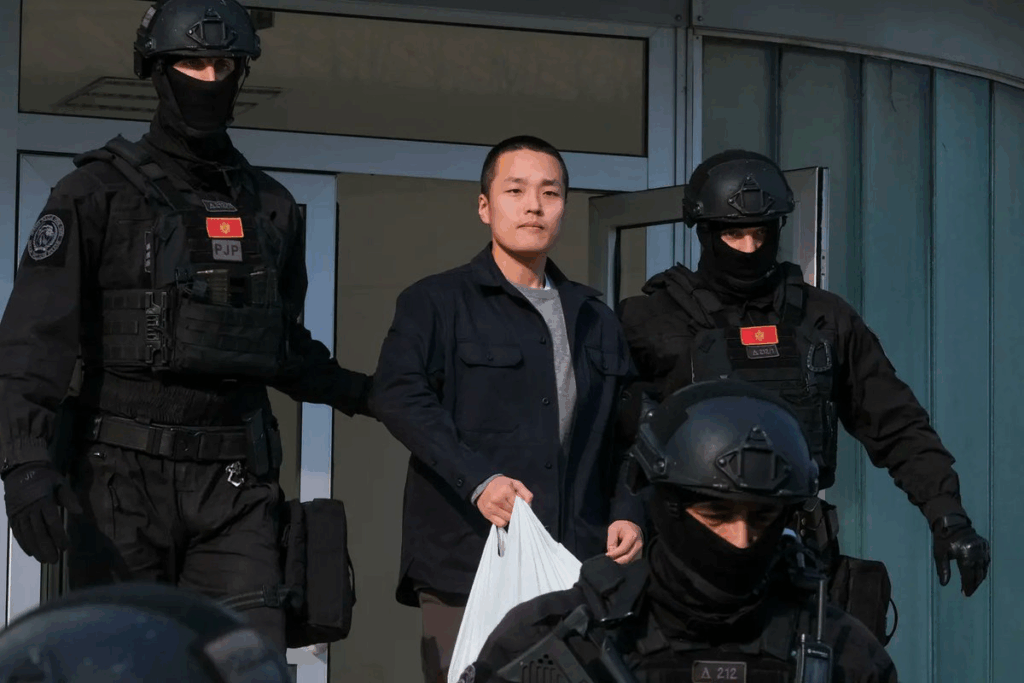
Terraform Labs co-founder Do Kwon has been sentenced to 15 years in federal prison, closing one of the most damaging financial fraud cases in recent memory. U.S. District Judge Paul A. Engelmayer delivered the sentence, calling Kwon’s actions an “epic, generational fraud” that devastated ordinary investors around the world.
The ruling marks a dramatic chapter in the collapse of TerraUSD and Luna, two cryptocurrencies that wiped out roughly $40 billion in market value in 2022 and set off shockwaves across global crypto markets.
Here’s what happened in court, what prosecutors uncovered, and why this case continues to matter far beyond the crypto world.
Why Judge Engelmayer Called It One of the Worst Frauds Ever
From the bench, Judge Engelmayer delivered one of the strongest condemnations seen in a financial crime sentencing.
He told Kwon:
“In the history of federal prosecutions, there are few frauds that have caused as much harm as you have, Kwon.”
The court found that Kwon repeatedly lied to investors, many of whom trusted him with their life savings, and continued misleading the public even as TerraUSD began to crack under its own design flaws.
What Kwon Was Accused of Doing
Kwon pleaded guilty to misleading investors about the stability of TerraUSD, a “stablecoin” he claimed would stay at $1 regardless of market volatility. According to federal prosecutors:
Key Allegations
- Kwon knew TerraUSD was unstable but continued to promote it as safe.
- He and Terraform Labs created complex financial schemes to inflate prices.
- When TerraUSD slipped from $1 in May 2021, Kwon secretly enlisted a high-frequency trading firm to buy millions of dollars’ worth of the coin — a move prosecutors say was meant to artificially restore the peg.
- He publicly insisted an algorithm called the “Terra Protocol” fixed the issue — a claim investigators say was knowingly false.
- After the 2022 crash, prosecutors said Kwon fled accountability, moving through several countries to avoid arrest.
Kwon ultimately faced nine criminal charges, including
- Securities fraud
- Wire fraud
- Commodities fraud
- Money laundering conspiracy
Prosecutors sought at least 12 years. The judge went higher.
How Investors Lost Billions
The collapse of TerraUSD and Luna in 2022 remains one of the biggest financial wipeouts in crypto history.
- $40 billion vanished almost overnight.
- Hundreds of victims submitted statements describing how their savings were erased.
- One investor, Ayyildiz Attila, told the court he lost $400,000–$500,000, writing, “My savings, my future, and the results of years of sacrifice disappeared.”
The prosecution argued that Kwon’s deception created a false sense of security, encouraging ordinary investors to put money into what they believed was a stable, algorithm-backed system.
What Do Kwon Said in Court
Wearing yellow prison clothing, Kwon addressed the court and apologized.
“All of their stories were harrowing and reminded me again of the great losses that I’ve caused… I want to tell these victims that I am sorry.”
His attorney said he showed “genuine remorse” and asked the judge for a sentence of no more than five years, noting that Kwon still faces legal proceedings in South Korea.
The judge rejected that request.
Why This Case Matters for the Future of Crypto
The TerraUSD collapse helped trigger a broader destabilization of the crypto market in 2022, a downturn that exposed vulnerabilities in so-called algorithmic stablecoins, wiped out investor wealth, and fueled demands for stricter regulations.
Prosecutors emphasized that Kwon’s fraud didn’t just harm individual investors; it damaged public confidence in digital assets and created ripple effects throughout the global financial system.
U.S. Attorney Jay Clayton said Kwon: “devised elaborate schemes” and tried to avoid responsibility once the system failed.
The message from the Department of Justice is clear: crypto founders can be prosecuted just like leaders of traditional financial institutions when investors are misled.