
Most U.S. national parks only require visitors to purchase an entrance pass or pay an admission fee. But one national park stands apart. If you’re traveling to the National Park of American Samoa, you may be asked to prove your U.S. citizenship or nationality before you can enter.
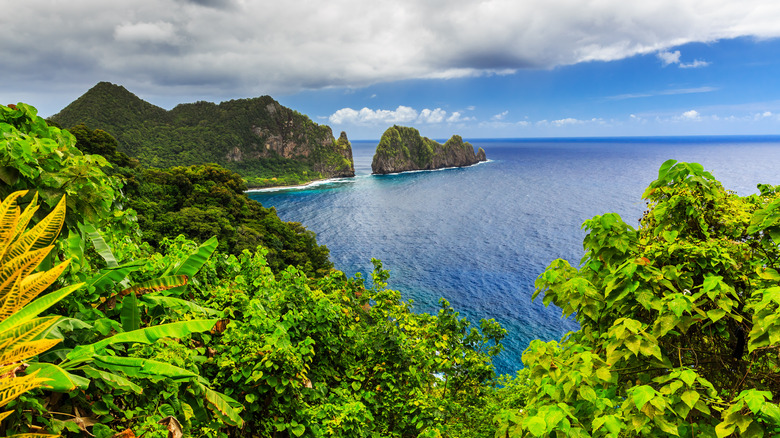
Located more than 2,600 miles (4,184 kilometers) southwest of Hawaii, the National Park of American Samoa is the only U.S. national park south of the Equator. Spread across three volcanic islands, it offers pristine rainforests, coral reefs, dramatic coastlines, and some of the clearest night skies in the Pacific. Its unique location, however, also comes with unique entry requirements.
Why do visitors need proof of U.S. citizenship?
Unlike national parks in the continental United States, the National Park of American Samoa is located in an unincorporated U.S. territory with its own immigration regulations.
According to guidance from the U.S. Department of the Interior and the National Park Service, U.S. citizens and U.S. nationals traveling to American Samoa should carry documentation proving their status. Accepted documents generally include:
- A valid U.S. passport
- A U.S. birth certificate (along with government-issued identification where applicable)
These requirements exist because American Samoa operates under its own immigration system, which differs from that of the 50 U.S. states and several other U.S. territories.
It’s important to note that the documentation requirement is related to travel into American Samoa itself—not because the national park independently requires proof of citizenship at its entrance gate.
Where is the National Park of American Samoa?
The National Park of American Samoa spans three islands:
- Tutuila
- Taʻū
- Ofu
Unlike most U.S. national parks, which consist of a single continuous protected area, this park is divided across multiple islands in the South Pacific.
The park preserves:
- Tropical rainforests
- Volcanic mountains
- Coral reefs
- Coastal cliffs
- Traditional Samoan villages
It is also home to unique wildlife, including fruit bats, rare birds, and vibrant marine ecosystems.
How do you get there?
Reaching the park requires considerably more planning than visiting most U.S. national parks.
Travelers first fly into Pago Pago International Airport on Tutuila Island. From there, smaller regional flights connect visitors to Taʻū and Ofu.
Because flights between the islands are limited, travelers are encouraged to plan transportation well in advance.
What makes this national park special?
The National Park of American Samoa offers experiences rarely found elsewhere in the U.S. National Park System.
Tutuila
Tutuila is the park’s most accessible island and features:
- The Mount ʻAlava Trail
- Panoramic coastal viewpoints
- Traditional Samoan villages
- Dense tropical rainforest
Taʻū
Taʻū offers a quieter, more remote experience.
Highlights include:
- Lata Mountain, the highest point in American Samoa
- Rugged volcanic landscapes
- Less crowded hiking trails
- Rich native biodiversity
Ofu
Ofu is best known for its spectacular beaches and marine life.
Visitors can enjoy:
- White-sand beaches
- Crystal-clear water
- Coral reef snorkeling
- Tropical fish and marine wildlife
Why is the Milky Way so visible here?
One of the park’s biggest attractions comes after sunset.
Because American Samoa is far from major cities and experiences very little light pollution, its night skies are exceptionally dark. On clear nights, visitors can often see the Milky Way stretching across the sky with remarkable clarity.
The park has become a favorite destination for:
- Astrophotographers
- Stargazers
- Nature enthusiasts seeking dark-sky experiences
What should you pack?
American Samoa has a tropical climate throughout the year.
Visitors should bring:
- Lightweight clothing
- Waterproof hiking shoes
- Rain jacket
- Sunscreen
- Insect repellent
- Snorkeling gear (if desired)
Rain showers can occur in any season, although October through May is generally considered the wetter period.
Is there an entrance fee?
No.
Admission to the National Park of American Samoa is free.
However, visitors should budget for airfare, inter-island transportation, accommodations, and other travel expenses, which can be significantly higher than those associated with visiting mainland U.S. national parks.
Why the park is unlike any other in the U.S.
The National Park of American Samoa stands apart from every other national parks in the United States.
Not only is it the nation’s only tropical rainforest national park and the only one located south of the Equator, but its location within a U.S. territory with its own immigration rules means travelers should prepare the necessary documentation before departure.
For those willing to make the journey, the reward is one of America’s most remote and least-visited national parks, offering untouched landscapes, vibrant coral reefs, authentic Samoan culture, and some of the clearest views of the Milky Way anywhere under the U.S. flag.
Key takeaways
- The National Park of American Samoa is located more than 2,600 miles from Hawaii across the islands of Tutuila, Taʻū, and Ofu.
- Travelers should carry proof of U.S. citizenship or nationality when entering American Samoa because the territory has its own immigration regulations.
- The park itself is free to enter.
- Popular activities include hiking, snorkeling, wildlife viewing, and stargazing.
- Its remote location and minimal light pollution make it one of the best places in the U.S. for viewing the Milky Way.