
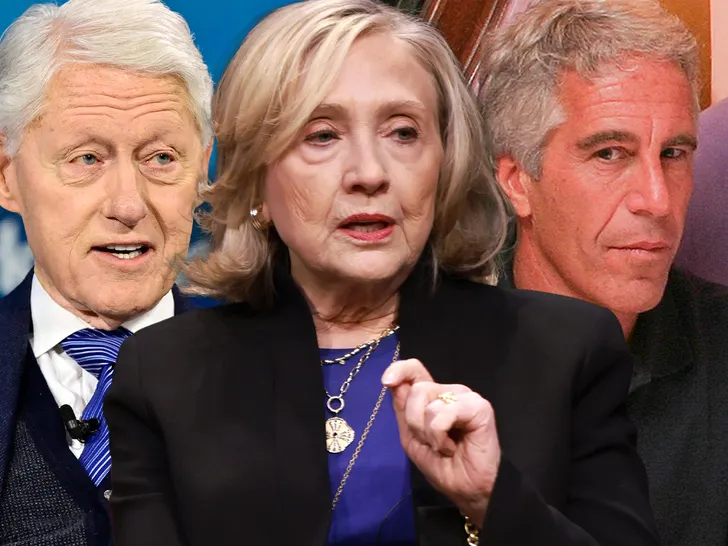
Bill and Hillary Clinton agreeing to testify before a US House panel on their past links to Jeffrey Epstein is more than a procedural development. It is a moment that sits at the intersection of law, politics, and public trust, arriving just days after the Justice Department released millions of pages tied to the Epstein investigation.
Within the first hours of the announcement, the political temperature in Washington rose. Supporters framed the move as transparency at work. Critics saw a calculated step to defuse a looming contempt vote in Congress. For the public, the bigger question is simpler: why now, and what actually changes because of it?
This article explains what led to the Clintons’ decision, what Congress is trying to achieve, and why this testimony matters even though no criminal allegations have been made against them.
Why are Bill and Hillary Clinton agreeing to testify now?
The timing is not accidental. The Clintons’ decision comes just ahead of a potential criminal contempt of Congress vote that had been advancing in the House.
The pressure point: contempt of Congress
House Republicans had accused the Clintons of defying subpoenas after they declined to appear in person for depositions. While they did submit sworn written statements, lawmakers pushing the probe argued that written responses were insufficient.
Key developments that shaped the reversal include:
- The House Oversight Committee voted to advance contempt resolutions.
- Congressional leaders signaled willingness to escalate the matter.
- The Justice Department released a massive new batch of Epstein-related files, renewing public scrutiny.
By agreeing to testify, the Clintons effectively removed the immediate basis for a contempt vote. Shortly after their announcement, consideration of the resolutions was suspended.
The Clintons’ stated position
According to a statement from Clinton spokesperson Angel Urena, both Bill and Hillary Clinton said they would appear and were prepared to answer questions under oath. The message emphasized precedent, signaling that they believe the same standards should apply to all individuals summoned by Congress.
That framing matters politically. It shifts the narrative from resistance to cooperation, even as the broader investigation continues.
What is the House investigation actually about?
At its core, the House probe is focused on Epstein’s network of relationships and whether powerful individuals received favorable treatment or evaded scrutiny.
Scope of the inquiry
The investigation is not a criminal case against the Clintons. Instead, it is part of a broader congressional effort to examine:
- Epstein’s associations with political, business, and cultural elites.
- How institutions handled warnings and allegations tied to Epstein.
- Whether transparency around Epstein’s activities was obstructed or delayed.
Lawmakers argue that understanding these connections is necessary to assess institutional failures. Critics counter that the inquiry risks becoming a political weapon.
Why did the Clintons initially refuse to appear in person?
The Clintons’ earlier refusal was rooted in a legal argument rather than outright noncooperation.
The legislative purpose argument
In letters sent to Congress, the Clintons contended that the subpoenas lacked a clear legislative purpose. Under US law, congressional subpoenas are valid only when tied to legitimate legislative aims.
Instead of appearing, they provided sworn written statements that outlined:
- Their knowledge of Jeffrey Epstein.
- Their interactions, or lack thereof, with Ghislaine Maxwell.
- Their positions on Epstein’s criminal conduct.
From their perspective, this satisfied the obligation to respond without endorsing what they viewed as a flawed subpoena process.
What they disclosed in sworn statements
Bill Clinton acknowledged flying on Epstein’s private jet during trips connected to Clinton Foundation humanitarian work. He stated he never visited Epstein’s private island and was unaware of Epstein’s crimes at the time.
Hillary Clinton said she had no meaningful relationship with Epstein, never flew on his plane, and never visited his properties.
These statements have not been contradicted by any criminal findings to date.
What do the newly released Epstein files show?
The Justice Department’s latest release added fuel to the debate, even if it did not add new criminal accusations against the Clintons.
What is in the latest DOJ release?
On January 30, the DOJ released roughly three million documents tied to Epstein. These materials include:
- Court records and investigative files.
- Interview transcripts with victims and witnesses.
- Flight logs and contact references.
- Photographs and related evidentiary material.
Bill Clinton’s name appears hundreds of times in the documents, largely due to travel records and social interactions. Importantly, no victim has accused him of wrongdoing.
One image circulating widely shows Clinton in a hot tub with Epstein and an individual whose face was redacted by the DOJ. The photo has drawn attention but has not been linked to any criminal allegation.
Who else is named in the files?
The files reference numerous high-profile figures, including former Prince Andrew, Bill Gates, Elon Musk, Howard Lutnick, and filmmaker Mira Nair. Inclusion in the documents does not imply criminal conduct, a distinction that has often been lost in public discourse.
How does Donald Trump factor into this political fight?
The investigation has become entangled with broader partisan tensions, especially given Donald Trump’s return to the presidency.
Competing narratives
Democrats argue the probe is being weaponized to target political opponents of President Trump. They point to Trump’s own documented associations with Epstein in the past, even as Trump denies being “friendly” with him or visiting Epstein’s island.
Republicans counter that the focus is accountability, not partisanship, and that no individual should be exempt from scrutiny due to status or political alignment.
This clash matters because it shapes how the testimony will be framed and received by the public.
What could come out of the Clintons’ testimony?
Even without criminal allegations, congressional testimony can have significant consequences.
Potential outcomes to watch
The hearings could lead to:
- Clarification of timelines and interactions that remain unclear in public records.
- New questions about how political and philanthropic networks operate.
- Recommendations for legislative changes around transparency and oversight.
What is unlikely to happen
Based on current information:
- There is no indication of criminal charges against the Clintons.
- Testimony alone does not equate to legal liability.
- Congress cannot prosecute crimes directly.
The impact is more likely to be reputational and political rather than legal.
Why does this matter beyond the Clintons?
The significance of this moment goes beyond two well-known political figures.
A test of institutional accountability
Epstein’s case exposed deep failures across systems that were supposed to protect vulnerable people. Congressional scrutiny, even when politically charged, reflects ongoing public demand for accountability.
This episode also raises broader questions:
- How transparent should powerful individuals be about past associations?
- Where is the line between legitimate oversight and political theater?
- What reforms are needed to prevent similar failures in the future?
TL;DR
Bill and Hillary Clinton have agreed to testify before a US House panel on their links to Jeffrey Epstein, reversing an earlier refusal as a contempt vote loomed. The move follows a massive DOJ document release that renewed scrutiny but did not allege criminal wrongdoing by the Clintons. The testimony is likely to shape political narratives and transparency debates, even if it leads to no legal consequences.