
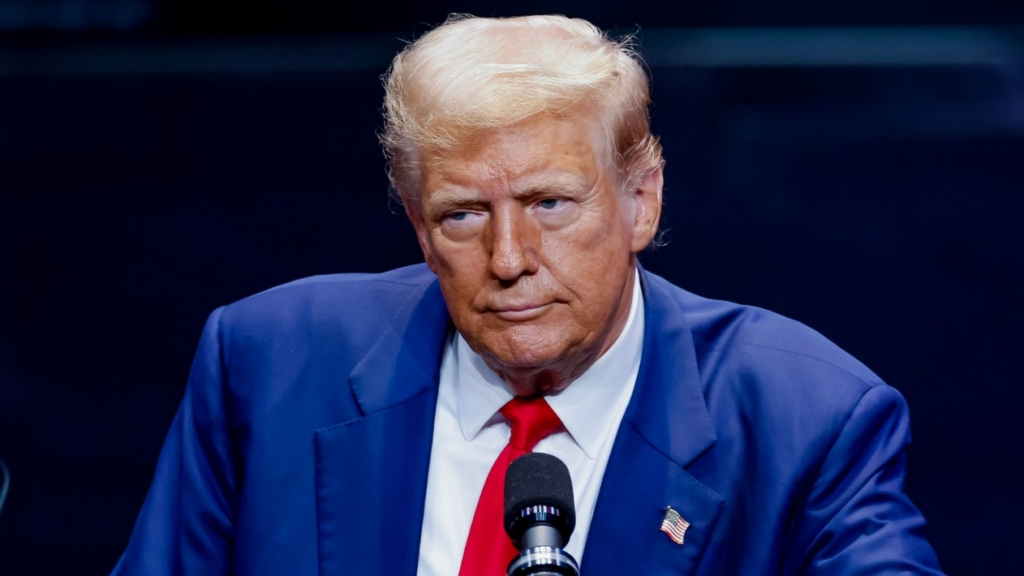
Iranian state television has aired what officials and analysts describe as the most explicit threat yet against United States President Donald Trump, further inflaming already tense relations between Washington and Tehran.
The broadcast, reported by AFP, showed an image from the 2024 assassination attempt on Trump during a campaign rally in Butler, Pennsylvania. Over the image appeared a chilling message: “This time it (the bullet) will not miss the target.”
The warning marks a sharp escalation in rhetoric at a moment when US–Iran relations are strained by regional conflict, domestic unrest inside Iran, and unresolved security threats.
What exactly did Iranian television show?
The image aired on Iranian state television reportedly came from the July 2024 shooting at a Trump campaign rally in Butler, Pennsylvania. During that incident, Trump was grazed in the ear by a bullet fired by Thomas Crooks.
By pairing the image with a direct threat, Iranian media crossed a line from symbolic hostility into explicit menace, according to Western officials familiar with Iranian messaging tactics.
This is the most direct public threat against Trump attributed to Iranian state media, rather than anonymous online channels or indirect propaganda.
Why is this threat significant now?
The timing matters. Tehran and Washington are already locked in a cycle of mutual warnings, sanctions, and military posturing across the Middle East.
Iranian officials have repeatedly accused the US of destabilizing the region, while Washington has warned Tehran against targeting American interests, troops, or allies.
This televised threat signals that Iranian messaging is becoming more confrontational, even as US intelligence agencies remain on alert for real-world plots.
A history of threats against Trump
This is not the first time Iran has been linked to threats against Trump.
In 2022, Iranian media circulated a video depicting a simulated assassination attempt on Trump at his Mar-a-Lago golf course in Florida. That video resurfaced after Ryan Routh was arrested for attempting to assassinate Trump at the same location.
US officials have long warned that Iran views Trump as a symbolic and strategic target, particularly after his administration’s policies toward Tehran and the region.
What do US authorities say about Iranian plots?
According to the US Justice Department, American authorities foiled an Iranian-led plot in 2024 aimed at assassinating Trump.
Federal officials said Farhad Shakeri was arrested after allegedly being tasked by Iran’s Revolutionary Guard Corps to carry out the killing. The case underscored concerns that Iranian threats could extend beyond rhetoric into operational planning.
While Iran has denied direct involvement in assassination plots, US officials say intelligence assessments point to sustained interest in targeting Trump and other former officials.
How Iran’s domestic unrest fits into the picture
The threat aired on state television comes amid growing unrest inside Iran.
Protests that initially erupted over economic grievances have expanded into broader calls for regime change. According to the Human Rights Activists News Agency (HRANA) in the United States, at least 2,403 protesters have been killed and more than 18,000 arrested during the unrest.
At recent pro-government demonstrations, participants reportedly chanted “Death to America!” while pledging loyalty to Iranian Supreme Leader Ayatollah Ali Khamenei.
Analysts say aggressive messaging toward the US often increases during periods of internal pressure, as leaders seek to redirect public anger toward external enemies.
Rising regional tensions and military warnings
Iranian officials have warned that American troops in the region would be targeted if the US launches strikes against Iran. Tehran has also issued repeated threats toward Israel, further raising fears of a wider regional escalation.
In Washington, officials are monitoring whether the rhetoric aired on Iranian television is meant purely for domestic consumption or signals a shift toward more dangerous actions.
What happens next?
Security agencies in the US are expected to reassess threat levels following the broadcast. While officials caution against overreacting to propaganda, they also stress that explicit threats from state-linked media cannot be ignored.
For now, the message underscores how volatile US–Iran relations remain and how quickly rhetoric can escalate into something more dangerous.
Whether the threat is symbolic intimidation or something more serious, it adds another layer of tension to an already unstable geopolitical relationship.
TL;DR
- Iranian state television aired a message threatening Donald Trump, saying “the bullet will not miss”
- The broadcast used an image from the 2024 assassination attempt in Butler, Pennsylvania
- US authorities previously foiled an Iranian-linked plot to assassinate Trump
- The threat comes amid domestic unrest in Iran and rising regional tensions
- US officials are closely monitoring whether rhetoric could translate into action