
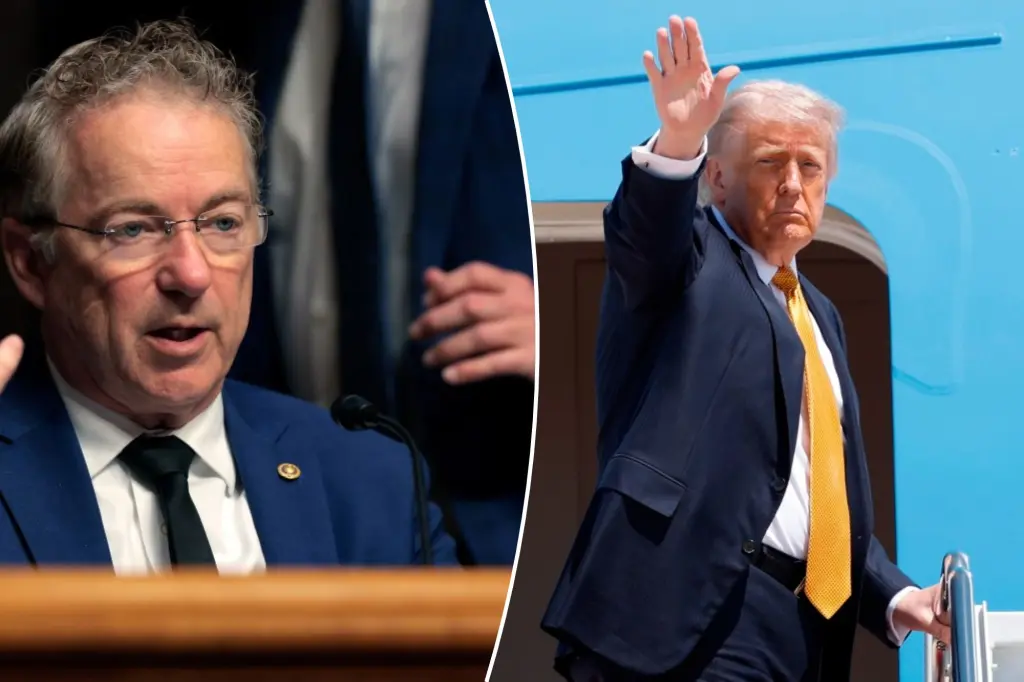
A high-stakes Senate hearing on the origins of COVID-19 is set to put fresh pressure on the US intelligence community after Senator Rand Paul announced that a CIA whistleblower will publicly testify about what he describes as a government “cover-up” surrounding the pandemic’s beginnings.
The hearing, organized by the Senate Homeland Security and Governmental Affairs Committee, is expected to revive one of the most politically charged questions of the post-pandemic era: whether COVID-19 emerged naturally or originated from a laboratory incident in China.
According to Paul, the whistleblower is a longtime CIA official who claims that intelligence agencies suppressed evidence and limited public disclosure of internal assessments on the virus’s origins.
The testimony comes at a geopolitically sensitive moment, with US President Donald Trump visiting Beijing for talks with Chinese President Xi Jinping amid growing global tensions tied to the West Asia conflict and energy security concerns.
What Rand Paul says the whistleblower will reveal
Paul announced the hearing through social media posts and a formal committee statement, describing the testimony as a major challenge to what he called years of institutional secrecy.
According to the senator, the whistleblower previously worked within the Office of the Director of National Intelligence and participated in a special CIA-linked analytical group tasked with examining COVID-19’s origins.
Paul claims the witness will testify that
- Intelligence agencies restricted or withheld relevant information from the public
- Analysts within the intelligence community leaned toward a lab-origin assessment
- Internal conclusions were softened or buried during public reporting processes
- Officials resisted transparency regarding investigative findings
Speaking to Fox News and the New York Post ahead of the hearing, Paul argued that parts of the intelligence establishment continue to resist disclosure.
“The deep state is still hiding the origins of this virus,” Paul told the New York Post.
He also suggested that the whistleblower would reinforce claims that analysts concluded the virus likely originated from a laboratory rather than through natural transmission.
Why the COVID origins debate remains politically explosive
More than six years after the pandemic first emerged, the origins of COVID-19 remain unresolved at the international level.
Two primary theories continue to dominate the discussion:
The natural spillover theory
This theory suggests the virus jumped naturally from animals to humans, likely through wildlife trade networks or wet markets.
Many virologists and public health experts initially viewed this explanation as the most probable scenario, partly because previous coronavirus outbreaks, including SARS, followed similar patterns.
The lab leak theory
The lab leak hypothesis argues that the virus may have accidentally escaped from a research facility, most commonly linked to the Wuhan Institute of Virology in China.
Supporters of this theory point to the following:
- Coronavirus research conducted in Wuhan
- Questions surrounding biosafety protocols
- Limited transparency from Chinese authorities
- Difficulties faced by international investigators seeking raw data
Over the past several years, parts of the US intelligence community have shifted toward viewing a laboratory accident as a plausible explanation, though agencies remain divided.
That split is central to the political significance of the Senate hearing.
What US intelligence agencies have said so far
US intelligence assessments have never reached a unanimous conclusion about COVID-19’s origin.
Different agencies have reportedly reached different levels of confidence regarding competing theories.
Some agencies have leaned toward natural emergence, while others have supported the lab leak theory with varying confidence levels. Several agencies have also stated that available evidence remains inconclusive.
This fragmented assessment has fueled criticism from lawmakers who argue the government has failed to provide transparency about what intelligence officials actually know.
The CIA itself has historically maintained a more cautious public position compared to some other agencies.
Consider adding a timeline graphic here showing how US intelligence assessments on COVID origins evolved between 2020 and 2026.
Why this hearing could matter politically
The hearing arrives during a period of renewed scrutiny over pandemic-era decisions, government credibility, and US-China relations.
Republican lawmakers, including Paul, have increasingly framed the COVID origins issue as follows:
- A transparency failure
- An intelligence oversight issue
- A public trust crisis
- A national security concern
The hearing could also intensify broader debates over the following:
- Gain-of-function research
- Federal funding tied to virology studies
- Pandemic preparedness
- Intelligence community accountability
At the same time, critics warn that political hearings can sometimes overstate incomplete evidence or blur the line between scientific uncertainty and partisan messaging.
That tension will likely shape public reaction to the whistleblower’s testimony.
What remains unknown ahead of the testimony
Despite the anticipation surrounding the hearing, several major questions remain unanswered.
The whistleblower’s evidence has not been publicly released
As of now, the specific documents, communications, or intelligence assessments the whistleblower plans to reference have not been made public.
Without supporting evidence, outside experts will likely remain cautious about drawing firm conclusions.
Intelligence disagreements still exist
Even if the whistleblower presents claims favoring a lab-origin theory, that would not automatically settle the broader scientific debate.
COVID-19 origin investigations remain complicated by:
- Limited access to Chinese research data
- Incomplete early outbreak records
- Political tensions between Washington and Beijing
- The passage of time since the pandemic began
China continues to reject lab leak allegations
Chinese officials have repeatedly denied claims that COVID-19 originated from a laboratory in Wuhan and have accused Western governments of politicizing the issue.
The Chinese government has also criticized US intelligence investigations into the pandemic’s origins.
The broader credibility battle surrounding COVID investigations
The pandemic permanently altered public trust in governments, scientific institutions, and intelligence agencies across the world.
For many Americans, the origins debate has become symbolic of a larger question: whether governments fully disclosed what they knew during one of the deadliest global crises in modern history.
That explains why hearings like this continue to generate intense political and media attention years after the first lockdowns ended.
Whether the whistleblower produces genuinely new evidence or simply reinforces existing suspicions may ultimately determine the hearing’s long-term impact.
Either way, the testimony is likely to reignite fierce debate over transparency, accountability, and the unanswered mysteries surrounding COVID-19’s earliest days.