
Rationing Measures Introduced as Avian Flu Disrupts Supply
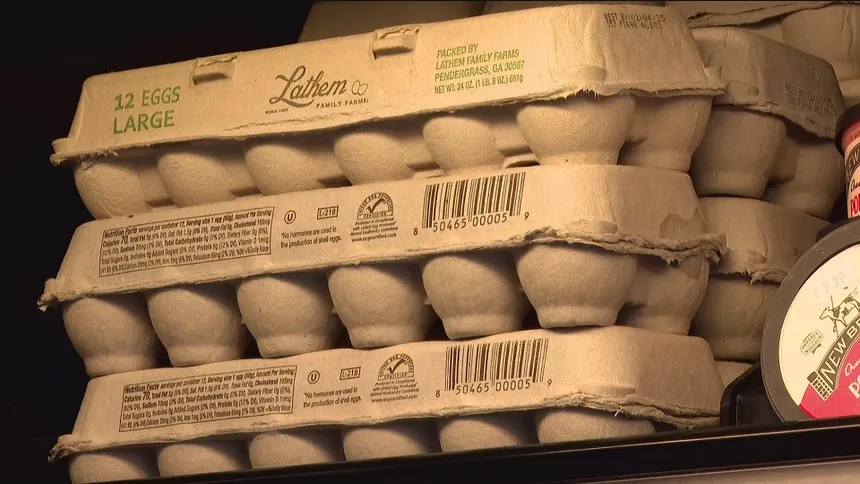
Supermarkets across the United States are tightening egg purchase limits as a severe bird flu outbreak continues to disrupt supply chains. California shoppers, in particular, are struggling to find eggs, with long morning queues and purchase restrictions becoming the new normal.
Egg limits and long lines
At a Costco in San Jose, California, customers have been limited to three cartons per purchase since Saturday. By late morning on Tuesday, only a handful of organic brown and green eggs remained—white eggs had completely sold out. A sign at the store entrance warned customers of the restrictions.
“You need to come early to make sure you can buy eggs,” said Marcie Lopez, a shopper at the store. Prices have surged, making eggs both expensive and scarce.
At another Costco in Azusa, California, a store clerk greeted early morning customers with a blunt announcement: “No eggs, no eggs, no eggs.”
“It’s unbelievable—we arrived early, but still couldn’t get eggs,” said Luna, another frustrated customer.
Social media frenzy and retailer limits
Empty shelves and skyrocketing prices have sparked consumer panic, with social media platforms flooded with videos of frantic shoppers grabbing eggs in bulk. A viral clip from a Costco store showed an entire fresh stock being wiped out in less than 10 minutes.
To manage supply, major retailers have imposed strict purchase limits:
- Trader Joe’s: One dozen eggs per customer per day.
- Whole Foods: Maximum of three cartons per shopper.
- Kroger: Two dozen per trip.
- Sprouts: Four dozen per visit.
- Giant Eagle: Three cartons per transaction.
- Market Basket (Massachusetts): Two cartons per family.
In California, Safeway has been restricting customers to two dozen eggs per visit for over a month. A store worker named John explained that deliveries arrive only twice a day—at 7 a.m. and noon—yet eggs still sell out by late afternoon.
Bird Flu outbreak fuels crisis
The shortages stem from a deadly strain of avian influenza (HPAI) that has devastated egg-laying flocks across the country. According to the US Department of Agriculture (USDA), over 150 million poultry birds have been culled to combat the H5N1 virus, drastically reducing egg production.
As a result, prices have soared. The national trading price for large white shell eggs has hit $7.34 per dozen, while cage-free eggs in California have climbed to $9.11 per dozen. The USDA warns that the crisis is unlikely to improve in the near future.
Retailers and restaurants struggle to adapt
Many supermarkets have cut back on egg promotions to conserve stock, while some are keeping prices high to curb demand. At an Aldi in Monrovia, a sign read:
“Due to supply challenges, eggs are limited to two per customer. We apologize for any inconvenience.”
Meanwhile, restaurant chains are feeling the impact. Waffle House, which serves 272 million eggs annually, has introduced a 50-cent surcharge per egg at its 2,100 locations nationwide.
Consumer behavior driving the shortage
Experts say the shortage is being worsened by panic buying. Saloni Vastani, an associate professor of marketing at Emory University, told USA Today:
“Egg prices are rising due to avian flu, but the fear of future shortages is making consumers buy more than usual, further depleting store supplies.”
The USDA predicts egg prices will rise by 20% in 2025, far exceeding the projected 2.2% increase in overall food costs. Prices in December 2024 were already 36.8% higher than the previous year, reflecting the strain on the market.
With no immediate solution in sight, shoppers and retailers alike must brace for continued disruptions in egg availability.