
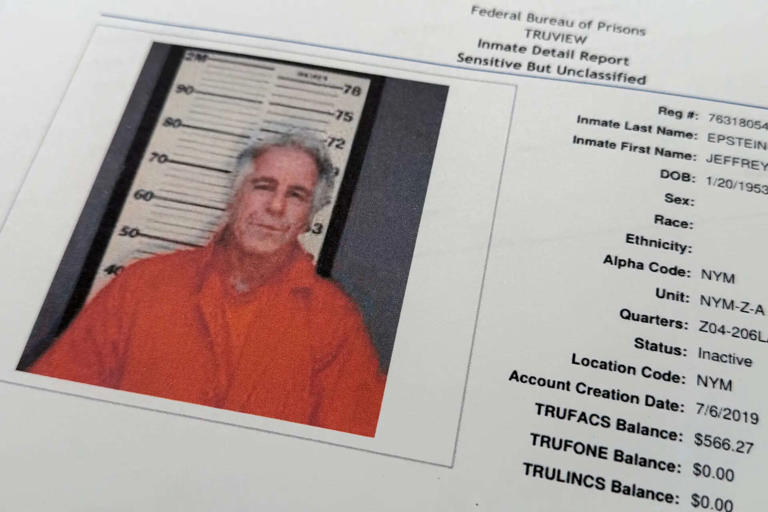
The estate of convicted sex offender Jeffrey Epstein has agreed to pay up to $35 million to settle a lawsuit brought by survivors of his abuse, according to a court filing submitted Thursday in federal court in Manhattan.
A federal judge in New York must still approve the proposed settlement before it becomes final. If approved, it would resolve a 2024 lawsuit accusing the estate’s co-executors of helping enable Epstein’s misconduct through their professional roles.
What Does the Proposed Settlement Cover?
The settlement applies to dozens of individuals who allege they were “sexually assaulted or abused or trafficked” by Epstein between January 1, 1995, and August 10, 2019—the day he was found dead in a federal jail cell in New York.
Under the terms outlined in the filing:
- The estate would pay $35 million if 40 or more survivors are deemed eligible members of the settlement class.
- If fewer than 40 individuals qualify, the payout would be reduced to $25 million.
This tiered structure reflects the number of verified claims and determines the total compensation pool available for distribution.
Who Is Involved in the Lawsuit?
The lawsuit was filed against the estate’s co-executors:
- Darren Indyke, Epstein’s longtime lawyer
- Richard Kahn, Epstein’s former accountant
The complaint accused them of enabling Epstein’s illegal activities through their legal and financial services. The suit did not allege that either man committed sexual abuse or personally witnessed abuse.
Both co-executors have denied wrongdoing. According to the court filing, the proposed agreement does not constitute an admission of liability or fault. It also shields them from further legal action by members of the settlement class if the judge approves the deal.
Why the Number 40 Matters
The $35 million headline figure hinges on one key threshold: 40 qualifying survivors.
If that benchmark is met, the estate pays the higher amount. If not, the total payout drops by $10 million.
Boies Schiller Flexner LLP, the law firm representing the class of survivors, reportedly told media outlets including Bloomberg that it is confident at least 40 individuals qualify who have not previously settled with the estate.
That confidence will be tested during the court’s review process, which will assess eligibility and fairness before granting approval.
What Happens Next in Federal Court?
The case is pending before a federal judge in Manhattan. Before final approval, the court must determine that:
- The settlement is fair and reasonable.
- The class of eligible survivors is properly defined.
- Notice procedures are sufficient to reach potential claimants.
A fairness hearing is typically scheduled in such cases, allowing objections or concerns to be raised.
How This Fits Into the Broader Epstein Legal Fallout
Epstein, once a well-connected financier, was arrested in 2019 on federal sex trafficking charges involving minors. He died in custody while awaiting trial, in what authorities ruled a suicide.
His death did not end legal scrutiny.
Since 2019, multiple civil lawsuits have been filed against:
- His estate
- Former associates
- Financial institutions that allegedly facilitated his operations
The estate previously established a victims’ compensation program that paid out hundreds of millions of dollars to claimants. This new settlement addresses a separate lawsuit targeting the estate’s administrators.
Recently, the U.S. Department of Justice released millions of pages of documents, photographs, and videos tied to the investigation into Epstein and his network. While much of the material has already been referenced in prior proceedings, the volume underscores the breadth of the investigation.
For credibility, link to official DOJ document releases or summaries from major outlets such as The New York Times or Reuters.
Why This Settlement Matters
For Survivors
Civil settlements can provide financial compensation and formal acknowledgment of harm, even in the absence of a criminal conviction. Because Epstein died before trial, many survivors were unable to see criminal proceedings unfold in court.
This agreement, if approved, would represent another step toward legal closure for some victims.
For the Estate’s Administrators
Approval would resolve allegations that the co-executors enabled misconduct through their professional roles. The settlement language makes clear they do not admit wrongdoing.
For the Legal System
The case highlights how civil litigation often becomes the primary path to accountability when criminal proceedings are cut short. It also demonstrates how estate assets can be used to satisfy claims tied to a decedent’s conduct.
Ongoing Questions
Despite multiple settlements and compensation programs, public interest in Epstein’s network remains high.
Key questions persist:
- Were other enablers involved who have not faced consequences?
- What additional information might be revealed through document releases?
- Will further civil actions be filed as new evidence surfaces?
Legal experts note that complex estate litigation can take years to fully resolve, particularly when multiple classes of claimants are involved.
TL;DR
- The estate of Jeffrey Epstein has agreed to pay up to $35 million to settle a lawsuit brought by survivors.
- The full amount applies if 40 or more survivors qualify; otherwise, the payout drops to $25 million.
- Co-executors Darren Indyke and Richard Kahn deny wrongdoing and do not admit liability under the proposed agreement.
- A federal judge in Manhattan must approve the settlement before it becomes final.
The case underscores how civil litigation continues to shape the aftermath of one of the most high-profile sex trafficking scandals in recent U.S. history.