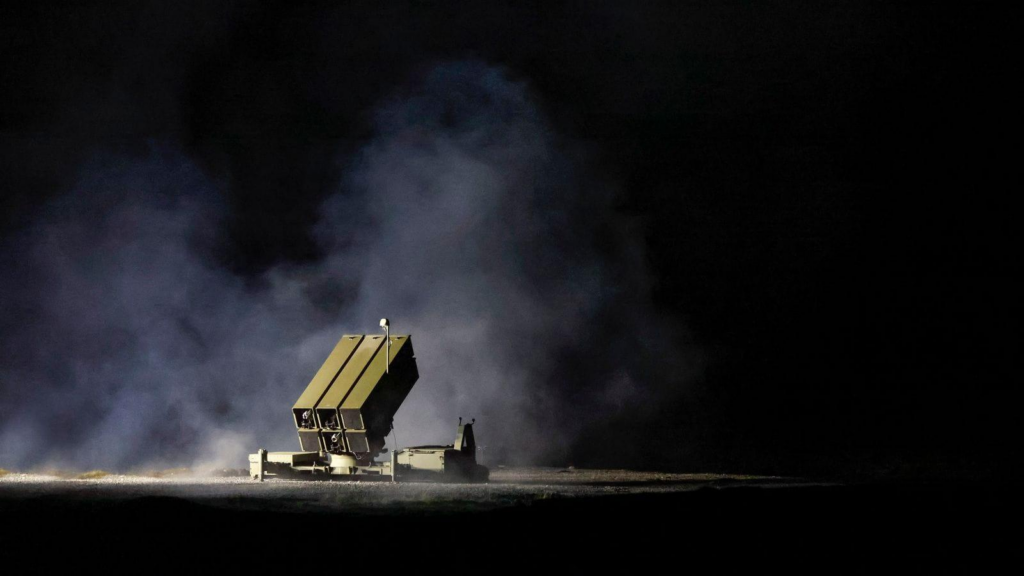
The idea of American fighter jets being shot down was, until recently, almost unthinkable. For decades, U.S. airpower operated with near-total dominance in contested regions. That assumption is now being tested. A series of incidents involving downed U.S. aircraft over Iran has raised a pressing question: how is Iran managing to hit some of the most advanced military platforms in the world?
The answer lies not in a single breakthrough weapon but in a layered strategy that blends technology, mobility, and deception.
What has changed in Iran’s air defense strategy?
Iran has spent years preparing for a fight it cannot win conventionally. Instead of matching the U.S. plane for plane, it has focused on asymmetric warfare.
That means exploiting vulnerabilities rather than overpowering strengths.
In practical terms, Iran has:
- Invested in short-range, hard-to-detect missile systems
- Prioritized mobility over fixed infrastructure
- Built redundancy through hidden and dispersed assets
This approach turns the battlefield into something less like a chessboard and more like a minefield where threats are everywhere and rarely visible.
How do infrared systems like Majid threaten advanced aircraft?
Why passive detection is a game-changer
One of the most discussed systems in recent analyses is the Majid air defense system, introduced by Iran in 2021.
Unlike traditional radar-based systems, Majid uses infrared tracking. That means it detects the heat signature of an aircraft rather than bouncing radar waves off it.
This has two major implications:
- It is much harder to detect because it doesn’t emit signals
- It reduces the effectiveness of radar-jamming countermeasures
In simple terms, stealth aircraft are designed to evade radar, not heat.
Infrared systems flip the script. Even a highly advanced jet still produces heat from its engines, making it visible to these sensors. Add a proximity fuse, which detonates the missile near the target rather than requiring a direct hit, and the margin for survival shrinks further.
India Today reports that analysts believe the Majid infrared air defense system or shoulder-fired missiles may have been deployed in these attacks.
Why is low-altitude flying increasing the risk
The trade-off pilots are forced to make
To avoid long-range radar systems, pilots often fly at lower altitudes.
But this tactic comes with a cost.
Low altitude places aircraft within range of:
- Shoulder-fired missiles (MANPADS)
- Short-range air defense systems like Majid
- Hidden launchers positioned in the terrain
At higher altitudes, aircraft are visible but harder to hit. At lower altitudes, they are harder to detect but easier to strike.
Iran’s strategy exploits this dilemma.
It forces pilots into a narrow corridor where every option carries risk.
What makes mobile missile launchers so effective?
Understanding the “shoot-and-scoot” tactic
Iran has increasingly relied on mobile surface-to-air missile launchers.
These systems are mounted on vehicles and can relocate quickly after firing.
The tactic is simple but effective:
- Launch a missile
- Immediately move to a new location
- Avoid counterstrikes
This “shoot-and-scoot” approach creates a moving target problem for U.S. forces.
Even if a launch is detected, retaliation may arrive too late.
Leaked reports have suggested Iran is acquiring advanced man-portable systems like the Russian-made Verba, known for:
- High sensitivity to heat signatures
- Ability to filter out background interference
- Effectiveness against low-flying aircraft and helicopters
For slow-moving aircraft like helicopters, these systems are particularly dangerous.
How does concealment give Iran an edge?
The role of terrain and underground infrastructure
Iran’s geography is an asset.
Mountains, deserts, and coastlines provide natural cover. On top of that, Iran has invested heavily in underground facilities often referred to as “missile cities.”
These include:
- Tunnel networks carved into mountains
- Reinforced underground storage for missiles
- Hidden launch points that can be activated quickly
This makes preemptive strikes extremely difficult.
Even sustained air campaigns may fail to eliminate these systems because:
- Their locations are concealed
- They are spread across wide regions
- They can be reactivated after attacks
In effect, Iran has built a defense network designed to survive being targeted.
How asymmetric warfare levels the playing field
Why the U.S. advantage is being challenged
The U.S. still maintains a technological edge in aviation. But warfare is no longer decided by technology alone.
Iran’s strategy focuses on:
- Cost-effective weapons against expensive aircraft
- Forcing operational constraints on U.S. pilots
- Creating uncertainty in every mission
A shoulder-fired missile costing tens of thousands of dollars can threaten an aircraft worth tens of millions.
That imbalance is the essence of asymmetric warfare.
It doesn’t aim to dominate. It aims to disrupt, complicate, and gradually erode advantage.
What this means for future air combat
The recent incidents suggest a broader shift.
Air superiority is no longer guaranteed, even for the most advanced militaries.
Instead, future air combat may involve:
- Greater reliance on electronic warfare and countermeasures
- Increased use of drones to reduce pilot risk
- More cautious mission planning in contested airspace
The skies are becoming contested again.
And in that environment, survival depends as much on strategy as it does on technology.
TL;DR
- Iran is using asymmetric warfare to counter U.S. airpower
- Infrared systems like Majid can detect aircraft without radar
- Low-altitude flying exposes jets to short-range missiles
- Mobile launchers use “shoot-and-scoot” tactics to avoid retaliation
- Underground and hidden systems make targeting difficult
- The result is a more contested and dangerous airspace