
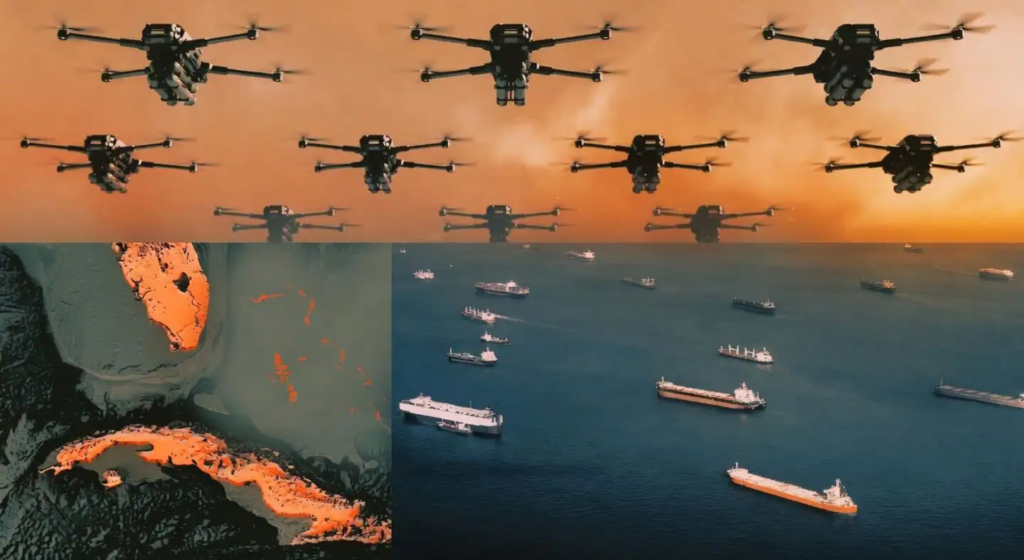
Just 90 miles from the coast of Florida, a new security concern is quietly emerging for the United States: drones. According to reports citing US intelligence officials, Cuba has allegedly acquired hundreds of military drones from Russia and Iran, sparking growing concern in Washington about the possibility of future attacks targeting the following:
- Guantanamo Bay Naval Base
- US naval vessels
- Infrastructure near Key West
US officials stress they do not believe Cuba is preparing imminent attacks.
But the reports highlight something more important:
The age of cheap drone warfare has dramatically changed how even relatively weak states can create strategic pressure.
And for American officials, the idea of adversarial drone systems sitting just off the US coastline is deeply unsettling.
What exactly are US officials claiming?
According to reports citing classified intelligence shared with Axios, Cuban officials have allegedly discussed scenarios involving drone warfare if relations with Washington continue deteriorating.
US officials reportedly believe Cuba has acquired:
- More than 300 drones since 2023
- Systems of “varying capabilities”
- Additional military hardware requests from Russia
The intelligence claims some drones have been positioned at strategic locations across the island.
Officials also reportedly said Cuban military discussions have included:
- Drone strikes against Guantanamo Bay
- Surveillance operations
- Potential maritime attacks
- Asymmetric warfare tactics
Importantly, US officials emphasized that Cuba is not currently viewed as preparing active military operations.
Instead, the concern centers on long-term capability development.
Why drones are changing the security equation
For decades, Cuba was not viewed as a major conventional military threat to the United States.
Its aging air force and limited naval power pale in comparison to US capabilities.
But drones change that equation because they are:
- Cheap
- Hard to detect
- Easy to deploy
- Effective asymmetrically
- Increasingly sophisticated
A country no longer needs advanced fighter jets or large warships to create security headaches.
Modern drone warfare allows smaller powers to:
- Disrupt infrastructure
- Threaten military bases
- Conduct surveillance
- Create political pressure
- Complicate air defenses
The Ukraine war and conflicts in the Middle East have accelerated that transformation dramatically.
Why Guantanamo Bay matters strategically
The Guantanamo Bay Naval Base remains one of America’s most strategically sensitive overseas military facilities.
The base serves multiple functions:
- Naval logistics
- Regional military operations
- Intelligence activities
- Detention infrastructure
- Caribbean security operations
Its symbolic importance also matters enormously.
Any credible threat against Guantanamo would carry political impact far beyond its direct military significance.
That helps explain why even limited Cuban drone capabilities are drawing attention in Washington.
The Iran and Russia connection
Reports suggest US officials are especially concerned because Cuba’s alleged drone build-up may involve technology and training connected to:
- Iran
- Russia
Both countries have become increasingly influential in modern drone warfare.
Iran has:
- Supplied drones across the Middle East
- Developed low-cost attack drone systems
- Used asymmetric drone tactics extensively
Russia’s war in Ukraine has:
- Accelerated battlefield drone innovation
- Normalized mass drone operations
- Created new tactical doctrines
US officials reportedly believe Cuban personnel may be learning from both systems.
One report even suggested Cuban fighters serving alongside Russian forces in Ukraine may have gained firsthand exposure to modern drone tactics.
That possibility has amplified American concerns.
Why the US sees this as part of a bigger geopolitical pattern
Washington’s concerns extend beyond Cuba itself.
American officials increasingly view the island as a potential platform for rival powers operating near US territory.
For years, the US has expressed concerns about:
- Russian intelligence facilities in Cuba
- Chinese surveillance operations
- Signals intelligence collection
- Strategic partnerships hostile to Washington
Now drones are entering that equation too.
US officials reportedly fear a future scenario where:
- Iran supplies drone systems
- Russia provides technical support
- Cuba offers geographic proximity
That combination could create new security complications across the Caribbean and Gulf region.
The memory of the Cuban Missile Crisis still shapes Washington
Even though officials insist this situation is nowhere near the scale of the Cuban Missile Crisis, the historical shadow remains impossible to ignore.
The core strategic anxiety is similar:
hostile military capabilities positioned extremely close to the United States.
A senior US official reportedly summarized the concern bluntly:
“No one’s worried about fighter jets from Cuba… but it’s worth noting how close they are.”
That geographic reality changes how Washington calculates risk.
Cuba says it has the right to defend itself
Cuba has rejected the accusations and criticism.
The Cuban embassy defended the country’s military posture, arguing that every sovereign nation has the right to self-defense under international law.
Havana also accused Washington of:
- Spreading falsehoods
- Manufacturing pretexts
- Escalating tensions
From Cuba’s perspective, its military modernization may simply reflect fears of US pressure, sanctions, and potential intervention.
That broader context matters because US-Cuba relations have remained deeply hostile for decades.
Why this story matters beyond Cuba
The bigger story here is not just about Cuba.
It is about how drone warfare is shrinking geography.
For most of modern history, military power near the US mainland required the following:
- Aircraft carriers
- Bombers
- Missile systems
- Large military infrastructure
Now, relatively inexpensive drones can create strategic anxiety even from small states with limited conventional power.
This is part of a global shift toward the following:
- Asymmetric warfare
- Distributed military systems
- Low-cost deterrence
- Hybrid conflict strategies
In many ways, drones are becoming the geopolitical equalizer of the 21st century.
The concern in Washington is not that Cuba could defeat the United States militarily.
It is that small, deniable, hard-to-detect systems can create instability, disruption, and uncertainty close to American shores.
What happens next?
Several scenarios remain possible:
- The intelligence concerns fade without escalation
- The US increases surveillance near Cuba
- Additional sanctions target Cuban military networks
- Regional military deployments expand
- Diplomatic tensions worsen further
Much will likely depend on:
- US-Iran relations
- Russia’s global military partnerships
- Cuba’s internal economic situation
- Broader Caribbean security dynamics
For now, officials insist there is no immediate crisis.
But the reports suggest Washington increasingly sees drone proliferation in the Western Hemisphere as a growing long-term security challenge.
TL;DR
- US officials claim Cuba has acquired hundreds of drones from Iran and Russia
- Intelligence reports suggest Cuban military discussions included possible drone attacks on Guantanamo Bay and nearby US targets
- Officials say there is no immediate threat but growing concern over drone warfare capabilities
- The US fears Cuba could become a platform for rival powers near American territory
- Cuba denies wrongdoing and says it has the right to self-defense
- The situation reflects how drone warfare is reshaping modern geopolitics