
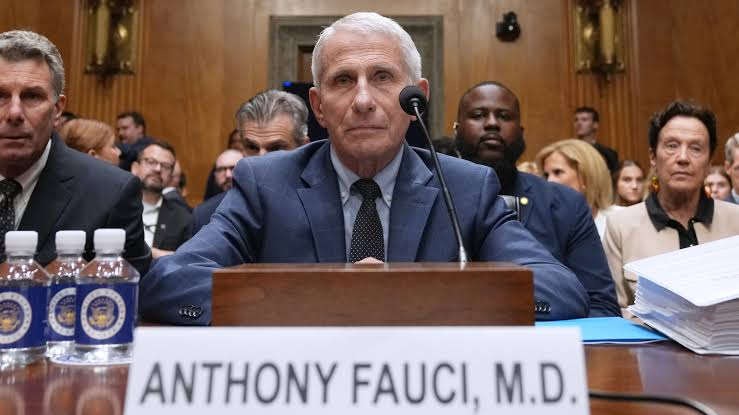
Former National Institute of Allergy and Infectious Diseases (NIAID) Director Dr. Anthony Fauci repeatedly invoked his Fifth Amendment right against self-incrimination during a Senate hearing examining his role in the U.S. response to the COVID-19 pandemic.
The hearing before the Senate Homeland Security and Governmental Affairs Committee featured sharp exchanges between Fauci and several Republican senators, who criticized his refusal to answer questions and argued that a presidential pardon should prevent him from invoking the Fifth Amendment. Fauci, acting on the advice of his attorneys, declined to respond to virtually all substantive questions.
What Happened at the Hearing?
The Senate Homeland Security and Governmental Affairs Committee convened the hearing to question Fauci about issues related to the federal government’s handling of the COVID-19 pandemic.
Before questioning began, Fauci stated that he would invoke his Fifth Amendment right against self-incrimination based on legal advice, saying he believed answering questions could expose him to additional legal risks.
Throughout the hearing, he repeatedly responded with the same statement declining to answer.
Questions About Basic Facts Went Viral
One of the hearing’s most widely shared moments came when Senator Josh Hawley asked Fauci several simple factual questions after becoming frustrated with his repeated refusals to testify.
Among the questions were:
- What day of the week it was.
- What color his tie was.
- What color the carpet was.
Fauci declined to answer each question, again invoking the Fifth Amendment on the advice of counsel. The exchange quickly circulated on social media.
Dispute Over the Fifth Amendment
Several Republican senators argued that Fauci should not be permitted to invoke the Fifth Amendment because he had previously received a presidential pardon related to matters under investigation.
Senator Josh Hawley cited the Supreme Court’s 1896 decision in Brown v. Walker while criticizing Fauci’s refusal to testify.
However, whether a particular witness may properly invoke the Fifth Amendment depends on the specific legal circumstances, including whether truthful testimony could expose the witness to criminal liability outside the scope of any pardon or immunity. Courts—not lawmakers at a hearing—ultimately resolve such disputes if they arise in litigation.
Senators Press Fauci on His Refusal
Several Republican members continued questioning despite Fauci’s repeated invocations.
Senator Bernie Moreno asked Fauci whether he knew what the Fifth Amendment says and requested that he recite it.
When asked additional questions—including after an aide reportedly brought a copy of the Constitution into the hearing room—Fauci again declined to answer, citing his Fifth Amendment rights on the advice of counsel.
Why Did Fauci Invoke the Fifth?
According to his opening remarks, Fauci said he believed the hearing was part of an effort to pursue criminal allegations against him and stated that his attorneys had advised him to invoke his constitutional privilege against self-incrimination.
He also said he had previously cooperated extensively with congressional investigations but believed declining to answer was appropriate under the circumstances.
What Happens Next?
Some Republican senators have suggested pursuing contempt proceedings or additional legal action over Fauci’s refusal to answer questions.
Whether any such action would proceed—and whether Fauci’s invocation of the Fifth Amendment was legally valid under the circumstances—would ultimately depend on applicable law and any future court proceedings.
As of now, no court has ruled on the legality of Fauci’s specific invocation during this hearing.
Why This Matters
The hearing underscores the continuing political and legal disputes surrounding the U.S. response to the COVID-19 pandemic years after the public health emergency.
It also highlights broader constitutional questions about congressional investigations, presidential pardons, and the circumstances under which witnesses may invoke the Fifth Amendment when facing potential legal exposure.
The Bottom Line
Dr. Anthony Fauci repeatedly invoked the Fifth Amendment during a contentious Senate hearing examining his role in the federal COVID-19 response, declining to answer both substantive and basic factual questions on the advice of counsel. Republican senators argued that a prior presidential pardon should prevent him from relying on the constitutional privilege, while Fauci maintained his refusal throughout the hearing. Any legal dispute over the validity of his invocation would ultimately be decided through the courts rather than during the congressional hearing itself.
TL;DR
- Dr. Anthony Fauci repeatedly invoked the Fifth Amendment during a Senate hearing on July 29.
- Republican senators questioned whether he could rely on the privilege after receiving a presidential pardon.
- Fauci declined to answer both substantive and simple factual questions on the advice of counsel.
- The hearing focused on Fauci’s role during the COVID-19 pandemic and related investigations.
- Legal experts have long debated the relationship between pardons, immunity, and Fifth Amendment protections in different circumstances.