
The US Supreme Court has delivered one of the most consequential rulings on presidential authority in decades, significantly expanding President Donald Trump‘s power to remove leaders of independent federal agencies.
In a 6-3 decision, the court ruled that Congress cannot shield certain executive officials from being fired by the president simply because they serve on independent commissions. The judgment overturns key parts of a legal doctrine that had shaped the federal government for nearly 90 years and could fundamentally change the relationship between the White House and dozens of independent agencies.
Here’s what the ruling means, why it matters, and what powers the president gains.
What did the US Supreme Court decide?
The Supreme Court ruled that the president has the constitutional authority to remove officials who exercise executive power on the president’s behalf, even if Congress previously granted them protection from dismissal except for specific causes.
The case centered on the Federal Trade Commission (FTC), whose commissioners had long been protected under a 1914 law allowing removal only for:
- Inefficiency
- Neglect of duty
- Malfeasance in office
The court concluded that these protections violate the Constitution when applied to officials carrying out executive functions.
Why did the case reach the Supreme Court?
The dispute began after Rebecca Slaughter, an FTC commissioner originally appointed during Donald Trump’s first administration and later reappointed by President Joe Biden, was dismissed in March 2025.
The Trump administration argued that her continued service conflicted with its policy priorities.
Slaughter challenged her removal, arguing federal law protected FTC commissioners from being fired without cause.
She initially won in both the district court and the federal appeals court. However, the Supreme Court allowed her removal while reviewing the broader constitutional question before ultimately ruling in Trump’s favor.
What did the majority say?
Chief Justice John Roberts, writing for the six-member conservative majority, argued that executive officials must remain accountable to the president because the president is accountable to voters.
Roberts wrote that officials exercising executive authority cannot be insulated from presidential oversight through statutory job protections.
The majority concluded that the modern FTC performs executive functions and therefore falls within the president’s constitutional authority.
Why did the liberal justices disagree?
The court’s three liberal justices issued a sharp dissent.
Justice Sonia Sotomayor, joined by Justices Elena Kagan and Ketanji Brown Jackson, argued that the ruling fundamentally changes how the federal government operates.
According to the dissent, independent agencies were intentionally designed by Congress to operate outside direct political control, allowing them to regulate industries, enforce laws, and make decisions without pressure from changing presidential administrations.
Sotomayor warned that weakening those protections could make previously independent regulators increasingly political.
Which agencies could be affected?
Although the case focused on the FTC, legal experts believe the ruling could affect numerous independent federal commissions, including:
- Federal Energy Regulatory Commission (FERC)
- Nuclear Regulatory Commission (NRC)
- National Labor Relations Board (NLRB)
- Consumer Product Safety Commission
- Federal Communications Commission (FCC) (potentially in future litigation)
- Securities and Exchange Commission (SEC) (depending on future legal challenges)
Many of these agencies have traditionally operated with commissioners serving fixed terms that span multiple presidential administrations.
What powers does the president gain?
The ruling does not give the president unlimited authority over the federal government.
However, it substantially increases presidential control over independent regulatory agencies by making it easier to remove officials who oversee executive functions.
Practically, the president now has greater ability to:
- Replace agency leadership more quickly.
- Align regulatory policy with White House priorities.
- Influence enforcement decisions through new appointees.
- Reshape independent commissions without waiting for terms to expire.
The decision strengthens executive control over agencies that were historically insulated from direct presidential influence.
Does this affect every federal agency?
No.
The ruling specifically concerns officials who exercise executive authority.
Some agencies or offices with unique constitutional structures may still be treated differently, and future litigation is likely to determine exactly which commissions remain protected.
Legal scholars expect additional court challenges involving agencies such as the SEC, FCC, and Federal Reserve, whose independence has long been viewed as important to financial and economic stability.
Why is this considered one of the biggest expansions of presidential power?
For nearly a century, the Supreme Court’s 1935 decision in Humphrey’s Executor v. United States allowed Congress to create independent agencies whose commissioners could not be removed solely because a president disagreed with their policies.
This latest ruling significantly narrows that precedent.
Constitutional scholars say the decision marks one of the largest shifts toward a stronger executive branch in modern American history because it gives presidents greater control over agencies that regulate major sectors of the economy.
Supporters argue this improves democratic accountability because voters elect the president.
Critics warn it could weaken the independence of regulators meant to enforce laws without political interference.
Trump’s reaction
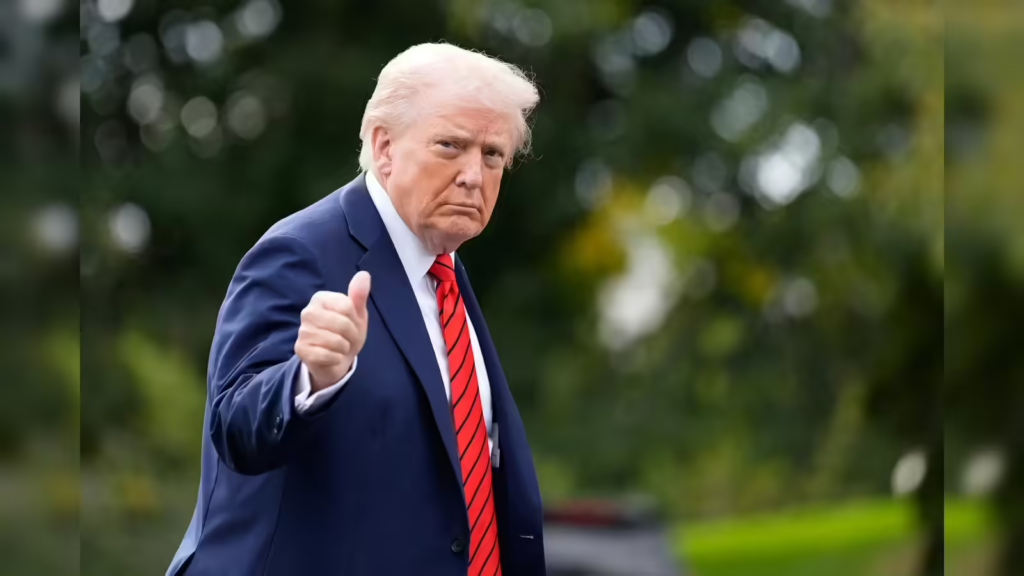
President Donald Trump welcomed the decision, describing it as the “greatest increase in presidential power” in roughly a century.
The ruling aligns with his longstanding argument that presidents should have greater authority over executive branch officials implementing federal policy.
What happens next?
The decision is expected to trigger further legal challenges involving other independent agencies.
Courts will likely determine, on an agency-by-agency basis, which officials remain protected and which now fall under the expanded presidential removal authority.
Congress may also face pressure to reconsider how independent commissions are structured, although any legislative response would still need to comply with the Supreme Court’s constitutional interpretation.
TL;DR
The US Supreme Court ruled that President Donald Trump can remove members of certain independent federal agencies without needing to show cause, weakening nearly 90 years of legal precedent. The decision gives presidents greater control over agencies like the FTC and could reshape how numerous federal regulators operate, while leaving questions about the scope of the ruling to be resolved in future court cases.