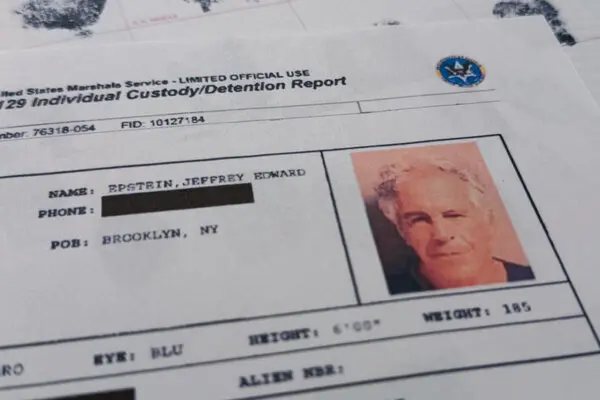
More than six years after the death of convicted sex offender Jeffrey Epstein, questions continue to surround how he secured a controversial plea deal that many critics argue allowed him to avoid far more serious consequences.
Now, a former Florida police chief who helped investigate Epstein is renewing allegations that federal officials under the administration of former President George W. Bush undermined efforts to pursue stronger charges against the financier.
The claims come from Michael Reiter, who led the Palm Beach Police Department during the original investigation into Epstein’s activities in the mid-2000s.
What did former police chief Michael Reiter allege?
According to comments highlighted in a report by the Miami Herald, Reiter believes local investigators built a substantial case against Epstein involving multiple alleged underage victims.
Reflecting on the federal handling of the investigation, Reiter made a striking claim.
“It felt like the people who work for our government were working more for Epstein than they were working for the victims and protecting the public,” he said.
Reiter alleged that after local authorities gathered evidence and interviewed numerous alleged victims, prosecutors at higher levels became less willing to pursue aggressive charges.
His account suggests that investigators expected Jeffrey Epstein to face severe legal consequences but instead watched the case move toward a negotiated settlement.
What was the original Jeffrey Epstein investigation?
The Palm Beach investigation began after reports that Epstein had allegedly paid underage girls for sexual massages at his Florida mansion.
Police ultimately identified dozens of potential victims and witnesses.
Investigators alleged that young girls were recruited and brought to Epstein’s residence, where some were allegedly paid for sexualized encounters.
The case quickly attracted national attention because of Epstein’s wealth, political connections, and network of influential associates.
The plea deal that sparked years of controversy
In 2008, Epstein reached a plea agreement with federal prosecutors.
Instead of facing federal sex trafficking charges, Epstein pleaded guilty in Florida state court to charges related to soliciting prostitution from a minor.
The agreement allowed him to avoid a potentially lengthy federal prosecution.
The deal later became one of the most controversial prosecutorial decisions in modern American legal history.
Critics argued that the agreement failed to reflect the seriousness of the allegations and provided unusually favorable treatment.
Why is Alex Acosta part of the controversy?
Reiter’s account references Alexander Acosta, who served as the U.S. Attorney for the Southern District of Florida during the Epstein investigation.
According to Reiter, Acosta told him that federal prosecutors were receiving guidance from higher levels within the Department of Justice and that Epstein’s legal team had successfully delayed proceedings.
Acosta has faced scrutiny for years over his role in approving the non-prosecution agreement.
The issue resurfaced in 2019 after Epstein was arrested on federal sex trafficking charges in New York.
That same year, Acosta resigned as labor secretary in the administration of Donald Trump amid renewed criticism of the plea agreement.
Who represented Jeffrey Epstein?
Epstein assembled an unusually prominent legal defense team.
Among the attorneys involved was Alan Dershowitz, along with several other high-profile lawyers.
The defense argued that allegations against Epstein were exaggerated and challenged the credibility of some accusers.
Critics of the plea deal contend that Epstein’s wealth and access to elite legal representation helped him secure treatment unavailable to most defendants facing similar allegations.
What evidence did investigators say they had?
According to Reiter, investigators interviewed more than two dozen alleged victims and believed they had established a pattern of misconduct.
He has consistently argued that local authorities had developed a strong criminal case before federal intervention changed its trajectory.
Reiter also claims he faced criticism and professional consequences for continuing to push the investigation.
These allegations remain part of a long-running debate about whether law enforcement agencies and prosecutors adequately pursued the case.
The “intelligence” claim and continuing questions
One of the most widely discussed claims surrounding Epstein emerged years later when reports surfaced that Acosta had allegedly told interviewers that he had been advised to leave Epstein alone because he “belonged to intelligence.”
The claim has circulated widely online and in media reports.
However, no publicly available evidence has conclusively established that Epstein worked for any intelligence agency.
Numerous investigations, media inquiries, and congressional reviews have examined aspects of the Epstein case, but many questions about his connections and influence remain unresolved.
Why does the Jeffrey Epstein case still matter?
The Epstein case has become a symbol of broader concerns about whether wealthy and politically connected individuals receive preferential treatment within the justice system.
For many victims and advocates, the controversy extends beyond Jeffrey Epstein himself.
It raises questions about:
- Prosecutorial discretion
- Accountability within the justice system
- Treatment of victims in high-profile cases
- The influence of wealth and political connections
- Transparency in plea negotiations
Those questions continue to fuel public interest years after Epstein’s death in federal custody in 2019.
What is established fact and what remains disputed?
Several aspects of the case are well documented:
- Epstein was investigated by Palm Beach police.
- Numerous underage girls were identified as potential victims.
- Epstein received a controversial plea agreement in 2008.
- The agreement generated years of criticism from victims and legal experts.
- Federal prosecutors later charged Epstein with sex trafficking offenses in 2019.
However, several claims remain allegations or unresolved questions, including:
- Whether federal officials intentionally weakened the case.
- Whether political pressure influenced prosecutorial decisions.
- Whether Epstein had any intelligence connections.
- Whether senior government officials intervened directly in the investigation.
No court has established those claims as fact.
Why Reiter’s comments are drawing attention now
Reiter’s remarks have reignited debate because they come from one of the earliest law enforcement officials involved in the case.
His comments also arrive amid continued public scrutiny of how Epstein maintained influence despite years of allegations and investigations.
For critics, his account reinforces long-standing concerns that the justice system failed many victims.
For others, the allegations underscore the importance of distinguishing between documented facts, personal recollections, and claims that have yet to be independently verified.
As public interest in the Epstein case continues, Reiter’s comments are likely to add another chapter to a controversy that remains one of the most scrutinized legal and political scandals in recent American history.
TL;DR
- Former Palm Beach Police Chief Michael Reiter says federal officials weakened efforts to prosecute Jeffrey Epstein in the mid-2000s.
- Reiter claims investigators had evidence from dozens of alleged victims.
- Epstein ultimately secured a controversial 2008 plea agreement that avoided federal prosecution.
- Former U.S. Attorney Alex Acosta has faced years of criticism over the deal.
- Allegations that Epstein had intelligence connections remain unproven.
- Many questions about the handling of the case continue to be debated years after Epstein’s death.