
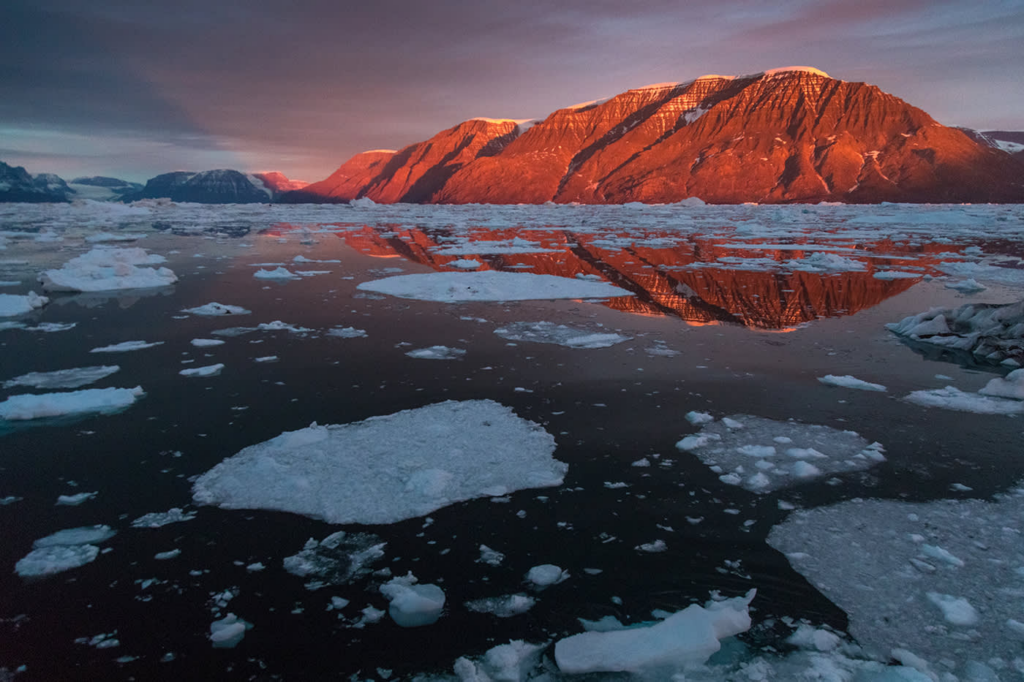
When Donald Trump declared that Greenland is “vital for the Golden Dome we are building,” he wasn’t reviving an old talking point for shock value alone. The comment, delivered ahead of high-stakes talks with Danish and Greenlandic officials in Washington, reflects a deeper strategic argument Trump has returned to with increasing urgency: that the Arctic island is central to America’s future missile defense, Arctic dominance, and great-power competition.
But Trump’s renewed push to bring Greenland under US control has triggered firm resistance from Denmark, Greenland’s leadership, and European allies—raising uncomfortable questions about sovereignty, alliance politics, and how far Washington is willing to go in the name of national security.
This is not just a diplomatic spat. It’s a window into how the US views the Arctic in an era of rising tensions with Russia and China—and why Greenland sits at the heart of that view.
What Did Trump Say About Greenland and the “Golden Dome”?
In a social media post, Trump argued that Greenland is essential to US national security and should fall under American authority. He went further, saying NATO would be stronger if Greenland were controlled by Washington, because the island is crucial to the “Golden Dome” missile defense system his administration is developing.
The phrase “Golden Dome” appears to describe an expansive, layered missile defense concept—one that would rely heavily on early-warning radar, satellite tracking, and forward-positioned sensors in the Arctic. Greenland’s geography makes it uniquely valuable for that purpose.
Trump’s comments came just hours before senior officials from Denmark and Greenland were due to meet US leaders, turning what was meant to be a diplomatic dialogue into a tense strategic showdown.
Why Is Greenland So Strategically Important?
Greenland’s importance isn’t theoretical. It’s geographic, military, and increasingly economic.
1. The Arctic Advantage
Greenland sits between North America and Europe, directly along the shortest flight path for intercontinental ballistic missiles launched from Russia toward the United States. That makes it ideal for:
- Early missile detection
- Tracking hostile launches
- Hosting radar and space surveillance systems
This is why the US has maintained a military presence there for decades.
2. Existing US Military Footprint
Under a 1951 defense agreement with Denmark, the US already operates military facilities in Greenland, including the long-standing Thule Air Base (now known as Pituffik Space Base). The agreement allows Washington to expand its presence if security conditions require it—without changing sovereignty.
Critics of Trump’s stance argue this makes the call for outright control unnecessary.
3. Resources and Long-Term Power
Greenland is believed to hold vast untapped reserves of rare earth minerals, uranium, and other strategic resources. As climate change melts Arctic ice, access to those resources—and to new shipping routes—becomes easier.
For the US, that raises concerns about rivals gaining influence in the region.
What Is the “Golden Dome” Missile Defense System?
Trump has offered limited technical detail, but the Golden Dome appears to be envisioned as:
- A next-generation missile shield
- Integrating space-based sensors, ground radar, and interceptors
- Designed to counter advanced threats, including hypersonic missiles
Greenland’s location would allow US systems to detect launches earlier than sensors based on the continental US alone. From a military planning perspective, that time advantage can be decisive.
How Have Denmark and Greenland Responded?
The reaction from Copenhagen and Nuuk has been swift—and blunt.
Greenland: “We Are Not for Sale”
Greenland’s prime minister, Jens-Frederik Nielsen, made clear that Greenland intends to remain aligned with Denmark, NATO, and the EU. He emphasized cooperation and dialogue, rejecting any idea of governance from Washington.
Greenland is a self-governing territory, and its leaders have consistently stated that decisions about its future belong to its people—not foreign powers.
Denmark Pushes Back
Danish Prime Minister Mette Frederiksen accused the US of exerting unacceptable pressure on a close ally and warned that borders cannot be changed through coercion or force.
Denmark has also highlighted increased military investment in Greenland and ongoing discussions within NATO to strengthen Arctic security—arguing that alliance cooperation, not annexation, is the answer.
What Role Does NATO Play in This Dispute?
Trump has suggested that NATO should back US control of Greenland. European leaders disagree.
European Commission President Ursula von der Leyen stressed that Greenland belongs to its people and that their wishes must be respected. French President Emmanuel Macron went further, warning that any challenge to the sovereignty of an EU member state would have unprecedented consequences.
At the center of the dispute is the North Atlantic Treaty Organization, an alliance built on mutual defense and respect for sovereignty. For many European capitals, Trump’s rhetoric cuts against those principles—even if they share concerns about Arctic security.
Why Has Trump’s Tone Become More Aggressive?
Trump first floated the idea of acquiring Greenland in 2019, during his first presidency. At the time, it was dismissed as unconventional but largely symbolic.
Since returning to the office, his language has hardened. He has suggested the US would obtain Greenland “one way or another” and has refused to rule out the use of force—remarks that have unsettled allies.
The shift reflects broader changes:
- Intensifying competition with Russia in the Arctic
- Growing concern about China’s interest in polar infrastructure
- A belief that traditional alliances move too slowly
From Trump’s perspective, control equals certainty. For allies, it looks like overreach.
What Do Americans Think About Acquiring Greenland?
Public opinion in the US is far from enthusiastic.
A recent Reuters/Ipsos poll found:
- Only 17% of Americans support acquiring Greenland
- Large majorities oppose using military force
- Nearly half disapprove outright of the idea
Support was low across party lines, suggesting that while national security resonates with voters, annexation does not.
Why This Debate Matters Beyond Greenland
This dispute isn’t just about one island.
It raises larger questions:
- How far can national security claims go before they undermine alliances?
- Can the US expand its strategic reach without destabilizing NATO?
- Who sets the rules in the Arctic as it becomes more accessible?
Greenland sits at the intersection of climate change, military technology, and global power politics. How this standoff plays out could shape Arctic governance for decades.
TL;DR
- Trump says Greenland is vital to the US “Golden Dome” missile defense system.
- Greenland’s Arctic location makes it key for early missile detection.
- Denmark, Greenland, and EU leaders firmly reject US control.
- NATO allies worry Trump’s approach undermines sovereignty.
- Most Americans oppose acquiring Greenland, especially by force.