
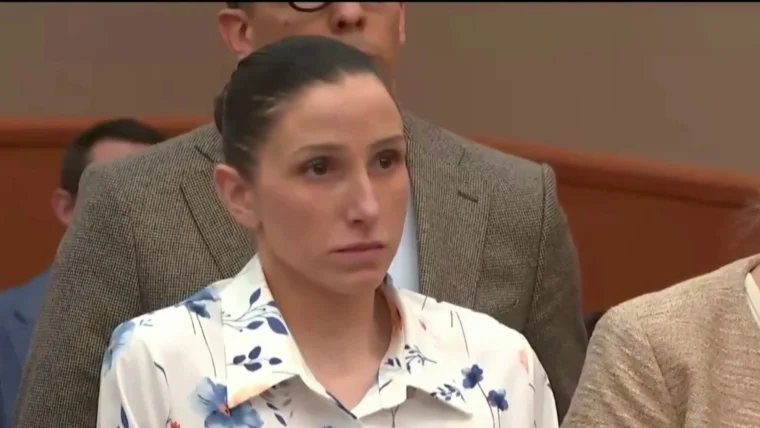
A Utah jury delivered a swift and decisive verdict in one of the more unsettling true crime cases in recent memory. Kouri Richins, a children’s author who wrote about grief, was found guilty of murdering her husband, Eric Richins, in a plot prosecutors said was driven by financial desperation and personal ambition.
The case, centered in Park City, has drawn national attention not just for the crime itself but for the stark contrast between the defendant’s public persona and the allegations proven in court.
What was the Kouri Richins case about?
At its core, the prosecution argued that Richins orchestrated her husband’s death in March 2022 by poisoning him with fentanyl, a powerful synthetic opioid.
The prosecution’s theory
According to court proceedings, Richins:
- Spiked her husband’s Moscow Mule cocktail with a lethal dose of fentanyl
- Previously attempted to poison him on Valentine’s Day with a laced sandwich
- Planned to access his $4 million estate to escape mounting debt
- Intended to start a new life with another man
Prosecutors described the killing as calculated, not impulsive. Their argument hinged on financial records, witness testimony, and a timeline that suggested premeditation.
The defense’s position
Richins pleaded not guilty and challenged the prosecution’s narrative throughout the trial. Her legal team argued procedural issues and attempted to cast doubt on the prosecution’s interpretation of events, even moving for a mistrial during closing arguments.
That motion was denied.
Why did the jury reach a verdict so quickly?
One of the most striking aspects of the trial was the speed of deliberation. The jury returned a guilty verdict in roughly three hours after a three-week trial.
What quick deliberations can signal
While not definitive, fast verdicts often suggest:
- Strong alignment among jurors
- Clear and compelling evidence
- Minimal disagreement over key facts
In this case, the prosecution’s narrative appears to have resonated decisively.
What role did financial pressure play?
Debt as a motive
Prosecutors emphasized that Richins’ home-flipping business was burdened with approximately $4.5 million in debt. This financial strain became central to their argument.
They claimed:
- Divorce would have limited her access to her husband’s wealth due to a prenuptial agreement
- His death would provide direct financial relief through inheritance
This framing positioned the crime as economically motivated, rather than emotionally driven.
The “double life” narrative
The prosecution also pointed to an alleged relationship with another man, suggesting Richins was planning a future beyond her marriage.
Together, these elements formed a narrative of calculated escape rather than spontaneous wrongdoing.
How did the children’s book factor into the case?
A controversial detail
Roughly a year after her husband’s death, Richins published a children’s book about coping with grief.
For prosecutors, this detail underscored what they portrayed as a contradiction:
- Public image: A grieving mother helping her children process loss
- Alleged reality: The architect of that loss
While the book itself was not evidence of guilt, it became a powerful symbolic element in the courtroom narrative.
What charges was Kouri Richins convicted of?
The jury found Richins guilty on multiple counts, including:
- Aggravated murder
- Attempted aggravated murder
- Insurance fraud
- Forgery
Each charge reflects a different dimension of the case, from the act itself to the alleged financial scheme surrounding it.
What sentence does she face?
Richins now faces the possibility of a lengthy prison term, with sentencing scheduled for May 13.
Potential penalties
- Up to 25 years or more, depending on how sentences are structured
- Additional penalties tied to fraud-related convictions
Sentencing will ultimately depend on judicial discretion and statutory guidelines.
Why this case stands out in true crime coverage
The contrast factor
Cases that capture public attention often involve a sharp contrast between appearance and allegation. Here, that contrast was particularly striking:
- A mother of three
- A published author focused on grief
- Accused and convicted of causing that grief
This dissonance tends to amplify public interest and media coverage.
The fentanyl dimension
The use of fentanyl adds another layer of relevance. As a substance at the center of a broader public health crisis in the U.S., its presence in a homicide case underscores its potency and accessibility.
What legal and social questions does the case raise?
Can financial motive strengthen a murder case?
Yes. Financial gain is one of the most clearly understood motives in criminal law. When supported by documentation such as debt records, it can significantly bolster a prosecution’s case.
How does behavior after a crime affect a trial?
While courts focus on evidence, juries are human. Actions taken after a crime, such as public appearances or publications, can influence perception, even if indirectly.
What does this case say about image vs. reality?
It highlights a recurring theme in criminal cases: public personas can diverge sharply from private actions. Courts, however, rely on evidence, not image.
TL;DR
- Kouri Richins was found guilty of murdering her husband, Eric Richins
- Prosecutors said she used fentanyl to carry out the crime and sought financial gain
- The jury reached a verdict in about three hours
- She faces a potential prison sentence following her May sentencing hearing