
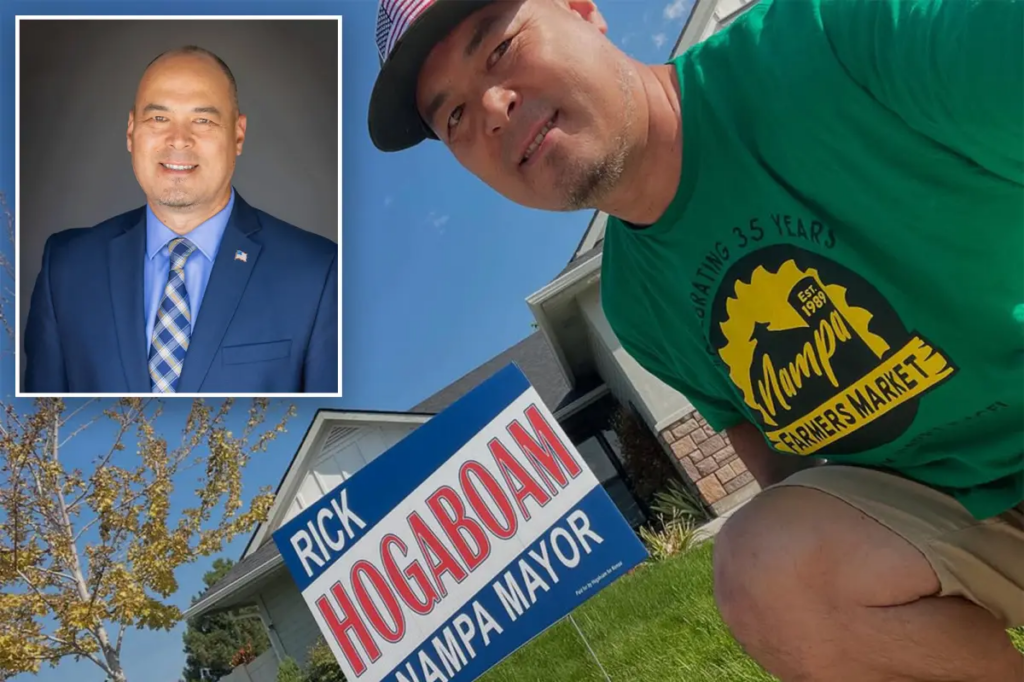
The sudden death of newly elected Idaho mayor Rick Hogaboam has left a growing community in shock—and raised renewed questions about the pressures of public office and the unpredictability of medical emergencies.
Hogaboam, 47, collapsed while speaking at a town hall event Wednesday evening and could not be revived despite immediate life-saving efforts. Just over two months into his term, his death marks a jarring interruption to a political career built on local service and steady ascent.
What Happened to Rick Hogaboam?
Rick Hogaboam suffered what officials described as a “medical emergency” during a public meeting in Eagle, Idaho, around 6:45 p.m.
According to local reports:
- Rick Hogaboam was actively speaking when he collapsed mid-address.
- Eagle Mayor Brad Pike, seated beside him, immediately began CPR.
- Emergency responders—including police, fire crews, and paramedics—arrived quickly.
- The town hall meeting was adjourned as responders worked to save him.
Despite rapid intervention, those efforts were unsuccessful.
His cause of death has not yet been publicly confirmed.
Why the Setting Matters
This was not a private moment—it unfolded during a civic event centered on regional collaboration. That context underscores the public-facing nature of local leadership, where officials are often working long hours in high-visibility environments.
Who Was Rick Hogaboam?
Rick Hogaboam was not a political outsider. He had spent years building experience in Idaho’s local government system before becoming Nampa’s 31st mayor.
A Career Built in Local Government
His public service résumé included:
- Chief of Staff to former Nampa Mayor Debbie Kling
- City Councilman in Nampa
- Substitute Idaho State Senator
- Canyon County Clerk, overseeing budgets and elections
He won the November mayoral election with 62.86% of the vote, defeating three opponents.
Personal Background
- Moved to Nampa from western New York in 2008
- Known for his loyalty to the Buffalo Bills
- Survived by his wife, five children, and a grandchild
Colleagues frequently described him as methodical, pragmatic, and deeply invested in community growth.
Why His Death Resonates Beyond Nampa
The sudden passing of a sitting mayor—especially one early in his term—has ripple effects that extend beyond local grief.
1. Leadership Vacuum
Nampa now faces an immediate governance challenge:
- A successor must be appointed
- Long-term policy continuity may be disrupted
- Ongoing initiatives could slow or stall
This transition period can be especially sensitive in fast-growing cities like Nampa, which sits within the Boise metropolitan area.
2. The Human Side of Public Office
Hogaboam’s death is also a reminder that public officials operate under intense schedules and expectations.
Just hours before the incident, he attended a training session with the Nampa Fire Department, reportedly remarking on the “beautiful day.”
That detail underscores how abruptly circumstances can change—and how demanding civic roles can be physically and mentally.
3. Public Health Awareness
Although the cause of death remains unknown, incidents like this often renew focus on:
- Cardiovascular health
- Early detection of underlying conditions
- Emergency preparedness in public spaces
The fact that CPR was administered immediately highlights the importance of basic life-saving training among both officials and the public.
How Leaders and Officials Are Responding
Tributes poured in quickly from across Idaho’s political spectrum.
Statements From Officials
- The Idaho House Republicans called him “more than a public servant.”
- Idaho Secretary of State Phil McGrane said he was “heartbroken.”
- Colleagues emphasized his commitment to:
- Strengthening families
- Managing growth responsibly
- Supporting civic institutions
These responses reflect not just political respect, but personal loss within a relatively tight-knit state leadership community.
What Happens Next in Nampa?
City officials will now need to follow established procedures to fill the vacancy.
Expected Process
While specifics may vary, typical steps include:
- Appointment of an interim or permanent replacement by city leadership
- Preparation for the next scheduled election cycle (held every four years)
- Reassignment or continuation of key policy initiatives
The Bigger Picture: When Public Moments Turn Into Emergencies
This incident joins a small but impactful list of public figures experiencing medical emergencies during live events.
Why These Moments Stand Out
- They are witnessed in real time, often by large audiences
- They blur the line between public duty and personal vulnerability
- They tend to spark widespread media attention and public reflection
In Hogaboam’s case, the presence of another elected official administering CPR adds a striking dimension—one leader trying to save another in the middle of civic duty.
Take Away
Rick Hogaboam’s death is not just a local tragedy—it’s a story about leadership, unpredictability, and the human realities behind public roles.
Key takeaways:
- Even experienced, active leaders can face sudden medical crises
- Emergency response readiness—including CPR knowledge—matters
- Local governance systems must be prepared for unexpected transitions
TL;DR
- Idaho Mayor Rick Hogaboam, 47, died after collapsing mid-speech at a town hall.
- CPR was administered immediately, but efforts to revive him failed.
- He had been in office just over two months after winning decisively in November.
- His death leaves a leadership gap in Nampa and raises broader questions about public health and emergency readiness.